
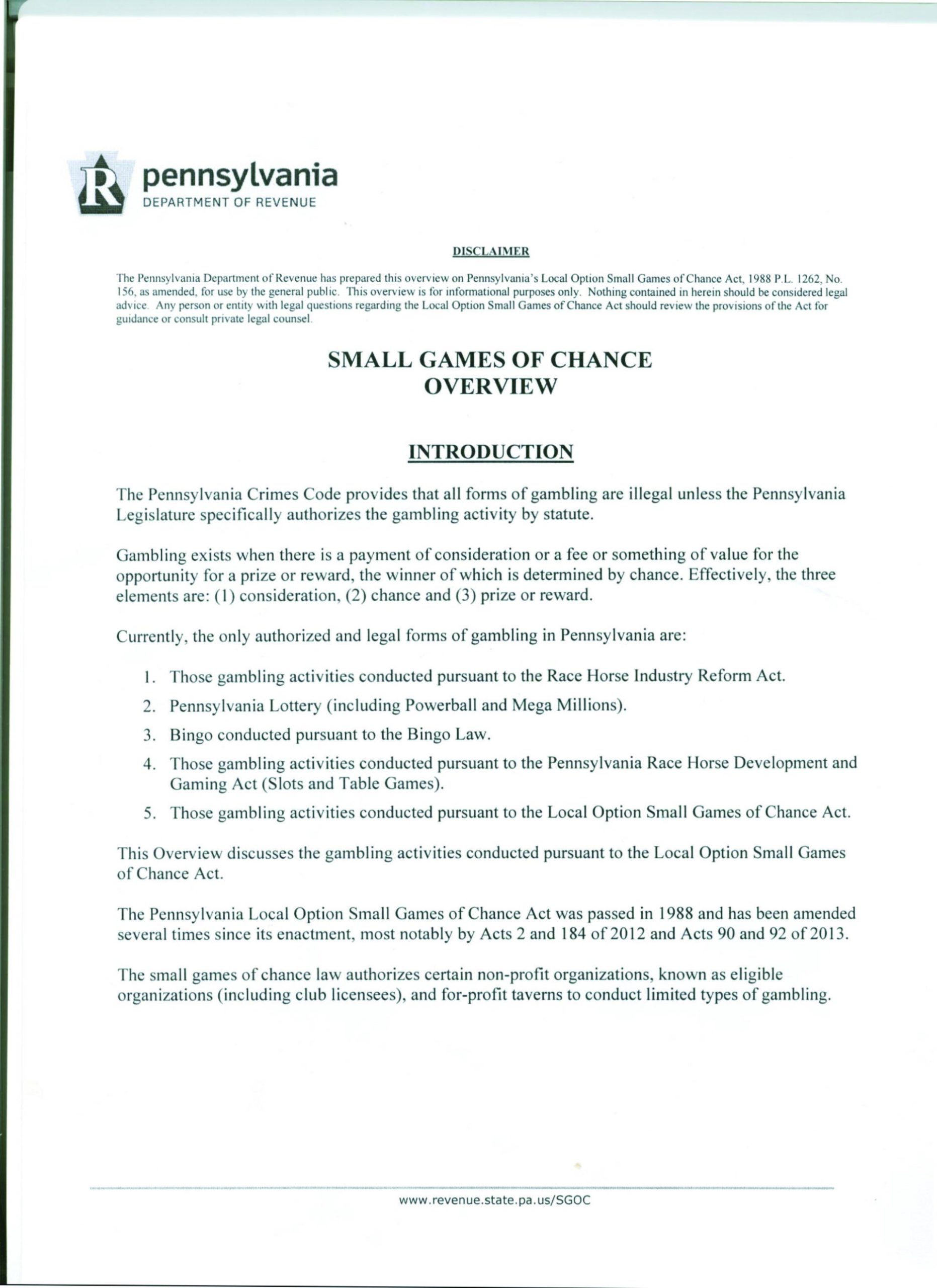
Non-profit organizations that want to conduct raffles, bingo, or other small games of chance in Pennsylvania need a small games of chance license.
Navigating the world of charitable fundraising in Pennsylvania can be tricky, especially when it involves games of chance. Knowing exactly who needs a small games of chance license in pa is crucial for any group planning such activities. These rules exist to ensure fairness and proper financial management.
If your organization intends to offer raffles or similar games for fundraising, you likely need to secure this specific permit from the state. This process helps to maintain transparency and adherence to regulations.

Who Needs a Small Games of Chance License in PA?
Okay, let’s dive into the world of small games of chance in Pennsylvania! It might sound complicated, but it’s really about making sure things are fair and legal when groups want to raise money. If you’re thinking about having a raffle, a bingo night, or a chance drawing at your local firehouse, church, or school, you’ll likely need a “Small Games of Chance” license. But who exactly needs one? That’s what we’re going to figure out together. It’s not just for anyone, there are specific rules about who can get this kind of license and the kind of groups that can use them. So, let’s explore the details and clear up any confusion.
Eligible Organizations: Not Just Anyone Can Play
The first thing to know is that not everyone can get a Small Games of Chance license. It’s designed for specific types of organizations. The state of Pennsylvania wants to make sure that the money raised goes to good causes. The groups that are permitted to apply for and get these licenses are called “eligible organizations”. Think of it as an exclusive club for groups with charitable hearts.
So, who’s in this club? Here’s the breakdown:
- Nonprofit organizations: This is the biggest category. If you’re a group that exists to do good – like a charity, a volunteer group, or even a local sports team for kids that doesn’t make a profit – you probably fall into this bucket. These organizations are often registered with the IRS under section 501(c), meaning they are classified as tax-exempt.
- Religious organizations: Churches, synagogues, mosques, and other places of worship can also get this license. They often hold raffles or bingo nights to help with their operations and outreach programs. These places are usually also tax-exempt and serve as a community hub.
- Fire companies: Volunteer fire companies, ambulance squads, and rescue teams work tirelessly to keep their communities safe. Often, they can use the funds from games of chance to purchase equipment and keep their vehicles running. They’re considered essential for the well-being of the community.
- Veterans organizations: Groups that support veterans and their families are also eligible. This helps them provide vital services and programs for those who have served our country. They do vital work in ensuring veterans get the support they require.
- Fraternal organizations: Some fraternal groups, like the Lions Club, Elks Club, or Knights of Columbus, can qualify. They focus on community service and often have a large membership of individuals that look to give back to their local areas.
- Associations of police: Organizations that represent police officers are also included, allowing them to raise funds that support their work or the families of police officers. They support those who put themselves on the line daily to protect their communities.
It’s important to understand that just because you are a group, doesn’t automatically qualify your group to be an eligible organization. There are many things that could cause your group to be ineligible, and we will cover some of the key things in this article.
What if your organization is not listed?
If your organization is not listed above, then you are most likely ineligible to obtain a Small Games of Chance license. However, it would be best to review the actual laws that are defined by the Commonwealth of Pennsylvania. There may be other qualifications that could allow your group to be eligible. When in doubt, you should always reach out to your local municipality for guidance.
The “Small” Part: What Games Are Allowed?
Okay, so you think your organization is eligible – great! But what exactly can you do with a Small Games of Chance license? Well, this is where the “small” part comes in. These are not meant for big-time casinos, but rather for smaller, community-based games that are meant to help your non-profit group raise money. These generally involve some kind of chance element, and they are conducted within the rules laid out by the state.
Permitted Games under the License:
Here’s a list of the most common types of games you can conduct with this license:
- Raffles: You know, like selling tickets for a chance to win a prize. This could be anything from a big TV to a basket of goodies. Raffle tickets can usually be bought before the drawing, and the winner is picked at random.
- Bingo: A classic! Numbered cards are marked as numbers are called, and the first to get a line (or pattern) wins. It’s a fun, social game often seen at church halls and community centers. Bingo is a popular way to raise money because it is easy to run and participants enjoy playing.
- Pull-Tab Games: These are little paper cards where you pull a tab to see if you’ve won. They can provide a quick way to create interest in a fundraiser.
- 50/50 drawings: A portion of the money collected goes to the winner, and the other portion goes to the organization. These are a fun way to generate income from your fundraiser that will also interest your participants.
- Drawings: Similar to raffles, but might involve different methods of choosing the winner. These are generally any kind of game where the results are dependent on the luck of the draw, which is a key element in Small Games of Chance.
Keep in mind, that there are rules and limits to the dollar amounts you can award in prize winnings. You must understand these limits, and make sure you never go over them or your organization can get into serious trouble.
Why You Need a License: More Than Just Permission
Now you might be thinking, “Why do I need a license for a simple raffle?” Good question! It’s not just about following the rules; it’s about making sure everything is fair, safe, and accountable. Having a license is also a way for the state to keep track of how much money is going through these games. It might seem like a hassle, but it helps protect everyone involved.
The Benefits of Having a License:
- Legal Compliance: The biggest reason is simple – it is required by law to have a Small Games of Chance license before conducting these types of games in Pennsylvania. Running these games without a license can lead to legal trouble for the people in charge, and even the organization itself. Nobody wants that, so you must make sure your organization is compliant.
- Transparency: The license helps keep things open and honest. All money raised has to be tracked, which ensures that it is being used for its intended purpose. This helps to build trust within the community, and makes sure the money raised goes to help your organization.
- Protection: The rules and regulations that come with the license protect both the people running the games and those who are participating. It makes sure that things are fair, and it also protects your organization.
- Public Trust: When an organization is licensed, the public tends to view it as more credible and trustworthy, which encourages people to participate in the fundraisers. Knowing the game is being run fairly and legally will make participants feel better about supporting the organization.
- Fundraising: Obviously, this is one of the main reasons you need the license, so you can host these kinds of games and raise funds for your organization. It’s a good way to get money to help achieve your organization’s goals.
Applying for Your License: Steps to Success
So you’ve decided your organization is eligible and these games can help. Great! Here’s a quick overview of how to apply for a Small Games of Chance license:
Steps to Apply
- Determine your eligibility: Go back to what we talked about previously in the article and make sure your organization qualifies as an eligible organization. This is extremely important, because the municipality will confirm this before the license is granted.
- Gather your paperwork: You’ll need documentation about your organization’s tax-exempt status, contact information for the people that will be in charge of running the games of chance, and the specific kind of games you plan to run. Every municipality might have slightly different paperwork requirements, so be sure to check with your local authorities.
- Contact your municipality: Licenses for Small Games of Chance are handled at the local level. This means you will need to apply through the municipality in which your organization is located. Do some research and find out who you need to talk to in your city, borough or township.
- Submit the application: Fill out all the required forms and provide all the necessary information. Accuracy is really important here. A mistake can delay the process. Pay the required fee and submit all your paperwork to your local municipality.
- Wait for approval: The municipality will review the application and conduct necessary due diligence to ensure your organization and application meets all the qualifications. Be patient, the process takes time.
- Receive your license: Once your application is approved, you will receive your Small Games of Chance license. You must post this in the same area where the games are being conducted.
- Follow the rules: Just because you have the license does not mean you can ignore the rules! You must make sure that you continue to follow the rules, and do everything legally.
Key Considerations
Before jumping in, there are a few other important things to consider, so your organization can be sure you are operating in compliance:
Record Keeping:
You must keep detailed records of all games that are conducted. This includes how many tickets were sold, how much money was collected, and what prizes were awarded. These records must be available for review and for accountability. Make sure you have a good system in place for recordkeeping before you conduct any games. This will help your organization stay in compliance with all the laws.
Volunteer Regulations:
Make sure that the volunteers who help run the games are aware of the rules, and are qualified to do so. You must be careful to not let just anyone help with handling money. Make sure you have responsible people helping with the handling of cash and recordkeeping.
Age Restrictions:
There are specific rules about who can participate in these games. Usually, participants must be 18 years or older, so be sure to have appropriate verification in place for your organization. Failure to abide by these age restrictions can lead to problems, and you must make sure your volunteers are aware of these rules.
Prize Limits:
There are rules on the dollar amount for how much your prizes can be valued. The prize amounts are usually set by law, and the organization must be aware of these limits. Make sure you never go over the prize limits, or it can create problems for your organization. Be sure to stay informed of the prize limits for any kind of game you conduct.
Reporting Requirements:
Depending on your municipality, you might have to report back periodically on how much money you have raised. This will help keep things transparent and ensure you are in compliance. This is also used to make sure you haven’t gone over your allowable limits for gross revenue. Keeping good records will make these reports much easier.
Local Variations:
While the state sets the main rules, local municipalities may have their own specific rules or extra requirements. It’s very important to check with your local authorities. They are the people who can help you understand exactly what you need to do.
Consequences of Not Having a License
Trying to run games of chance without the proper license is a big mistake. It can lead to serious penalties, including fines, and potentially being shut down. It can damage your organization’s reputation, and make it hard to raise funds again in the future. Make sure you follow all the rules, and apply for a license if your organization needs one. It is always better to be safe than sorry. The cost of running a game without a license outweighs the fees you will need to pay to obtain one.
In summary, a Small Games of Chance license in Pennsylvania is required for eligible organizations – nonprofits, religious groups, fire companies, veterans’ organizations, fraternal groups, and police associations – that want to conduct certain types of games of chance for fundraising. It’s more than just a piece of paper; it is a way to make sure everything is fair, transparent, and legal. By following the rules, these groups can raise funds responsibly and continue the important work they do in their communities. If you have any questions, or you think your group needs a license, always reach out to your local municipality. It will help make sure you have all the right information, so you can help your organization to achieve its fundraising goals.
Most small games of chance are illegal in Pennsylvania
Final Thoughts
Any nonprofit organization in Pennsylvania that wants to conduct small games of chance, like raffles or bingo, must obtain a license. This includes religious groups, charities, and fraternal organizations.
Essentially, who needs a small games of chance license in pa? Any qualifying nonprofit planning to hold these types of games needs to apply. Failing to obtain the license can result in legal penalties.

