
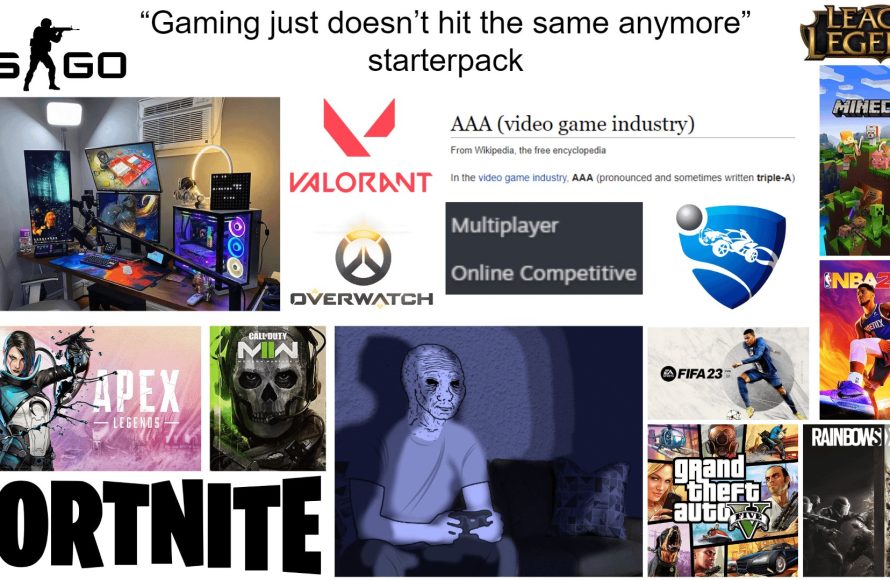
AAA games are sucking primarily because they prioritize profit and shareholder expectations over innovation and player enjoyment, leading to formulaic gameplay, microtransactions, and rushed development cycles.
Have you noticed a decline in the quality of big budget releases recently? It feels like many titles are failing to live up to the hype. The question on many gamers’ minds is, why are aaa games sucking? We are experiencing a period where innovation seems secondary.
This decline often manifests as predictable narratives and a heavy reliance on familiar mechanics. Publishers appear more focused on maximizing revenue streams through repetitive content. Rushed development cycles further contribute to this problem resulting in buggy and unpolished experiences.

Why Are AAA Games Sucking?
Have you ever felt that excitement for a big new video game, only to be let down? It seems like lately, many AAA games – the really expensive and hyped ones – haven’t been living up to expectations. It’s like they’re missing that special something that makes a game truly great. Why is this happening? Let’s dive in and explore some of the reasons why some of these big budget games just don’t hit the mark.
The Pressure of Profit: When Money Takes Over
One of the biggest issues is the sheer amount of money involved in making AAA games. We’re talking millions, sometimes even hundreds of millions, of dollars. This huge investment puts immense pressure on game developers to make sure the game sells well. This can lead to some bad decisions, where the focus shifts from making a fun game to making a game that will make a lot of money. Think of it like a school play where the goal is to get the most ticket sales, rather than putting on the best performance possible. When that happens, creativity can sometimes suffer.
The Influence of Publishers
Game publishers often have a lot of control. They are the companies that fund the game’s creation and handle the sales. Publishers often want to see a good return on their investment, and sometimes this clashes with what game developers think is best for the game. For example, they might push for features like loot boxes or microtransactions, even if those additions make the game less fun. They may also rush developers to release games before they’re truly ready, just to meet a deadline. This can result in buggy and incomplete experiences for players. The publisher’s desire for profit can sometimes overshadow the developers’ desire to make something special.
The Focus on Trends Instead of Innovation
Another side effect of the profit pressure is the tendency to chase trends. If a game with a certain style or mechanic is very popular, other publishers and developers tend to jump on the bandwagon. Instead of taking risks and trying out new things, they follow the path that appears to be safe and profitable. This can lead to a lot of games that feel very similar, lacking their own unique identity. It’s like everyone making the same kind of superhero movie instead of coming up with something completely new.
Lack of Polish: Buggy Releases and Unfinished Games
Have you ever bought a game only to find it full of glitches and errors? This is another growing problem with AAA games. Many big releases come out in what many would call an unfinished state, requiring players to download multiple patches to fix all the errors. This could mean the game crashes all the time, characters get stuck in walls, or that some of the game features just don’t work properly. This happens for a few reasons.
Rushed Development Cycles
As we discussed earlier, publishers often push developers to release games quickly to meet deadlines. This can lead to the developers not having enough time to properly test and polish the game. Imagine trying to write a book the night before it is due. The final result is likely to be messy and full of mistakes. It’s the same with games. When game development is rushed, the game’s quality often suffers. This can leave players feeling frustrated and like they paid full price for a broken product.
The “Patch It Later” Mentality
There has also been a shift in the industry where there seems to be an attitude that it’s okay to release a buggy game, because the bugs can be patched later. While it’s good that issues can be fixed after a game releases, it’s not okay to sell a game that’s clearly not ready. This reliance on post-release patches can give developers the excuse to cut corners during production. Players are then stuck with the burden of needing to constantly download large files to get a fully working experience. It’s a problem when you pay for a completed game, but get a beta version instead.
The Issue of Microtransactions and Loot Boxes
Many AAA games are now packed with microtransactions and loot boxes. These are ways for players to spend more money within the game after purchasing it. Microtransactions can include buying in-game items, boosts, or cosmetics. Loot boxes contain a random selection of virtual items that can sometimes give a player a big advantage. While some of these things might be okay in moderation, they can also ruin the game experience for some players.
Pay-to-Win Mechanics
Sometimes, microtransactions create what is called a “pay-to-win” situation. Players who spend extra money can gain a major advantage over those who do not, which can be very unfair. This is particularly frustrating in multiplayer games, where winning is often about skill, not just how much money a player is willing to spend. Pay-to-win schemes can undermine the skill required for playing the game, giving an unfair advantage for those willing to spend the extra money. This also makes those who cannot afford to spend more, or who do not like the mechanic, feel left out.
The Gambling Aspect of Loot Boxes
Loot boxes have been criticized for their similarity to gambling. Players pay for a chance to receive something valuable, but they don’t know what they will get. This can be particularly addictive, especially to younger players. The uncertain nature of loot boxes can pressure people to buy more and more, in the hopes of landing a rare and useful item. The feeling of being manipulated to spend more money in a game often leads to a negative view of the game overall.
Storytelling and Creativity Taking a Back Seat
While good graphics and exciting gameplay are important, a good story is what can truly make a game memorable. In recent years, some AAA games have been lacking when it comes to story and character development. Instead of creating a memorable world with engaging characters, they focus on the graphics, and the amount of content rather than story quality. Many great games are remembered for their well-written characters and compelling stories, which shows how important they are. Unfortunately, some developers choose to cut corners on story, focusing instead on things that are easier to measure, like the number of hours of gameplay or the quality of the graphics.
A Shift Toward Generic Plots and Characters
We’ve seen a lot of AAA games that seem to feature characters and plots that we’ve seen many times before. This lack of originality can make games feel predictable and unengaging. Instead of developing complex and relatable characters with unique motivations, some games have characters that feel like a collection of tropes. Instead of stories that take risks and explore interesting themes, they use narratives that feel safe and formulaic. This leads to a lack of excitement and can often create a sense of boredom in the players. Players want to see something new, or at least a creative twist on something old.
The Focus on Graphics Over Substance
Modern AAA games often focus heavily on having the best possible graphics. While it’s great when games look stunning, visuals alone cannot make a good game. Some developers put so much time and energy into making the game look beautiful, that they ignore other aspects of the game, like the story and characters, or gameplay mechanics. It’s like spending all of your time decorating a cake, but forgetting to actually bake it. The cake may look amazing, but it will taste terrible. Great graphics are nice, but they should always be in support of the game’s overall quality.
The Overreliance on Live Services and Games as a Service
Many modern AAA games have adopted what’s called a “live service” model. This means that a game is designed to be constantly updated with new content and features over time, rather than being a complete experience at release. While this can be good for keeping a game fresh, it can also create some negative consequences.
The Never-Ending Grind
Live service games often encourage players to keep playing for long periods of time. This may mean completing repetitive tasks, earning experience points, and collecting in-game resources. While some players might enjoy this sort of constant progression, it can become like a chore for others. Instead of playing a game for fun, players can feel like they have to constantly play to stay relevant. This repetitive grind can turn playing a video game from a relaxing hobby, into a never-ending to-do list.
Content Gating
Live service games sometimes hold back content and release it slowly over time. This can be frustrating for players who want the full experience right away. Instead of having all the features available at release, players have to wait for new content to arrive. This practice can make the game feel incomplete, and players may feel that they’ve paid full price for an experience that isn’t fully available to them. Some may even find this sort of content gating to be manipulative, as it draws people into playing for a longer time.
It’s not all bad news though. Many independent developers are creating some very exciting games. They don’t have the same budget or pressures as the big AAA studios, allowing them to take risks and prioritize fun and creative gameplay. These games often tell unique stories and have fun, original game mechanics, reminding us what makes games so much fun to begin with.
The issues with AAA games are complex and interconnected, but it all points to a need for a change. We need to encourage game developers to prioritize the love of game creation over sheer profits, to build games that are finished and fun, and to respect players and their time. Only then can we hope to see a return to a golden age of gaming, with games that really live up to the hype.
Why Are AAA Games Getting WORSE?!
Final Thoughts
AAA games often prioritize profit over innovation, leading to repetitive formulas. They chase trends instead of creating unique experiences. Microtransactions and rushed releases further diminish game quality. This core issue explains why are aaa games sucking.
The focus shifts to maximizing revenue rather than delivering enjoyable gameplay. Developers may cut corners to meet unrealistic deadlines. This ultimately disappoints players and damages the overall gaming landscape. We must demand higher quality and more creativity.

