
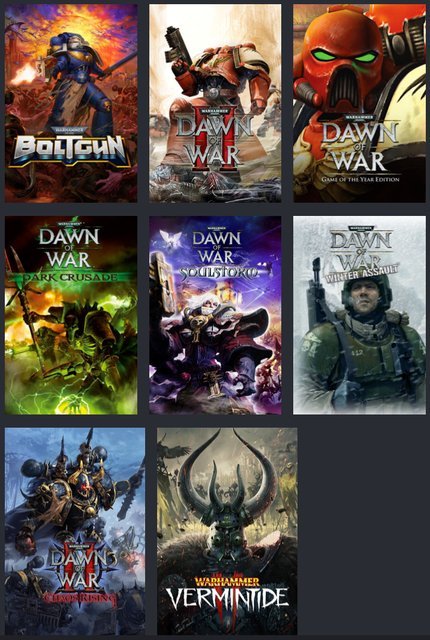
The extensive and varied Warhammer universe, with its rich lore and diverse factions, provides ample material for game developers to create many different types of games, explaining why there are so many Warhammer games.
Have you ever wondered why there are so many Warhammer games? It’s a valid question, considering the sheer volume of titles available across various platforms and genres. From grand strategy epics to fast-paced action adventures, it feels like the grim darkness of the far future, and fantasy realms are constantly being adapted into interactive experiences.
The sprawling lore behind Warhammer and Warhammer 40,000 offers a huge canvas for game development. This allows studios to explore different aspects of the universe and cater to a broad spectrum of player preferences which ultimately explains why there are so many Warhammer games.

Why Are There So Many Warhammer Games?
Have you ever looked at the video game store or an online game list and thought, “Wow, there are a lot of Warhammer games”? You’re absolutely right! It can seem like they’re everywhere, popping up in all sorts of different game genres. But why is that? What makes the world of Warhammer so popular that it has spawned so many different video game adaptations? Let’s dive into the fascinating reasons behind this deluge of digital battles.
A Rich and Expansive Universe
One of the biggest reasons why Warhammer has so many games is simply because it has an incredibly detailed and vast world. There isn’t just one single “Warhammer.” Instead, there are two main settings: Warhammer Fantasy and Warhammer 40,000 (often shortened to Warhammer 40k). Each of these is like a huge sandbox, full of interesting characters, unique factions, and complex storylines. This allows game developers to explore many different styles and types of games within these pre-established worlds. Think of it like this: imagine you have a giant toy box with loads of different kinds of toys in it – that’s essentially what the Warhammer universe offers developers!
Warhammer Fantasy: A World of Magic and Medieval Mayhem
Warhammer Fantasy is a world that takes inspiration from medieval Europe but amps up the magic and monsters to eleven. We’re talking about brave knights, powerful wizards, sneaky goblins, and ferocious dragons all clashing for control. Think swords and sorcery, with a good amount of chaos thrown in. This setting allows for lots of games focused on strategy, role-playing, and grand battles.
- Key Factions in Warhammer Fantasy Include:
- The Empire: Human nations with knights, cannons, and faith.
- The Dwarfs: Stubborn, skilled artisans with a grudge and an army to match.
- The Elves: Graceful, long-lived beings with powerful magic.
- Orcs & Goblins: A green tide of savage, chaotic warriors.
- The Undead: Skeletons, zombies, and powerful vampires.
Warhammer 40,000: Grim Darkness of the Far Future
Warhammer 40,000 is a completely different beast. It’s set in the distant future, where humanity is locked in an eternal war against aliens, demons, and itself. There is a strong mix of gothic architecture, advanced technology, and cosmic horror that permeates every aspect. Instead of swords, we have laser guns, power armor, and massive spaceships. This setting tends to inspire games that are focused on first-person shooters, real-time strategy, and tactical combat.
- Key Factions in Warhammer 40,000 Include:
- The Imperium of Man: The dominant human faction, steeped in religious fervor.
- Space Marines: Genetically enhanced super-soldiers, humanity’s finest.
- Chaos Space Marines: Traitorous Space Marines who worship dark gods.
- The Orks: A race of fun-loving, war-hungry green brutes.
- The Eldar: An ancient, psychic race on the brink of extinction.
- The Tyranids: A terrifying swarm of alien predators consuming everything in their path.
A Huge and Dedicated Fan Base
Another huge reason is that Warhammer has a massive and passionate fan base. People all around the world love these settings, its characters, and the lore. This means there’s a built-in audience for any new Warhammer game that comes out. Game developers know that if they create a good game, there will be plenty of eager gamers willing to jump in. The passionate fans buy the games, tell their friends, and help create even more demand for new games.
The Tabletop Game Connection
Many of these fans started with the tabletop miniatures games, which are like the original source for all the lore and stories. These tabletop games have been around for decades and have built up a very dedicated community. The video games are like an extension of that, a way for fans to experience their favorite armies and characters in a different medium. This makes the game’s target audience pre-determined, giving developers confidence in a return on investment.
Variety of Game Genres
The Warhammer universe is so rich and versatile that it can be adapted to almost any type of video game. Whether you like strategic planning, action-packed battles, or deep role-playing, there’s likely a Warhammer game that will suit your taste. This variety is another reason why we see so many different titles. Developers can pick and choose elements that fit well with different gameplay styles.
Real-Time Strategy
The epic battles of Warhammer, especially in 40k, lend themselves perfectly to real-time strategy games. These games let you command armies, manage resources, and outmaneuver your opponents. Games like Dawn of War are prime examples, letting players control massive armies of Space Marines, Orks, and other factions in huge battles.
Turn-Based Strategy
The methodical, tactical gameplay of the tabletop games translates nicely into turn-based strategy. Games like Warhammer 40,000: Mechanicus and Warhammer 40,000: Battlesector give you control over smaller units, forcing you to make careful decisions to secure victory.
First-Person Shooters
The brutal combat and diverse weaponry of the Warhammer universes make them great for first-person shooters. From the fast-paced action of Warhammer 40,000: Boltgun, or the cooperative horde slaying of Warhammer: Vermintide and Darktide, there are lots of different ways to experience the battles from a first-person perspective.
Role-Playing Games (RPGs)
For players who want deep stories and character building, there are Warhammer RPGs. Games like Warhammer 40,000: Rogue Trader and Warhammer: Chaosbane allow you to create your own character and venture across the universe, interacting with the rich lore. These games often feature branching storylines and choices that matter, making the experience very personal.
Action Games
The fast-paced, visceral battles of Warhammer also lend themselves to action games. Games like Warhammer 40,000: Space Marine and the Vermintide series put you right in the middle of chaotic battles, giving you control of powerful heroes as you cut down hordes of enemies.
Indie Games
In addition to big studio releases, Warhammer’s setting also inspires many smaller, indie game projects. Often these games take more risks, try different kinds of experiences, and add to the overall catalog of Warhammer games. This gives fans a wide range of different ways to interact with their favorite universes and often explore different corners of these worlds that the bigger games might not.
Multiple Developers and Publishers
Games Workshop, the company that owns Warhammer, has made deals with many different game developers and publishers over the years. This means that multiple studios are working on Warhammer projects at any given time. Each developer has their unique style and focus, leading to an incredibly diverse range of games. This constant flow of new content keeps the brand alive and ensures a steady stream of new games for fans to experience.
Licensing Opportunities
By licensing out their intellectual property to a number of different developers and publishers, Games Workshop is able to increase the number of Warhammer games on the market. Instead of relying on one studio to create a small number of games, they allow different studios to make their own vision of a Warhammer game. This approach has led to the wide range of options that we see today.
The Lore and Stories
Beyond just cool battles and diverse factions, Warhammer also has incredibly rich lore, complex stories, and compelling characters. The depth of this narrative content makes it easy for game developers to create new storylines and adventures within the existing universe. It’s like having a treasure chest full of stories just waiting to be turned into a game. This makes the Warhammer universe a very good foundation for any game, with ready-made situations and exciting plotlines.
Endless Narrative Possibilities
The constant conflict in both the Fantasy and 40k settings ensures that there will always be a new story to tell. The factions are always fighting, constantly vying for resources, power, or just plain survival, meaning that developers don’t have to invent excuses to justify the conflicts.
The Market Demand
The final reason for all these Warhammer games is simple: there is a strong market demand for them. Game publishers and developers respond to what players are asking for. Because the Warhammer universe has a big fan base who love the setting, lore, and characters, these types of games sell well. That means developers keep creating new ones, and so the cycle continues.
In short, the multitude of Warhammer games boils down to a potent mix of a vast and detailed setting, a dedicated fan base, the adaptability to various game genres, multiple developers working on the franchise, a treasure trove of lore, and, of course, market demand. All of these factors combined result in a seemingly never-ending stream of new experiences in the Warhammer universe. The world of Warhammer continues to expand, inviting gamers of all kinds to join the battles and explore its fascinating depth and breadth.
WHAT IS WARHAMMER? A guide for newcomers.
Final Thoughts
Warhammer’s rich lore and distinct factions provide ample material for different game genres. The sheer variety within the universe, from grimdark sci-fi to fantasy, allows developers to explore diverse gameplay experiences. This deep lore is definitely a main draw.
The popularity of the tabletop game generates interest in digital adaptations. Plus, multiple studios can acquire licenses to create their own versions. This competition fuels the creation of numerous titles.
So, ultimately, why are there so many Warhammer games? It’s the compelling setting, the licensing model and the dedicated fanbase that drives game development.

