
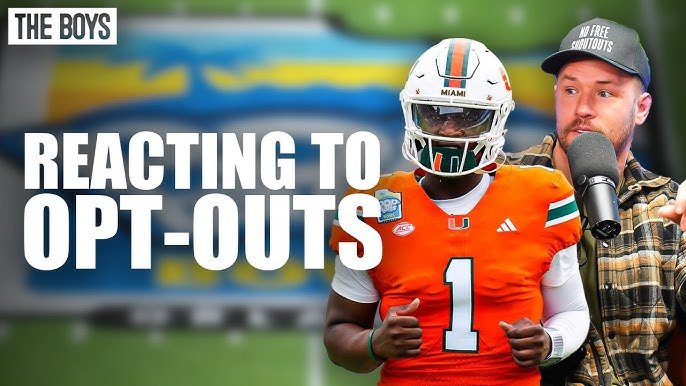
Players opt out of bowl games to protect their health and future draft prospects, prioritizing their professional careers over participation in non-playoff college games.
It’s become a common sight: star college athletes skipping their team’s bowl game. But why do college players opt out of bowl games? It’s a decision that often sparks debate among fans, yet the reasons behind it are usually very logical and centered around the player’s best interests.
These athletes frequently have NFL aspirations. They don’t want to risk injury that could jeopardize their draft stock. Missing out on a bowl game is a calculated move to ensure their professional future is not hampered.

Why Do College Players Opt Out of Bowl Games?
It’s bowl season, a time of excitement for college football fans. But lately, you might have noticed something: some star players are choosing not to play in their team’s bowl game. This can be confusing. Why would someone work so hard all season and then decide to sit out the final game? It turns out, there are several important reasons behind these decisions. Let’s dive into the main factors that lead college football players to opt out of bowl games.
Protecting Their Future: The NFL Draft and Injury Concerns
One of the biggest reasons players opt out is to safeguard their future in the NFL. For many college athletes, playing in the NFL is the ultimate dream. These bowl games, while exciting, do come with a risk.
The Fear of Injury
Imagine you’re a top prospect for the NFL draft. You’ve spent years honing your skills, and you’re just about to achieve your dream. Then, in a bowl game, you suffer a serious injury. This injury could drastically affect your draft stock, possibly costing you millions of dollars and jeopardizing your entire NFL career. It’s a big gamble for a game that doesn’t impact their draft potential significantly. The risk simply outweighs the reward for some players.
Here is an example for clear understanding:
- Before injury: A player is projected to be drafted in the first round, and gets a contract with a value of $20 million.
- After injury: The same player’s draft status is lowered to the third round, and his contract may only be worth $4 million.
This possible dramatic change makes the decision to skip the bowl game much more straightforward for those looking towards their professional career.
NFL Preparation
The period between the end of the regular season and the NFL draft is crucial. It’s a time for players to train, prepare, and attend pre-draft evaluations such as the NFL Scouting Combine. Playing in a bowl game, which often occurs right around that time, can cut into this crucial preparation time. Players often decide to use that time to focus on getting stronger, faster, and ready for the next level. It allows them to refine their skills and improve their performance for the NFL scouts.
Focusing on Draft Evaluations
The NFL draft process involves much more than just playing games. It’s about showing scouts what you’ve got in drills, interviews, and testing. By opting out, players can focus entirely on performing well at the NFL combine and private workouts. They can work on their 40-yard dash time, agility drills, and other tests to showcase their physical capabilities. They can also work on their interviews and present themselves to the teams. It is very important to make positive impression on the scouts, as it directly affects their selection in the NFL draft.
The Rise of the Transfer Portal
Another factor that has significantly changed the landscape of college football is the transfer portal. This system allows players to transfer to another school more easily than ever before. The portal’s existence adds another dimension to the bowl game opt-out decisions.
New Opportunities
If a player is looking to switch schools, the bowl game might be their last game with their current team. They might feel they’ve moved on mentally, and the bowl game is no longer their focus. They may feel that their time is better spent getting settled at their new school and working with their new teammates.
Avoiding Injury Before a Transfer
Similar to the NFL draft scenario, players who plan to transfer also face an injury risk. A serious injury in a bowl game could threaten their ability to play well at their new school, decreasing their scholarship opportunities and their chances of getting significant playing time with their new team. A potential injury could impact their market value if their transfer plan is jeopardized.
The Changing Landscape of College Football
College football has undergone many changes recently, and these changes have affected the bowl game situation. The players are more aware of their options and their value than they were in the past. Bowl games were once the highlight of the football season, but now they have to compete with other things, like early entry into the draft.
The Emphasis on Player Empowerment
Today’s college athletes have a more powerful voice. They understand their worth, and they want to make choices that are best for themselves and their futures. They no longer feel obligated to play in every game if it doesn’t fit their best interests. Players now feel empowered to do what’s right for themselves, and opting out of a bowl game is one of the ways they exercise this control. This is very different than how things were in the past, when players were expected to play every game if healthy.
The Limited Importance of Bowl Games
Some might argue that the significance of some bowl games has diminished over time. Except for the College Football Playoff games, many bowls do not heavily influence a team’s final ranking or championship hopes. This reduced importance makes it easier for players to skip these games without feeling like they are letting their team down, and especially if the bowl game is not considered a high-profile one.
NIL Deals and Financial Considerations
The rise of Name, Image, and Likeness (NIL) deals has also impacted player decisions. Some players, who have secured significant NIL deals, might prioritize these opportunities over playing in a bowl game. They may have sponsors or endorsements that require their time and focus. While playing in a bowl game may be important for their team, they may have obligations to their endorsements and sponsors, leading them to decide to opt out of games.
Mental and Physical Fatigue
A grueling college football season takes a toll on players’ minds and bodies. The physical demands of practice and games, along with the mental pressure to perform well, can lead to burnout. After a long season, some players simply need time to recover and recharge.
The Long Season
The college football season is a very long commitment of hard work and training. It begins in summer with training camp and continues through the fall, and often includes games throughout the week and weekends. This creates significant fatigue for the players. Some players choose to skip the bowl game because they are tired and want to get time off to refresh their minds and bodies before training for the next level.
Emotional Strain
Playing at a high level for an entire season, especially when dealing with wins and losses, creates stress. The mental part of football is just as tiring as the physical, and the emotional toll of competing each week can leave a player drained. Stepping away after a long season can be vital for their overall well-being and prevent physical and mental burnout.
Different Player Circumstances
Each player has their own situation and reasoning for their decision. It’s not as easy as just saying that every player who opts out is doing it for one reason, it’s often a mix of various factors. Players in certain situations may be more likely to opt-out.
Players with NFL Draft Stock
Players who are projected as high-round draft picks are more likely to opt out, due to the higher risk involved with playing in bowl game as compared to the low chances of gaining the draft stock. The potential financial reward and professional career opportunities are significant, making the decision much easier.
Players with Minor Injuries
Sometimes a player may have been playing through a minor injury during the season. They may not be fully healthy by the time the bowl game comes around. Rather than risking further injury and hampering their future, these players often choose to sit out, so that they can heal fully.
Players with Other Priorities
Some players might have specific personal circumstances that lead them to opt out, such as family obligations or academic needs that require their attention. College athletes have a lot on their plates, and sometimes things outside of football become their top priority.
In conclusion, the reasons why college players opt out of bowl games are complicated and multi-faceted. These decisions aren’t taken lightly. They usually involve weighing their long-term goals against the immediate desire to compete. As college football continues to change, we’ll likely see this trend continue as players prioritize their futures.
Coach Holtz On Players Opting Out Of Bowl Games
Final Thoughts
College players often skip bowl games to protect their NFL draft stock. Injury risk is a major concern during these non-championship games. They also might prepare for professional training.
Many athletes prioritize their financial futures over a single college bowl game. Some may simply feel ready to move on. So, ‘why do college players opt out of bowl games’, primarily it comes down to career and financial considerations.

