
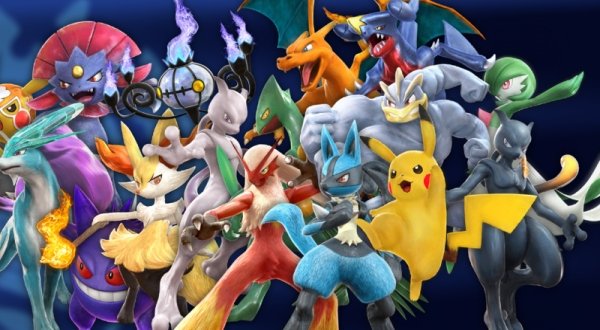
Pokemon do not say their names in the games to maintain a sense of realism and to emphasize their animalistic nature, relying on cries rather than human language.
Ever wondered why, despite their iconic status, Pokemon don’t audibly utter their names within the games? It’s a question that has intrigued many players for years: why don’t Pokemon say their names in the games? The unique cries they make are central to their identity but do not provide a straightforward label like their name.
These cries, while not words, effectively communicate emotions and actions. This design choice immerses players, making the world feel more like a vibrant ecosystem than a scripted drama. The limited verbal communication from pokemon enhances the game’s natural and adventurous feel.

Why Don’t Pokemon Say Their Names in the Games?
Ever played a Pokémon game and wondered why Pikachu doesn’t shout “Pikachu!” like he does in the anime? It’s a common question, and the answer isn’t as straightforward as you might think. It involves a mix of game design, technical limitations, and a bit of good old-fashioned creative choice. Let’s dive into the world of Pokémon sounds and explore why these creatures use unique cries instead of their names.
The World of Pokémon Cries
Instead of saying their names, Pokémon use unique sounds, often called “cries,” “barks,” or “calls.” These cries are a fundamental part of their identity in the games. They’re how you recognize a wild Pokémon in the tall grass, and they’re how you know when your team member is ready to battle. Think about the high-pitched “Pika-pika!” of Pikachu or the deep roar of Charizard. These sounds are iconic, and they play a huge role in the game’s overall feel. Let’s look at the different layers of why these cries exist instead of names:
Maintaining a Unique Identity
Each Pokémon is designed to be special, and their cries contribute to this uniqueness. Imagine if every Pokémon just said its name; it would feel very repetitive very quickly. The cries help to give each Pokémon a distinct personality and help to build a connection between players and the monsters. They also provide a hint to the Pokémon’s type or character: a gentle “chirp” might indicate a Normal or Flying type, whereas a deep growl might signal a Dragon or Dark type. The cries are a form of “sound branding” for each Pokémon.
Gameplay and Recognition
The cries are not just for show; they’re important for gameplay mechanics. Players use the sounds to quickly recognize different Pokémon in the wild, especially when moving through an area with different species. The specific sound is often the first cue when a wild encounter occurs, allowing a player to prepare. It’s quicker to recognize the unique sound of, let’s say, an Eevee, than it is to try and read text or analyze a pixelated sprite. The cries give a more immediate and intuitive feedback loop.
- Quick Identification: Identify a Pokémon instantly by its sound.
- Battle Cues: Recognize which Pokémon is entering or leaving the battle.
- Environmental Awareness: Hear Pokémon cries in the world, providing a sense of immersion.
Technical and Design Choices
While creative reasons are important, technical and design choices also play a part in the decision not to have Pokémon speak their names.
Memory Limitations
Older games, especially the ones on Game Boy and Game Boy Advance, had limited memory. Storing multiple recordings of each Pokémon saying its name would have used a significant amount of memory. These resources were better used on creating other game elements such as sprites, battle systems and items. For many Pokémon, there are also different versions of their name in different languages, so this would have further complicated things. Simple cries that used synthesized sounds were easier to manage within the technological limits.
Voice Acting Complexities
Imagine the sheer number of voice actors needed to voice almost a thousand different Pokémon. Each would require recording and processing, which would be a huge undertaking. This effort would be further multiplied by the need to handle multiple languages. Furthermore, each Pokémon’s voice would need to fit its personality. It might also affect the consistency of their character across different games and media. The decision to use stylized cries was a practical way to avoid a potential nightmare of scheduling voice actors, recording time, and budgeting.
Not only would the actual recording of these voices take time, consider the data storage for all these. Older games were limited in storage capacity, so adding high quality voice samples for every Pokémon would be impossible. Even today, voice acting can be complex for large games with huge rosters, so this would have been a huge undertaking. Instead of the complexity of voice acting, the developers opted for the simplicity of uniquely synthesized sounds.
Maintaining a Sense of Mystery
Let’s consider this: if Pokémon spoke their names, would it actually add to the experience? Perhaps not! There’s a certain charm in the fact that you need to learn each Pokémon’s distinct cry. It’s almost like learning a new language – a unique form of Pokémon communication. The cries, in their own way, make the Pokémon feel more like wild creatures and less like cartoon characters. It maintains that mystique around the creatures and makes learning them part of the fun and process of becoming a trainer.
This element of mystery enhances the role-playing aspects of the game. As players, we don’t fully understand the Pokémon world. The fact they don’t speak our language, but instead have their own way of communicating through cries makes their world feel more magical and less like our own. This creates a greater sense of wonder and exploration.
The Anime Exception: Why Pokémon Talk in the Show
If you’ve watched the Pokémon anime, you know that many Pokémon do say their names. So why the difference between the games and the show? The anime is created for a different purpose and uses different methods.
Storytelling Needs
In the anime, Pokémon often say their names for clarity and to make the characters and plot more accessible to a younger audience. This helps viewers connect with the Pokémon characters. It also helps in understanding the different interactions between characters. If a Charmander says “Charmander,” it makes it instantly clear to a younger audience which character is being shown.
Simplified Communication
While the games rely on visual cues and unique cries, the anime needs to provide a more direct and simple way for Pokémon to communicate with each other and with their human partners. When Pikachu says “Pika Pika,” we can interpret it as any number of things, but it is easier to use their name to give it greater clarity. This means that they can portray more complex emotions and motivations using their names and other vocal sounds, rather than relying on non-vocal expressions. This makes it easier for the viewers to follow the narrative.
Emphasis on Character
The anime is more character-driven than the games. Having Pokémon say their names helps build that connection to the characters. It allows the audience to identify their favorite characters quickly and develop feelings towards each Pokémon. In a visual medium like TV, it helps the writers build stories that focus on the relationships and personalities of the main Pokémon cast.
Evolution of Pokémon Sounds
Over the years, the sounds of Pokémon have evolved. Older games use more synthesized, 8-bit style cries. More recent games use sounds that are higher quality and more detailed. However, the general concept of Pokémon using cries instead of names has remained consistent, and it looks like this won’t change anytime soon.
From 8-Bit Sounds to Complex Cries
The early Pokémon games featured very basic sound effects, often consisting of simple tones and blips. As the technology has improved, the cries have become more varied and detailed. They use a wider range of frequencies and effects to capture the essence of each Pokémon. With each new console generation, the quality and complexity of cries has improved, giving an updated feel to each generation.
Consistency and Recognizability
Despite improvements in sound quality, game developers have focused on maintaining the essence of the original cries. The sounds still have to be immediately recognizable, even as the quality is greatly improved. When the cries are adjusted for modern tech, the developers have to be careful not to change the cry too much. This is important for the fans, as it maintains a sense of nostalgia and familiarity. It also helps new players immediately understand the identity of older Pokémon.
The Charm of Pokémon Cries
Ultimately, the choice to have Pokémon use cries instead of names in the games is a mix of creative and technical considerations. The cries are a vital part of the Pokémon experience, and they help to add to the unique charm of the game world. They give the world an amazing feel and allow for a very memorable and fun experience. They have become iconic in their own right, and help fans to identify their favourite Pokémon. Even though some may wonder why, they wouldn’t want it to change.
Why Do Pokémon Only Say Their Names?
Final Thoughts
Pokemon games feature cries, not names. This design choice creates a more immersive experience. Imagine every battle with every pokemon constantly shouting its name; it would quickly become repetitive and grating.
The absence of spoken names helps maintain a degree of mystery. Therefore, the core reason why dont pokemon say their names in the games lies in maintaining game play enjoyment and a unique feel.

