
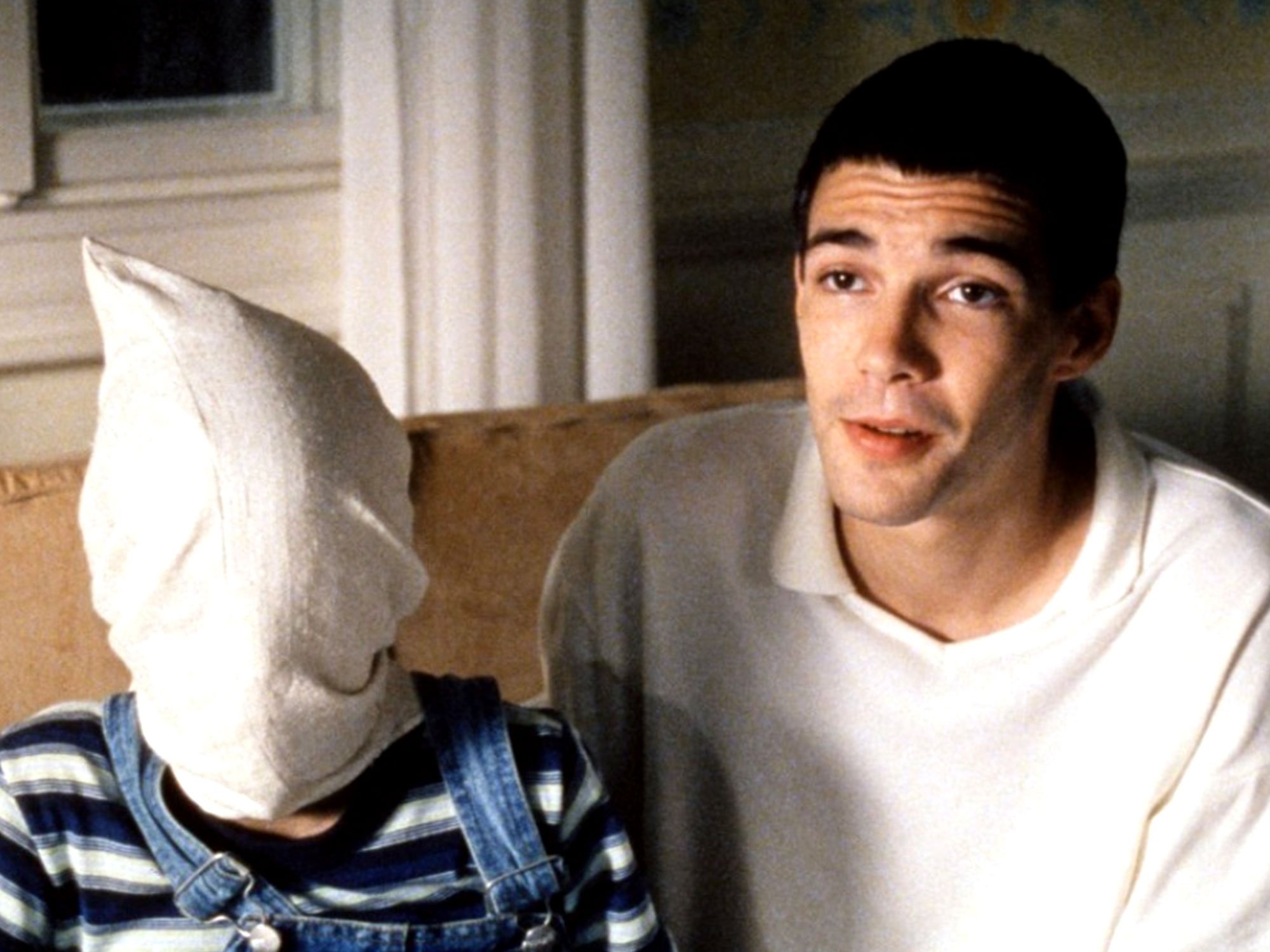
The calculated, brutal violence and the characters’ direct address to the audience, blurring the lines between fiction and reality, makes Funny Games disturbing.
Have you ever felt truly unsettled by a film? Funny Games does this for many, and it isn’t just because of the violence. The film’s disturbing nature comes from how it implicates the viewer. It forces us to confront our own voyeurism.
The way the perpetrators break the fourth wall adds to the discomfort. They acknowledge that we are watching, making the violence feel much more personal and real. This pushes the boundaries of what we expect from a thriller. People often wonder why Funny Games is disturbing, and these elements provide a significant part of the answer.

Why is Funny Games Disturbing?
Okay, let’s talk about a movie that makes a lot of people feel really uneasy: Funny Games. It’s not scary in the way a monster movie is, with jump scares and loud noises. Instead, it’s disturbing – deeply, uncomfortably so. But why? What makes this movie so different and why does it get under our skin so much? We’ll explore the reasons why Funny Games has earned its reputation for being unsettling and thought-provoking, looking closely at its methods, its message, and the effect it has on its audience.
Breaking the Fourth Wall: A Direct Confrontation
One of the first things that makes Funny Games different is how it treats the audience. Usually, when we watch a movie, we’re just observing a story. We’re safe on the other side of the screen. Funny Games breaks this rule. The characters, particularly Paul, one of the young men tormenting the family, often looks directly at the camera and talks to us. He smirks, he winks, he even asks us what we think will happen next. This isn’t just a cool trick; it completely changes how we experience the movie. We are no longer passive viewers, but almost complicit in the violence.
The Power of Direct Address
This direct address forces us to confront our role as spectators of violence in media. It throws our comfortable distance into question. Paul’s gaze implicates us – are we secretly enjoying the suffering on screen? Are we part of the problem? This intentional act makes the experience incredibly uncomfortable and forces self-reflection on our viewing habits. It’s like the movie is saying, “You watch this stuff for entertainment, don’t you? Well, here it is, presented plainly and without any of the usual glamorization.”
The Violence is Not Glamorous
Speaking of glamorization, most movies that show violence make it look exciting or cool. There are often heroic figures who use violence to achieve a goal, or fight bad guys. They win the fight, save the day, and everything is okay. Funny Games shows something very different. The violence is brutal, messy, and completely pointless. There is no noble purpose, no heroic arc. The characters who inflict the suffering are just bored, callous, and they don’t have any grand plan beyond causing pain.
The Unsettling Realism
One of the main reasons the violence in Funny Games feels so disturbing is because it feels real. There are no fancy action scenes. The movie doesn’t shy away from showing the horrible impact of physical harm on the body and mind. This realistic approach avoids the usual safety net of fantasy or action movie tropes, and makes the suffering on screen much more difficult to watch. It’s not a cartoon; it’s an approximation of what real violence looks like. The film’s direction and editing choice also play a large role here. The director doesn’t use quick cuts or intense music, instead lingering on the uncomfortable details of the situation. This creates a slow, grinding sense of dread that is hard to shake.
The Randomness of the Violence
Another aspect that makes Funny Games so disturbing is its complete randomness. In most movies, there’s a reason why something bad happens. Often, the bad guys have a clear motive. But in Funny Games, there’s no real reason why the family is targeted. They did not do anything wrong. They just happened to be in the wrong place at the wrong time. The perpetrators just seem to choose them simply out of their own cruel whim. This lack of motivation makes the violence even more unsettling, because it reminds us that bad things can happen to good people for no reason.
A Violation of Our Expectations
This lack of motive really messes with our heads because it violates what we expect from a movie. We expect that there will be an explanation for why events unfold as they do, that there will be some sense to the madness. Funny Games denies us this satisfaction, making the violence seem even more senseless. This randomness creates a feeling of helplessness, which adds to the overall sense of unease. The film makes us feel as vulnerable as the characters in the film.
The Unwavering Cruelty
The actions of the young men in Funny Games aren’t just violent; they are deliberately cruel and taunting. They play “games” with their victims, manipulating and torturing them psychologically and physically. They don’t just want to inflict harm, they want to see them break down and suffer. They constantly humiliate the family, making them beg for mercy and then mocking them when they do. This calculated cruelty is much more disturbing than simple violence, because it reveals the deeply disturbing psychological mindset of the attackers.
Psychological Torture
The film really focuses on the psychological aspect of the violence. The characters aren’t just suffering physically, they are also enduring intense emotional distress. The young men twist the knife further, making their victims question their own values, morals and sanity. This aspect of the film makes it far more disturbing than a simple “slash-em up” horror movie, where there is often a clear and final physical resolution. In Funny Games, it’s not just about what’s happening on the screen, but also the lingering emotional impact that stays with you long after the movie is over.
The Absence of Redemption or Catharsis
One of the things that makes most movies enjoyable, even scary ones, is that they provide a sense of catharsis. We watch a scary situation, the heroes fight back, and things resolve. There is a sense of satisfaction and release. Funny Games offers no such relief. There’s no triumphant moment for the victims, no heroic figure that saves the day. The movie ends on a chilling and unresolved note, leaving us feeling defeated and deeply troubled. There is no victory, no good lesson learned.
Leaving the Audience Uneasy
This lack of resolution is deliberate and is a big reason why the movie is so unsettling. By denying us the usual comforting endings, the film forces us to confront the reality of violence without any of the usual movie-magic solutions. This creates a feeling of frustration and hopelessness, and forces us to contemplate the fact that, in real life, there aren’t always happy endings. It leaves a lingering sense of unease that few movies can achieve. It also raises important questions about the nature of cinema itself.
The Movie’s Intentional Discomfort
Funny Games doesn’t want you to enjoy it. It’s intentionally designed to make you uncomfortable and question what you are watching. The movie uses every trick in its book to unsettle you and make you think. Its disturbing nature is not a failure on the part of the filmmakers, but their goal. The director, Michael Haneke, specifically made this movie to challenge the way audiences view violence in movies. He wants us to think about our relationship with entertainment and whether we are just passive consumers of violence, without thinking about its real-world impact.
Challenging the Audience
Ultimately, Funny Games isn’t just a movie you watch for entertainment. It’s more of a social commentary. It’s a film that wants to start a conversation. It asks us to confront the darkness within ourselves and the society around us. By making us so deeply uncomfortable, the movie forces us to be active viewers, instead of passive ones. It makes us ask questions that we might otherwise ignore. It does not offer easy answers, but challenges the audience to seek out these solutions themselves. It stays with you for long after the final credits have rolled.
The Performances
While the direction, screenplay and editing all add to the discomfort of the movie, it’s also important to mention the performances of the actors involved. The actors, both playing the perpetrators and the victims, do a fantastic job of creating a palpable sense of fear and dread. Their ability to convey such deep psychological distress and their realistic reactions make the experience much more believable and much more disturbing. Each actor does a superb job of getting under our skin and creating a real sense of danger.
Realistic and Disturbing
The young men aren’t portrayed as cartoonish villains. They seem like regular people, and this makes them much more frightening. Their casual cruelty is disturbing, and this realism enhances the movie’s overall message. In this way, the film is more effective, because you could realistically see this sort of event happening in real life.
The Lingering Impact
Unlike many movies where the feelings fade as soon as the credits roll, Funny Games has a tendency to linger. You might find yourself thinking about the film days, or even weeks, later. The questions it poses and the unease it creates stick with you. This is not a movie you’ll easily forget, and this is the intention behind it. It’s a film that wants to stay with you, to make you think, and to challenge you.
More than Just Entertainment
In the end, Funny Games is disturbing because it’s not just entertainment. It is a deliberately provocative and thought-provoking film that goes against the norms of traditional cinema. It makes us question our own role as viewers, it refuses to glorify violence, and it provides no easy answers, no catharsis. It pushes us outside of our comfort zone and forces us to engage with difficult and unsettling ideas. This is why, despite the negative reactions from some viewers, it has become an important film that challenges the accepted rules of genre and storytelling. It remains a disturbing and powerful experience, one that sticks with you for a long, long time. It’s a movie that is hard to watch, but one that may be even harder to ignore.
Funny Games is disturbing because it challenges us, confronts us, and refuses to let us be passive viewers. It’s not a movie you will soon forget. It forces us to think about the nature of violence in the world, our role in consuming it, and the responsibility of media. It’s a harsh, uncomfortable, and deliberately unsettling film. This unique and challenging approach is precisely why it continues to provoke such strong reactions to this day.
The Brutality Of FUNNY GAMES
Final Thoughts
Funny Games disturbs because it breaks the fourth wall. It directly implicates the viewer in the violence. The film’s calculated cruelty lacks any redemptive arc, and that’s why is funny games disturbing.
The characters’ casual sadism and the prolonged suffering shown make for a truly uncomfortable viewing experience. We must confront our own complicity in watching their horrifying actions.

