
Yes, the Dark Souls games are connected through shared lore, characters, and locations, although their connections are often subtle and open to interpretation.
The twisting, gothic worlds of Dark Souls beckon us with their challenging gameplay and intricate storytelling. Many players find themselves pondering the relationships between each game. Are all the Dark Souls games connected, or do they stand alone as separate stories? The answer is more nuanced than a simple yes or no.
While each title presents a seemingly unique narrative, threads of shared history weave through the series. Familiar characters, items, and locations surface in different titles. These elements invite speculation and deeper exploration of the lore. They encourage players to piece together the bigger picture.

Are All the Dark Souls Games Connected?
The world of Dark Souls is famous for its challenging gameplay, but also for its deep and mysterious story. Many players wonder if all the Dark Souls games are connected, forming one big epic tale. The answer, like much in Dark Souls, is not straightforward. It’s a mix of direct connections, subtle hints, and shared themes that create a rich tapestry. Let’s dig into how these games relate to each other.
The Core Connection: The Cycle of Fire
At the heart of the Dark Souls universe lies the concept of the First Flame. This flame is the source of life and power. In each game, we see the world fading as the First Flame weakens. The undead curse, the hollowing of souls, and the rise of powerful beings are all connected to this dwindling flame. This cycle is a crucial link between all the games. The main characters, the player-controlled protagonists, are always involved in the choice of rekindling the flame or letting it fade completely, which starts the dark age. This concept is the common thread weaving through each adventure.
The Role of the First Flame
The First Flame is like a magical campfire keeping the world going. When it starts to die down, things get weird. The undead, like you, come into being, and the world begins to fall apart. Each Dark Souls game shows us different points in this cycle. For instance, we start in a world where the First Flame is already quite weak in the first Dark Souls. In Dark Souls 3, we are in a world where the flame has been linked many times and is almost at its end.
Understanding the Undead Curse
The undead curse ties into the First Flame too. When the flame weakens, people start becoming undead. They rise after death and start losing their minds. This is why most of the people we meet in the Dark Souls games are quite strange or are going mad. The fear of hollowing drives many of their actions. The undead curse is directly linked to the First Flame and a major connecting factor between all the games. Characters across different games can be undead or are trying to cure the curse.
Direct Story Connections
While the cycle of the flame is the big connection, there are also direct story links. This means we see characters or locations that appear in more than one game.
Recurring Characters
Some characters show up in different games, although sometimes in different forms or situations. Here are a few examples:
- Patches: This tricky character is a recurring nuisance. He appears in different forms, like as Patches the Hyena or Unbreakable Patches, but he always causes trouble for players. He tricks players and pushes them off cliffs in all the games he features in, almost like a running joke within the series.
- Gwyndolin: The hidden leader of Anor Londo appears in Dark Souls 1. While not directly present physically in Dark Souls 3, his presence and his legacy are still felt through other characters such as Aldrich, Devourer of Gods. This indirect connection helps solidify the idea of a shared history.
- The Emerald Herald: Appearing in Dark Souls 2, her purpose and story are tied to the overall narrative of the cycle. While she doesn’t directly appear in other games, her role in the story suggests how this cycle and different world are connected.
These returning faces tell us that these are not separate stories, but parts of one big world with shared history and lore.
Returning Locations
Some locations also show up across different Dark Souls games. While they may look different due to the passage of time, their appearance helps to connect the different worlds.
- Anor Londo: This once-grand city, a major location in Dark Souls 1, appears as a ruin in Dark Souls 3. While heavily decayed, the recognizable architecture and design make the link undeniable.
- Firelink Shrine: This place serves as a hub in most Dark Souls games, though it appears slightly differently each time. In each game it plays an important role as a central location and a place of refuge for the player.
- Areas influenced by previous games: While not exact location repetitions, some areas draw inspiration from previous settings. For example, some areas in Dark Souls 3 resemble locations from Dark Souls 1, showcasing how the passage of time affects these locations.
These familiar locations help us picture the history of this world and how it has changed.
Indirect Connections: Themes and Lore
Beyond direct links, there are themes and lore that connect all the Dark Souls games. These are more like puzzle pieces that help us understand the bigger picture.
The Gods and Their Influence
The gods, like Gwyn, Lord of Cinder, play an important role in the overall story. While they may not appear directly in each game, their impact is felt in the world. The gods and their actions shaped the history and the events of the world, making their influence a common connection between games. Their deeds cause some of the problems the player encounters.
The Search for Meaning and Purpose
A big theme in Dark Souls is the search for meaning. Players are often thrown into the world without much explanation. Each game challenges players to find their own purpose in a world that seems to be falling apart. This quest for purpose ties each experience together, regardless of specific story details. Even if each game has a different story, the theme of players finding their own way makes them feel similar.
The Nature of Souls
Souls are the core currency and source of power in the Dark Souls world. They play a vital role in character progression and are intimately tied to the lore of the games. The very nature of souls, their use and their effect on the world, is consistent across all titles, creating a fundamental link through gameplay mechanics and story implications.
The concept of souls in the Dark Souls universe also adds to the overarching theme of the cycle and its effects on the world. They are a representation of life force and are directly involved with the nature of life and the undead curse. This concept further shows how all of the games are intricately intertwined with each other.
Do all the Dark Souls games share the same timeline?
This is a complex question, and the answer isn’t straightforward. The games don’t follow a strict linear timeline as we might see in other series. It’s more of a cyclical timeline where events repeat in different ways. Each game seems to take place at a different point in the cycle of the First Flame. This doesn’t mean they happen after each other, but rather, they exist within this repeating cycle. Some believe there is a timeline, with Dark Souls 1 followed by 2 and then 3. But with time moving differently and the cycle itself, it is hard to find a specific place for each game in a specific timeline.
The connections between the games create a rich and deep narrative. Whether through direct links with characters or locations, or shared themes and lore, they all contribute to the overall Dark Souls experience. The true beauty of this connection is in the player’s ability to piece it together.
Dark Souls 2: A Branching Narrative
Dark Souls 2 often stands out as slightly different compared to the first and third games. This difference, however, is part of the point. It explores the cycle from a different angle and has its own unique story. Even though it feels slightly separate, it is still linked to the wider universe through the shared themes, mechanics, and lore, especially with its exploration of the undead curse and the nature of the cycle.
It introduces new characters, locations, and narrative elements, while still focusing on the overall themes of the fading flame and the undead. Even though it can feel like a detour in the overall storyline, its connection is important to the wider Dark Souls world.
Why the Connections Matter
The connections are important for a few reasons. They provide layers of meaning to the story. They give the world a deep sense of history. They make it feel like a real place where past events impact the present. The connections also provide fans with a reason to speculate, theorize, and discuss these connections, making the community stronger and more engaged with the overall lore.
The Dark Souls games are not just separate stories, but a collection of interconnected experiences. The direct connections, shared lore, and overall cycle are what makes the games so special. As players continue to replay the games and dive deep into the lore, they see new connections and appreciate the depth that the series brings.
The Dark Souls series does an amazing job of weaving its world in such a way that each experience is simultaneously unique and part of a grand, larger whole. It’s a testament to the series’ storytelling that so many discussions are still being had on the connections and meaning behind these worlds and the cycle that connects it all. These connections matter because they turn a series of challenging games into an epic story with history, depth, and mystery.
In the end, the Dark Souls series’ interconnectivity allows players to explore the world and make their own understanding of the connections through their experiences in each game, making the world richer and more impactful. Each game is part of a bigger picture, waiting for players to piece it together.
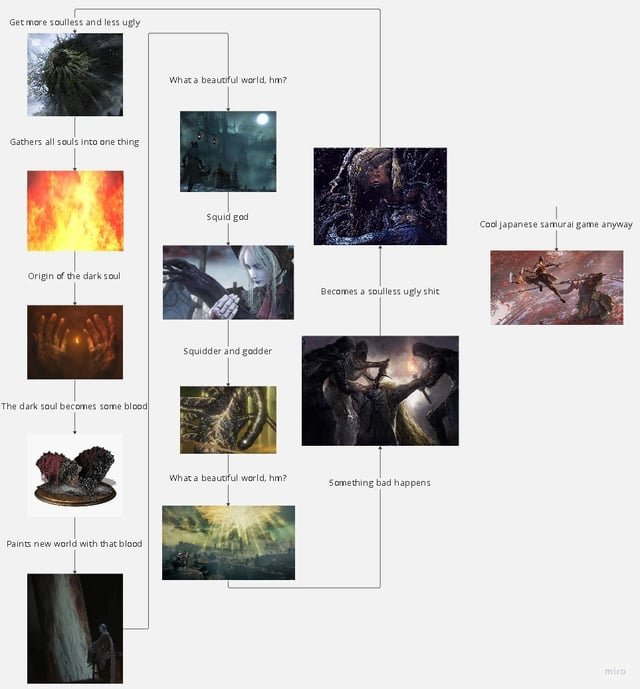
Could All of FromSoftware's Games Be Connected!? INSANE Theory! ( Elden Ring, Dark Souls & More )
Final Thoughts
While each Dark Souls game features its own distinct narrative, the recurring themes, characters, and items strongly suggest a shared universe. Subtle connections and cyclical lore point to a much larger picture than the individual stories portray.
The games are linked thematically and through gameplay, however, explicit continuity is light. Are all the dark souls games connected? The answer is yes and no; it is a complex network of echoes and repetitions, not a direct timeline.

