
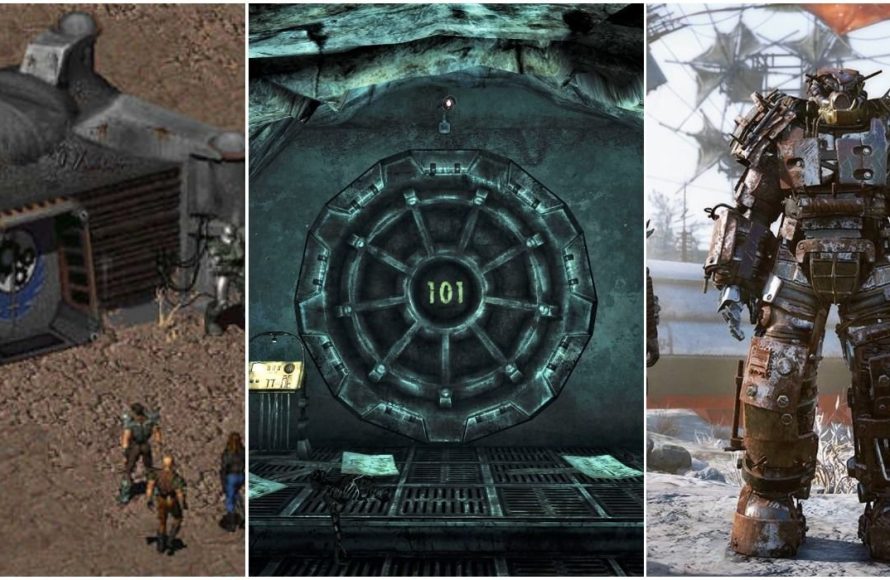
Yes, all Fallout games are connected through a shared timeline, world, and lore, though some connections are stronger than others.
The sprawling wastelands, the retro-futuristic aesthetic, the vault dwellers emerging into a post-apocalyptic world. These are all hallmarks of the Fallout series. But with so many titles, it’s natural to wonder, are all the Fallout games connected? The answer is complex, not just a simple yes or no answer.
While each game presents unique stories and characters, they exist within a single timeline. This means that events in one game can have ramifications or be referenced in another. Some connections will be more direct than others. It is worth delving into it further if this has captured your interest.

Are All the Fallout Games Connected?
The world of Fallout is big and sprawling, filled with strange creatures, interesting people, and lots of post-apocalyptic adventure. But with so many different games in the series, it’s easy to wonder: are they all connected? The short answer is, yes, they are! While each game tells its own unique story, they all take place within the same overall timeline and share many connections, making them part of a larger, fascinating universe.
The Shared Universe: A Foundation of Connection
At the heart of it all, the Fallout games share a common setting: a post-nuclear America. The Great War, a devastating nuclear exchange that occurred in 2077, is the event that throws the world into chaos. This event is the crucial moment that sets the stage for all the Fallout games, and that is a major key for these games to connect each other. Every game explores different regions and factions that emerged after the war. This common backdrop is the most important link between the games. Even though characters might not interact directly, they’re living in the same shattered world, dealing with the consequences of the same global tragedy.
Key Elements that Tie the Games Together
Several common elements weave the different Fallout games into a single tapestry. These are some of the key aspects:
- Vaults: The pre-war shelters designed to protect people from nuclear fallout are present in every game. These vaults, each with its own unique social experiment, often become key locations or plot points.
- Factions: Groups like the Brotherhood of Steel, the Enclave, and the various raider gangs make appearances throughout the series. These factions, sometimes with changing goals and leadership, provide a continuous narrative thread.
- Technology: Advanced technologies like power armor, robots, and energy weapons are consistently present throughout the Fallout games. These technologies are always there, reminding us that the Fallout world has a distinct and cohesive aesthetic.
- Pip-Boys: The iconic wrist-mounted computer, the Pip-Boy, is another consistent feature. It’s a tool that ties all the games together, and many gamers use this tool regularly.
- The Post-Apocalyptic Style: The retro-futuristic aesthetic, with its 1950s-inspired designs clashing with high-tech weaponry, is a defining visual element present in each game.
Chronological Order: How the Games Fit in Time
Understanding the timeline is essential for seeing how the games connect. While you don’t need to play them in order to enjoy them, they have a chronological order:
- Fallout 76 (2102): Set the earliest in the timeline, Fallout 76 depicts the events immediately following the Great War in Appalachia. You take on the role of one of the first vault dwellers to venture out and start rebuilding.
- Fallout (2161): The game that started it all, Fallout introduces the player to the post-apocalyptic wasteland in California. The player character, a Vault Dweller, needs to find a water chip for their vault.
- Fallout 2 (2241): Taking place 80 years after the first game, Fallout 2 follows the Chosen One, a descendant of the original Vault Dweller, as they search for the Garden of Eden Creation Kit (G.E.C.K.) to save their village.
- Fallout 3 (2277): Set on the East Coast, Fallout 3 follows the Lone Wanderer who leaves Vault 101 in search of their father. The game focuses on the rebuilding of the Capital Wasteland, and it focuses on the Project Purity, for the safe drinking water for everyone.
- Fallout: New Vegas (2281): This game takes place in the Mojave Wasteland. The story is about a Courier who was shot and left for dead, and then gets entangled in the struggle for control of New Vegas.
- Fallout 4 (2287): Set in Boston, Fallout 4 follows the Sole Survivor, a pre-war individual who awakens in Vault 111 after being cryogenically frozen. The game explores themes of artificial intelligence, settlement building, and what constitutes humanity.
This timeline shows that the games are not just random stories but are part of a larger history, with each game adding to the lore of the Fallout world.
Geographic Connections: Where the Games Are Set
The Fallout games are set in different regions of the former United States, and those regions play a big part in the story and atmosphere of each game. Each location gives us a unique look at how different areas handled the post-apocalyptic world.
The Different Locations in the Fallout Universe
- California (Fallout, Fallout 2): The original setting of the series, California is the home of Vault 13 and the Brotherhood of Steel and a lot of other factions. The first two games explore this region and how it recovered (or didn’t) from the war.
- Appalachia (Fallout 76): This region, based on West Virginia, focuses on the rebuilding process and the emergence of new factions soon after the war.
- The Capital Wasteland (Fallout 3): Covering the area around Washington D.C., this region is a destroyed urban environment, with many iconic landmarks.
- The Mojave Wasteland (Fallout: New Vegas): Located around the ruined city of Las Vegas, this area is a desert environment with a lot of political intrigue.
- The Commonwealth (Fallout 4): Centered around the city of Boston, the Commonwealth is a mix of urban ruins and rural landscapes. In this region, you can also find the Institute, a mysterious scientific organization.
While these regions are distant from one another, they share the same post-apocalyptic world and are influenced by the same historical events, and that’s what connects them all.
Factions: Shared Groups and Their Impact
Many factions are present in several games, and their activities and evolutions tie the different stories together. For instance, the Brotherhood of Steel is a major faction in many Fallout games. The Brotherhood has different chapters across the wasteland, but the core principles are the same: they collect and safeguard technology, especially in the post apocalyptic world.
Examples of Recurring Factions
- The Brotherhood of Steel: This tech-focused group believes in preserving pre-war technology. They are in many games and act as allies, enemies, or something in between.
- The Enclave: A group that claims to be the remnants of the pre-war US government, the Enclave is usually a major antagonist in the games.
- Raiders: Different raider groups are always a problem in the wastelands, and they show the darker side of the post-apocalyptic life.
- Super Mutants: These mutated humanoids are another common enemy that are created through different means.
The presence and evolution of these groups show that the fallout universe has continuity across different regions and different times.
Story Threads and Callbacks: Nods to Previous Games
The Fallout games are packed with subtle (and sometimes not-so-subtle) callbacks to previous entries. Characters, items, or places might be mentioned or even make a return. These callbacks are great for long-time fans and show that the developers made sure all games are interconnected. The games do not only share the factions but also share the same story in different ways.
Examples of Story Callbacks
- References to the Vault Dweller or Chosen One: Characters in later games sometimes talk about the actions of heroes from earlier games.
- Returning Characters: Occasionally, a character from a previous game will reappear, like Dr. Madison Li from Fallout 3, who returns in Fallout 4.
- Items and Locations: A specific weapon or location from a previous game can make a surprise appearance in another one.
These small details strengthen the feeling that you are exploring a single, shared world with its own history and lore.
Why the Connections Matter
The connections between the Fallout games make the experience better. It allows players to see the long-term effects of the Great War, understand the evolution of the different factions, and feel the weight of the history of the wasteland. These connections add depth to the stories, making them much more meaningful.
Benefits of a Connected Universe
- Deeper Lore: The interconnectedness gives the world of Fallout a history and depth that many other games do not have.
- Satisfying for Fans: Callbacks, returning characters, and continuity gives the fan base a satisfying and richer experience.
- Meaningful Choices: Knowing that the choices you make impact the world in the long-term makes the decisions more important.
- Creates a Cohesive Experience: The shared universe creates a unified experience that feels more alive and real.
Ultimately, these connections are not just Easter eggs or references; they’re part of what makes the Fallout series so special and engaging for players.
The Fallout games, while telling different stories in different locations, are bound together by a shared universe, a common history, recurring factions, and frequent references. All of these elements work together to create a cohesive and meaningful gaming experience. It’s this interconnectedness that makes the Fallout series so much more than just a collection of individual games; it’s one vast, post-apocalyptic saga where the actions in one game can ripple through the others, adding layers of depth and engagement for players.
The Complete FALLOUT Timeline Explained!
Final Thoughts
So, while each Fallout game presents its own narrative, they exist within a shared universe with common lore, factions, and locations. The timeline progresses through each title, but the individual stories are mostly independent. A strong sense of place and history links them.
Therefore, are all the fallout games connected? Yes, they are interconnected thematically and through world-building. Each game builds upon what came before, creating a cohesive if not always directly linked experience.

