
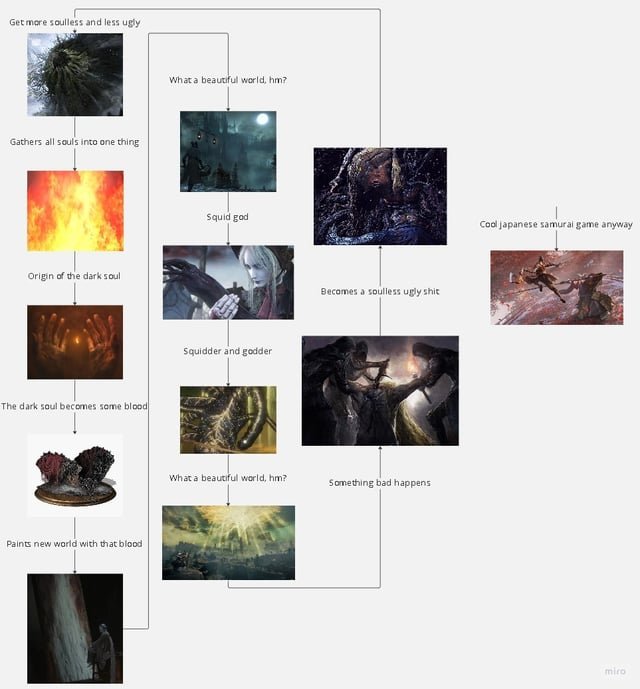
The Dark Souls games are connected through shared lore, recurring characters, and thematic elements, although the connections are often subtle and open to interpretation.
Do the worlds of Dark Souls intertwine, or are they disparate tales of misery? Many fans wonder if the games have a single, unified narrative. The question “are dark souls games connected?” surfaces regularly among dedicated players.
While each title presents a distinct setting, familiar faces and items reappear, suggesting a complex, interwoven tapestry. Lore hints suggest a cyclical nature between these worlds, adding further weight to this idea.

Are Dark Souls Games Connected? Unraveling the Lore
The world of Dark Souls is full of mystery. Giant knights, spooky monsters, and places that seem to twist and turn forever. But one question keeps popping up for many players: are these games actually connected? It’s not always obvious, and the stories are told in bits and pieces, making it even more confusing. Let’s explore the links between the Dark Souls games and see how they fit together (or don’t!). We will dig into the intricate lore, shared items, characters that appear more than once, and the repeating ideas that create a sense of a larger, interconnected universe. The storytelling in these games is more like putting a puzzle together than reading a book, and it’s part of what makes them so fun to play and talk about.
The Shared World: A Foundation of Similarities
While each Dark Souls game presents a distinct story, they share a common foundation—the world’s core principles. This foundation is built upon the idea of a cyclical nature, the repeating themes of fire and darkness, and the consequences of these forces colliding. These themes form a thread tying the games together. Let’s dive into some of these key elements:
The Cycle of Fire and Darkness
Central to every Dark Souls game is the concept of the First Flame. This powerful fire is the source of all life and light. As the flame fades, darkness begins to creep in, bringing with it stagnation and undeath. To prolong the age of fire, someone must link it, sacrificing themselves. This action restarts the cycle, pushing back the darkness, but only for a while. Each game explores different aspects of this cycle, showing different attempts to control or break from it. This repeating theme isn’t a simple repeat, though. Each game brings new ideas and variations to it.
The Undead Curse
The Undead Curse is a common thread throughout the series. The curse makes people come back to life after they die, over and over. But they lose a little bit of their sanity each time. The hollows, the most common enemies in the games, are those who have lost their minds because of the curse. In fact, the player character is also undead, searching for the meaning behind their curse and what they should do about the fate of the world. This idea of a person going through the cycle of life, death, and undeath is a constant element, reinforcing the interconnected nature of the stories.
Lord Souls
Lord Souls are fragments of powerful souls belonging to those who found the First Flame long ago. We see these souls or their echoes in every game. The remnants of these ancient beings become part of the story in each title, showing the continuing influence of the past. In Dark Souls, we go after the original Lord Souls. In Dark Souls II, we meet figures connected to those souls. And in Dark Souls III, we encounter their descendants, carrying the legacy forward. It is a consistent reminder of how connected time and space are in these games.
Direct Links: Characters, Items, and Locations
While the big ideas connect the games, there are more direct and obvious links too, like certain characters who appear in more than one game, items that seem to carry their history with them, and places that we get to see again, albeit in different conditions. These are like tiny pieces of the puzzle that help confirm the idea that the worlds are indeed connected.
Returning Characters
Several characters reappear throughout the Dark Souls saga. Although they may have different roles and locations, their presence creates a sense of continuity. Here are a few noteworthy examples:
- Patches: This sneaky character appears in some form in almost every game. He’s known for tricking and trapping players, proving he’s a constant presence in this cursed world.
- Andre the Blacksmith: This friendly blacksmith helps players make weapons and armor, and his expertise appears in multiple games, albeit at different times and places, and while he doesn’t explicitly discuss that, the continuity is there.
- Gough the Giant: While not in every game, Gough’s presence as an ancient archer is significant. He’s a remnant of an older age, showing that time stretches across the series, bringing familiar figures back in new ways
Shared Items and Equipment
The presence of shared items across games is a huge nod to their interconnectedness. Items like weapons, armors, and rings often reappear, with lore attached that further connects them. For example:
- Artorias’s Set: The armor and greatsword of Artorias the Abysswalker are highly sought-after items across several entries. These pieces have a known story from Dark Souls, and continue to appear in later games, serving as historical artifacts with a legendary status.
- The Dragonslayer Spear: This weapon, associated with Ornstein from Dark Souls, appears again with different origins, yet always carrying the legacy of its namesake. This reinforces how the echoes of past events persist in new contexts.
- Estus Flasks: The very method of healing via the Estus Flask is a common, repeating concept. The item and its usage is fundamental to all Dark Souls games, serving as a connection point on a mechanical and thematic level, emphasizing a shared world where the cycle of undeath and healing continues throughout.
Geographic Connections
While locations aren’t always directly the same, sometimes we find hints of where previous settings were, or where they might eventually be, after a long time. For example:
- Anor Londo/Irithyll of the Boreal Valley: Anor Londo from Dark Souls is iconic, and we see a very similar place called Irithyll in Dark Souls III. While it’s a new location, the architectural style and design elements tell us these places were or are connected in the timeline.
- The Kiln of the First Flame: This location is not directly repeated, but the idea of the Kiln is crucial. Each ending in Dark Souls shows its importance, and this is carried into Dark Souls III, where we revisit the idea of rekindling or ending the flame.
The Nature of Time and Space in Dark Souls
The passage of time and the way space is used are really important parts of the series. Time isn’t just a line in these games; it’s more like a big circle that sometimes bends back on itself. And places seem to twist and overlap in ways that don’t always make sense. This idea of a fractured time and space is the reason why different parts of the story can happen at the same time or seem to get mixed up.
Fractured Timelines
The Dark Souls games suggest a world where time is not linear. Events from the past, present, and potential futures can all intertwine. This idea allows for callbacks and connections that don’t always follow a simple order. One example of this is the fact that some characters and their stories may come before or after others. That means, some events happening before others in the game world can be shown later in the series. This adds another layer of complexity to the already intricate story.
Layered Worlds
The game world often shows this idea of places being on top of each other, or existing side-by-side in a way that we don’t expect. We often see locations that look very similar, but are in fact completely different, because time and space have changed them a lot. This helps create the feeling that everything is connected but also separate at the same time. This is also why we see characters that might have different forms. It’s all part of the idea that the world is both stable and constantly changing.
Is It a Direct Sequel? The Ambiguity of Connection
So, are the Dark Souls games direct sequels? The answer is tricky. While there’s clear connectivity, it’s not like a traditional game series. Dark Souls II especially gets called out for having more subtle connections to the other games in terms of lore. But the overall theme of the cycle and the influence of the past is always present. There are direct links, like the shared characters and locations. But there are also parts where the story seems to jump ahead or sideways. Instead of being a linear series, it’s more accurate to think of them as games in a shared universe, each showing different points in the timeline.
The Case of Dark Souls II
Dark Souls II often feels the most distant from the others. While it keeps the core themes, many of the locations, characters, and specific lore don’t seem to directly link to the first game or the third. Some players feel this disconnect, and it makes them wonder if Dark Souls II belongs to the same universe. But, it is essential to remember the theme of the cycle of fire and dark. Dark Souls II still deals with this concept, and the theme of cycles is still a part of the storyline, even if the characters and events are different, it can still be considered part of the Dark Souls universe.
The Intricacy of Lore Interpretation
Much of the story in the Dark Souls games comes from what is not said directly. The game doesn’t tell you everything at once. Instead, you have to figure things out by examining items, reading the details of the game environment, and thinking about what the characters and setting are telling you. It is this lack of clarity that opens up room for discussion and theory-building by players. The way each person interprets the lore can be different, and this is part of what makes it so fun to explore. The many theories and discussions among fans show the richness of the story-telling in Dark Souls.
Why the Connections Matter
The connections within the Dark Souls universe aren’t just for show; they enhance the experience in several ways. They provide depth, making players feel like they’re part of a larger story. When you see a familiar character or location in a new game, it feels like a link to the history, which creates a sense of wonder. And more importantly, it adds to the idea that the world has been affected by events in the past. These connections give the world that feeling that time continues to move. It is important to remember that every action by players has meaning within the bigger story. It is a world where the past, present, and future are all connected, and that makes the game world feel more real and substantial.
Enhancing Player Engagement
The lore connections in Dark Souls aren’t just for show. They give players something to look for and think about. The game encourages you to explore and discover all the parts of the story. This engagement with the hidden details makes the game more interesting, and more fun to play, as well as replay the game again and again. It motivates players to go past the simple gameplay and dig into the deeper meanings behind the game.
Creating a Sense of a Shared History
The connections between games provide a sense of shared history. When you find an old item from another game, it feels like you’re touching a piece of the past. This creates a deeper sense of meaning and makes the game world more than just a setting. It helps players understand the weight of their actions and how events have been affecting this world long before they started playing the game. This shared history makes the world of Dark Souls feel huge and complex, and it adds a layer of depth that makes it stand out from other games.
In conclusion, the Dark Souls games are indeed connected, but not in a typical way. It’s less like a straight line from one game to the next, and more like a web where everything is tied together. From the repeating ideas of fire and darkness to the characters and items that appear throughout the series, these elements create a sense of a shared universe and history. It’s a world where things repeat, change, and echo, and it is this idea that makes the story of Dark Souls so memorable and fun for fans. These games encourage thinking and exploration, creating a world that is not only challenging but also full of mystery and meaning. The connections aren’t always clear-cut, and this is part of what makes the world of Dark Souls so interesting. It lets players piece together the story on their own, which is why people keep talking about these games for years.
Elden Ring Is A Prequel to Dark Souls and Bloodborne #shorts
Final Thoughts
The interconnectedness of the Dark Souls games remains a topic of debate. While not direct sequels in the traditional sense, shared lore, characters, and item descriptions hint at a larger, shared universe. The cyclical nature of the world also suggests a connection across different eras.
Therefore, while not explicitly stated, the games share a lineage. Many players think are dark souls games connected, pointing to subtle thematic ties, and repeating world themes as clear connections. The series offers more a sense of a shared legacy, rather than a direct timeline.

