
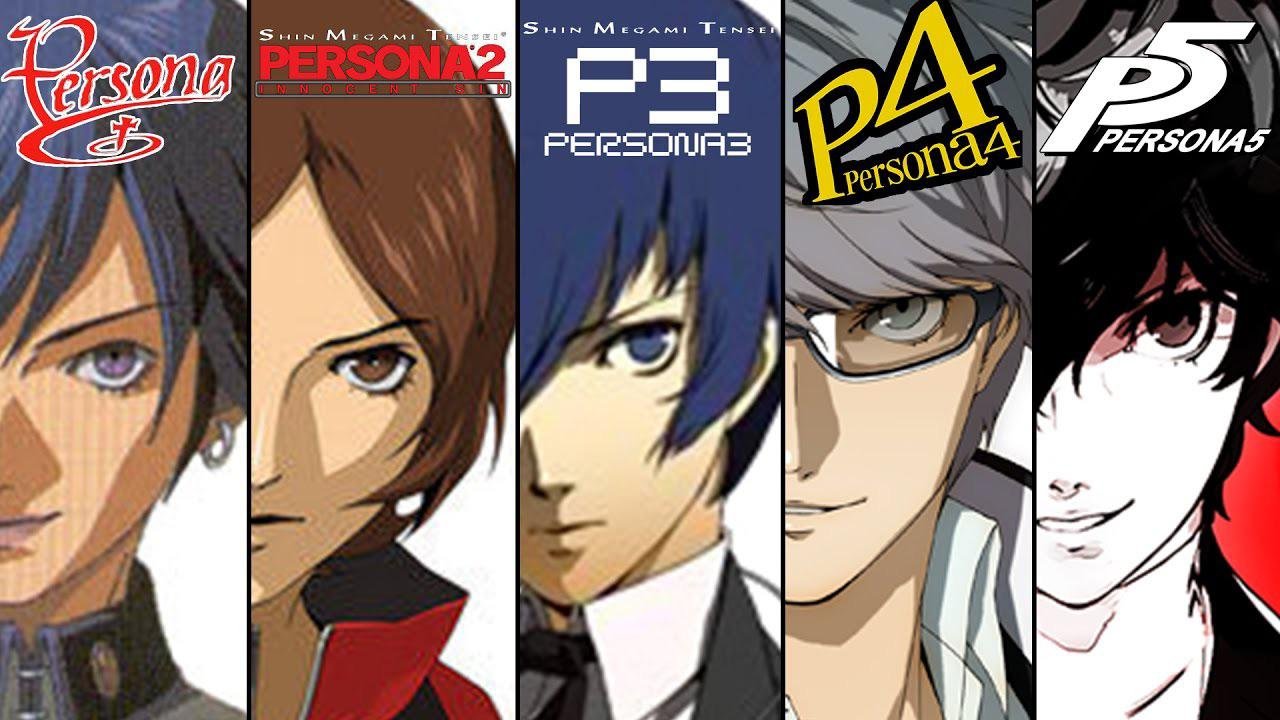
Yes, the Persona games are generally considered to exist within the same universe, with recurring characters, themes, and events subtly linking them.
The question always pops up among fans: are the persona games in the same universe? It’s a fair question, given the series’ complex lore and varied settings. While each entry focuses on a new cast and location, subtle connections hint at a shared reality.
These connections include familiar faces popping up in unexpected places and overarching organizations that appear across multiple titles. These recurring elements suggest that while each story stands alone, they all exist within the broader Persona world.

Are the Persona Games in the Same Universe?
That’s the question that bounces around in the minds of Persona fans everywhere. We all love the characters, the stories, and the stylish world of Persona. But are they all connected? Do the events of Persona 3 impact what happens in Persona 5? The short answer is: It’s complicated! While they aren’t all directly linked in a way that needs you to play every game to understand, they definitely share a universe, or at least a multiverse, in a really cool way. Let’s dive deep into this topic and explore how these games are connected and why that connection matters.
The Shared Lore: A Foundation for Connections
Even though each Persona game features a brand-new cast of characters and a separate city to explore, there are common threads that run through them all. These shared elements create a consistent universe, though it is not a single timeline but can be interpreted like a multiverse with connections. Think of it like how different Marvel movies are part of the same Marvel Cinematic Universe even if they don’t all have the same characters directly interacting in every movie.
The Velvet Room: A Constant Throughout
One of the most obvious connections is the Velvet Room. This mysterious place appears in every main Persona game, and even some spin-offs. It’s always a place with a unique vibe, usually a calming and elegant space where the main character meets an enigmatic host. The host, whether it’s Igor and his assistants, or other figures with similar power, guides the main character on their journey. The Velvet Room acts like a connecting thread through different stories. Here are some key aspects of the Velvet Room:
- Igor: The long-nosed man is a constant figure in the Velvet Room, always present to guide the protagonists. Though his specific role changes depending on the specific game.
- Assistants: Igor’s assistants change from game to game (like Elizabeth, Theodore, or Lavenza). Each have their own unique personalities, and these assistants often appear in different games as well, making connections between different entries.
- Purpose: The Velvet Room serves as a hub for fusing Personas and a place to help the player grow stronger by helping the protagonist in different ways. It is the place where the wild card is tested and they get guidance.
These shared aspects of the Velvet Room make the entire Persona series feel cohesive and that they exist within a large world.
Personas and Shadows: The Basic Building Blocks
The core mechanic of each game is the use of Personas, which are physical manifestations of a person’s inner self. Shadows, the chaotic forces the heroes fight, are another key element. The nature of both Personas and Shadows remain consistent across all the Persona games. This consistency helps solidify the shared universe aspect. Here’s a closer look:
- Personas: Represent aspects of the user’s personality and can be used in battle. They can be fused and strengthened to gain new abilities and power.
- Shadows: Twisted manifestations of negative emotions. In a sense, they are the evil that exists in human hearts.
These basic mechanics stay the same throughout the games, reinforcing the idea that the events in each game are all part of a shared reality, and making the games consistent in its structure.
Recurring Characters and References
While each game largely has its own set of characters, you might encounter familiar faces from previous entries. These cameos and references aren’t just nods to fans; they establish that the games are linked, not just thematically but directly. For example, the characters in Persona 4 appear in some of the spin-offs in the Persona 5 timeline, like Persona Q2. These connections, while not always central to the plot, are there for the observant fans and make the connections stronger.
- Cameos: Characters from past games appearing in minor roles or as supporting characters in later games.
- References: Mentions of events or places from past games in dialog or environmental details.
These references show the games exist within the same world and are tied together.
The Soft Connections: A Multiverse Interpretation
Instead of thinking of the Persona games as a single, linear timeline, it is more appropriate to think of them as a multiverse. The events of one game don’t always directly cause the events in another. However, they share core elements of lore and have occasional direct connections. Here’s why this interpretation is important:
Different Timelines and Alternate Realities
Each Persona game focuses on a different protagonist and a unique set of challenges. While these challenges are often related to the same concepts of the human psyche and shadow manifestations, the way they are manifested differs in each entry. This suggests that the games might exist in similar, yet distinct, realities, branching from a common core. For example, Persona 3 and Persona 4 have very different settings and overall feel.
- Unique Protagonists: Each game features a different protagonist with different powers and a distinct group of supporting cast.
- Different Threats: The central threats in each game vary, suggesting that each setting has its own unique set of problems to deal with.
The differences between each game make it more of a multiversal connection instead of a direct timeline.
The Role of the Collective Unconscious
The collective unconscious, a concept from the works of Carl Jung, is central to the Persona universe. It’s where the Personas are derived from and how Shadows are formed. The collective unconscious helps explain the common mechanics between the games, and also provides a space for variations to take place between them. Because the collective unconscious is a universal concept in the Persona universe, all events in the games can exist within it.
- Source of Power: The collective unconscious gives rise to both Personas and Shadows, providing the games with a cohesive core.
- Explanation for Differences: The differences between the games could be seen as different manifestations of the same universal concept within the collective unconscious.
This explains how the games can be set in different places, with different characters, but still share the same core mechanics and world principles.
The Impact of Spin-offs: Further Connections
Spin-off titles, such as Persona Q series, Persona 4 Arena, Persona 5 Strikers, and many others, further support the idea of the shared Persona universe. These games bring together characters from different main titles, reinforcing the interconnectedness and expanding the lore. They show that the heroes in these games can interact and their stories impact one another. Here’s why spin-offs matter:
- Cross-Overs: Spin-off titles bring together cast members of different Persona games.
- Expanding Lore: Spin-offs can introduce new information about the Persona universe and how it works.
Spin-offs make the connection between different games stronger, and further push the idea of them being part of the same universe.
Specific Examples: Making the Connections Clear
To further understand how the games are connected, let’s examine specific instances where the games show shared connections. These details can be easily missed if you’re not looking for them, but they play an important role in understanding the larger picture.
Elizabeth’s Appearances
Elizabeth, one of Igor’s assistants in Persona 3, plays a more active role in later games. Her desire to know more about the wild card and to understand the potential of the human soul shows her interest in multiple protagonists in the games. She even appears in Persona 4 Arena Ultimax and some of the dancing games. These appearances show the same character exists in multiple settings and timelines.
- Active Role: She seeks to understand more about Personas and the Wild Card ability of the protagonists.
- Multiversal Travel: Her involvement in different stories showcases the interconnections between timelines.
These appearances show that the games are not completely isolated.
The Kirijo Group and The Shadows
The Kirijo Group, a powerful corporation first introduced in Persona 3, is mentioned in other games as well. The research this company conducted about Shadows and other supernatural activities further establishes their continued presence in the Persona world. This shows that the events that happened in Persona 3 still has effects in other games even in different settings.
- Ongoing Research: The Kirijo Group’s research provides a consistent backdrop for how the supernatural is being studied.
- Shared History: The company creates a connection by sharing events and history that affect the different game timelines.
This helps establish a continuing world and not disconnected stories.
The Persona Users and The Wild Cards
Each main character in Persona is a Wild Card, which means they can wield multiple Personas and have a unique destiny. This concept is constant, and shows that regardless of the different stories each of them are destined to be the key to solve the main conflicts. Even though the users and the stories are unique, the existence of the wild card reinforces that the games share same mechanics.
- Unique Power: The Wild Card status is the protagonist’s special power, and this is shared among the main protagonists in every game.
- Shared Destiny: They are usually the key to saving the world in every game, and this makes the games have a similar structure and tone.
This consistency of the key characters in each of the games makes them connected as a whole.
Why It Matters That They’re Connected
So why does it matter if the Persona games are connected? The fact that they share a universe, or a multiverse, adds so much depth to the games. Here are some important reasons:
A Richer Narrative Experience
Knowing that these games share a universe enriches each experience. When you notice a character or a reference, you’re not just seeing a random callback; you’re seeing a connection to something bigger. It adds a layer of depth to each story and makes the world feel more alive.
Fan Theories and Community Engagement
The connections between the games have sparked tons of fan theories. Discussions about timelines, crossovers, and secret references have made the community engaged and very active. It’s fun to speculate and figure out what it all means.
Sense of Continuity
Although each story is unique, the shared universe creates a sense of continuity. It’s comforting to know the events and concepts you’re engaging with are part of a larger world that has a history and has a set rules and mechanics.
The shared mechanics, repeated characters, and common themes make the universe feel larger than a singular game.
Ultimately, whether it’s a single universe or a multiverse, the Persona games are definitely connected in meaningful ways. The shared lore, recurring characters, and core mechanics build a world that’s cohesive, even as it gives room for unique stories and experiences. It is part of what makes the series so loved by many people.
Persona's Shared Universe Timeline (feat. @Macca) | A Line Through Time
Final Thoughts
Essentially, the presence of recurring characters and concepts strongly suggests the Persona games are connected. However, their timelines and specific events don’t always align perfectly. The games often have subtle nods to each other.
This might imply a shared multiverse rather than a single, linear universe. The core question, are the persona games in the same universe, remains complex. ultimately each game’s story stands very much on its own.

