
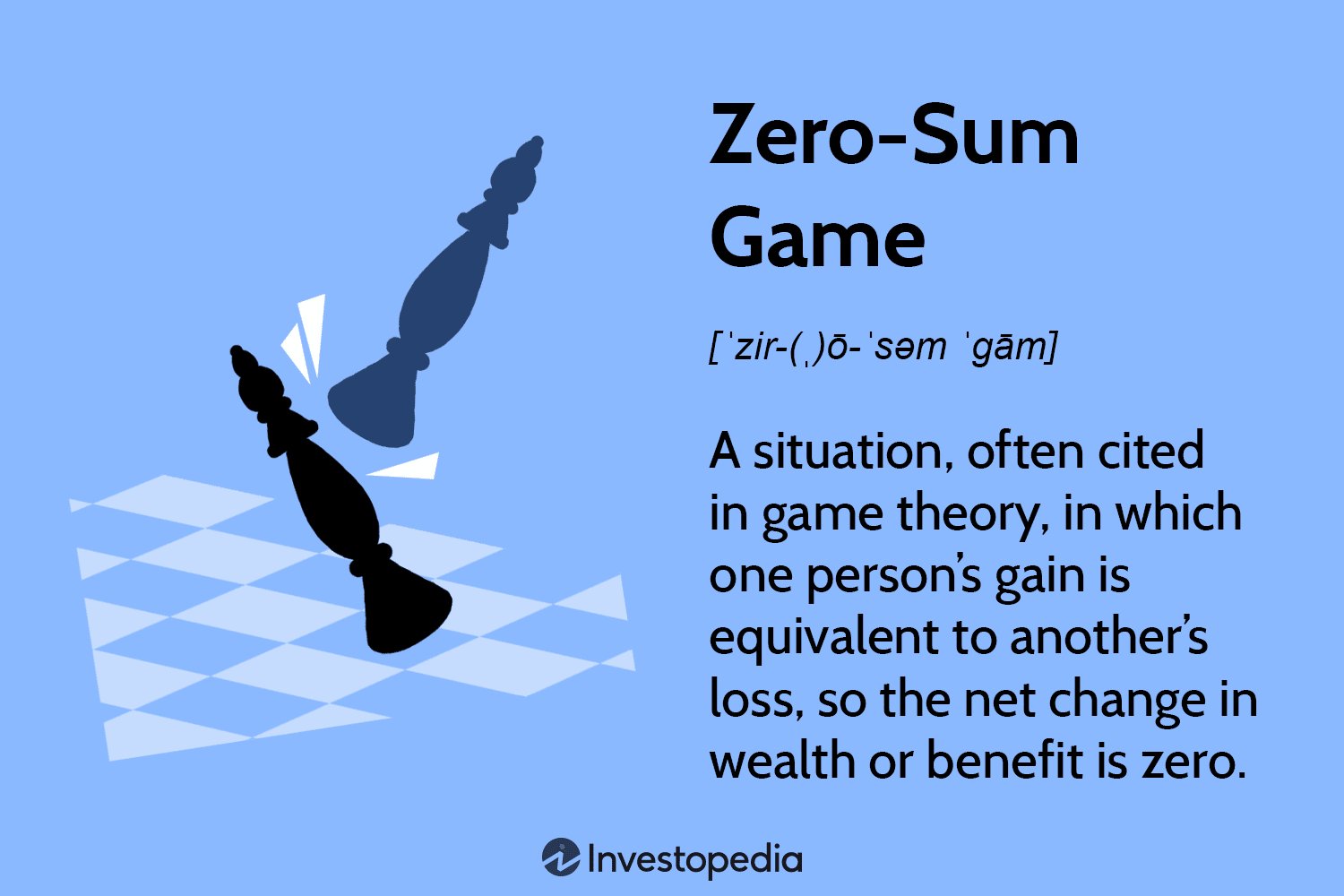
Zero sum games are only fair in the sense that one player’s gain is directly equivalent to another player’s loss; however, this does not address the fairness of the rules or initial conditions.
Imagine a pie. If I get a bigger slice, it means someone else gets less. This simple analogy often describes situations we call zero sum games, but it begs the question: are zero sum games fair? The very nature of this setup implies a direct conflict.
One person’s success is another’s failure. This creates a particular dynamic. Are the rules of the game equal for everyone? Do all players begin with the same chances? Exploring these ideas can help us understand these types of situations.

Are Zero Sum Games Fair?
Let’s dive into the fascinating world of zero-sum games. Imagine a pie. If someone gets a bigger slice, someone else gets a smaller slice. That’s basically what a zero-sum game is all about. The total amount of “stuff” (like points, money, or even just happiness in some situations) stays the same. One person’s gain is directly equal to another person’s loss. But does this mean they’re fair? It’s not a simple yes or no answer, so let’s break it down.
Understanding the Core Concept
At its heart, a zero-sum game is characterized by a constant quantity of resources or value. This means, unlike games where everyone can win (or lose), a zero-sum game creates a situation where one player’s success is intrinsically linked to the other player’s setback. It’s a closed system. Think of a simple tug-of-war. If one team pulls the rope to their side and gains ground, the other team necessarily loses ground. The total amount of “ground gained” by both teams is always zero – hence “zero-sum.” This concept applies to various scenarios, from simple card games to complex business negotiations.
Key Characteristics
- Fixed Resources: The total amount of the thing being fought over is constant. It doesn’t change, regardless of who wins.
- Direct Competition: Players are in direct opposition. If one person does well, it usually means someone else is not doing well.
- Gains Equal Losses: The total gain of all players equals the total loss of all other players. The sum of the outcomes is always zero.
It’s important to note that while the concept seems straightforward, real-world situations often involve complexities. We might think an auction is zero-sum if only one person gets the item, but the seller also gains, so overall it isn’t zero-sum.
Examples of Zero-Sum Games
Zero-sum games are more common than you might think, even if they aren’t always obvious. Let’s look at a few:
Classic Games
- Chess: One player wins, the other loses, no ties. All gains of one side are losses to the other.
- Poker: In most forms of poker, the money in the pot is redistributed among the players. If one person wins, all the others collectively lose the amount that person gains. (Note that if there’s a “rake” or charge from the house, this makes the game technically not exactly zero sum).
- Most Card Games: Games like Go Fish or War, where one player gathers points or cards at the expense of the other players.
Real-World Scenarios
- Some Business Negotiations: If a buyer tries to get the lowest price and the seller wants the highest price, a deal can become a zero-sum situation. If the buyer gets a lower price, the seller makes less money (and vice versa).
- Market Share: If one company gains market share, it often comes at the expense of another company. The total size of the market doesn’t usually change drastically, so it becomes a battle for a piece of a set pie.
- Certain Sports Competitions: Many individual sports are zero-sum. One swimmer finishing first means that someone else will not finish first.
It’s crucial to remember that these are simplified examples. The real world is messy, and even situations that appear to be zero-sum often involve complex factors that can blur the lines. A negotiation, for instance, might appear zero-sum initially, but the relationship between the parties may change over time, making it more beneficial for both parties if they cooperate.
The Fairness Question: Exploring Different Perspectives
Now we get to the core of it: are these games fair? It’s not a simple yes or no. We need to consider a few different angles.
Fairness in Process
One way to think about fairness is to look at the rules and how the game is played. Is everyone playing by the same rules? Do all the players have the same information? If the answer is yes, then we can say that the process of the game is fair, even if the outcome might not feel fair to the losing party. For example, in a poker game where everyone understands the rules and stakes, the process is considered fair, even though the results favor some players over others. However, if someone cheats, such as marking cards or hiding information, the process is no longer fair, and the fairness of the overall result is undermined.
Fairness in Outcome
The outcome of a zero-sum game is where things get tricky. In a situation where one player wins everything while the other loses everything, is that outcome fair? If we are strictly looking at it from a perspective of equal chances and equal process, then, yes, the outcome is fair, even if one side was very unlucky. Most people who lose in a zero-sum game often feel that the outcome is unfair. This is especially true if there is a power imbalance between the players or an unforeseen event that skews the chances. For instance, a negotiation between a large company and a small one might be considered fair in process but not fair in outcome because the large company has more negotiation power.
Skill vs. Luck
Another big piece of the fairness puzzle is the role of skill versus the role of luck in the game. In games like chess, skill is a huge factor, but even a great chess player can be surprised. Many games, especially card games, have elements of both skill and luck. A good player can be strategically sound, but they can also get lucky (or unlucky) with the cards. If luck plays a significant role, it can make a seemingly “fair” game feel unfair to those who have bad luck. If a game depends more on luck than skill, many people will feel that the game isn’t fair as the result does not reflect the player’s abilities. On the flip side, if the game depends more on skill, a player could learn how to be more strategic, potentially making the outcome more fair for them.
The Impact of Stakes
The perceived fairness of a zero-sum game is often affected by what’s at stake. If we’re just talking about a board game between friends, most people would be OK with the outcome because no one was really hurt in the process of losing, even if they felt unlucky. But if the game involves large amounts of money, or people’s livelihoods, or has potentially a much more significant impact, then the sense of fairness becomes more serious. For example, losing a board game with friends versus losing a business negotiation can have drastically different personal and financial consequences, making the perceived fairness more nuanced.
Ethical Considerations in Zero-Sum Situations
Beyond just fairness, we need to also think about the ethical implications of zero-sum scenarios. These are situations where we must consider the broader impact of our actions.
The “Win-at-All-Costs” Mentality
Zero-sum games can sometimes lead to a “win-at-all-costs” mentality. This can be dangerous because it can encourage people to be overly aggressive, or even dishonest, just to get ahead. When people start thinking the only thing that matters is their gain, then a lot of ethical lines can be crossed. It can lead to cheating, taking advantage of other people, and creating harmful, distrustful environments. For instance, in a business environment, this could lead to companies making unethical decisions to take market share from competitors, ultimately harming consumers.
Power Imbalances
As mentioned earlier, power imbalances can skew the perception of fairness. When one side has significantly more power than the other, even if the process is theoretically “fair,” the outcome might be inherently unfair. The more powerful side has many advantages, such as more resources, connections, and information. This can result in exploitative situations where one side is able to take much more from the other, even though they are ostensibly just playing by the rules. For instance, in negotiations between a major corporation and a small supplier, the corporation often has more leverage and can dictate terms, leading to potentially exploitative zero-sum outcomes.
The Impact of Zero-Sum Thinking
Zero-sum thinking is the idea that everything in life is a zero-sum game. This is not a healthy way to look at life and can lead to a lot of problems. It can damage personal relationships, and it makes cooperation and collaboration difficult, because if one person benefits, then it feels like someone else has to lose. For example, in a team, if people are only thinking in a zero-sum way, they will be unwilling to help each other because they might see other people’s success as a threat to their own. In a community, it might discourage charitable giving and social programs because some people might feel that those types of social programs are only a gain for one group, while another group loses out. It is important to realize that many real-life situations, especially in relationships, don’t need to be zero-sum; finding opportunities where everyone benefits can lead to more positive outcomes.
When Zero-Sum Games Can Be Useful
Despite some of the potential negative aspects, zero-sum games aren’t always bad. They can be useful in certain situations.
Motivation and Competition
In the right setting, a zero-sum game can create a healthy sense of competition and motivate people to do their best. When the rules are clear and understood, it can be a fun way to try to improve your skills and test your strategies. Think of a sports competition. In a sport like chess, the zero-sum nature of the game can push people to be more strategic and to think many steps ahead. It can also be a great way to learn resilience and how to deal with both winning and losing.
Simulation and Learning
Zero-sum games can be used to simulate various real-world situations. By creating a zero-sum environment, people can learn about competitive dynamics, strategy development, and the importance of decision-making. Business simulations, for example, often utilize zero-sum principles to help students practice negotiation skills, pricing strategies, and competition scenarios in a risk-free environment. This “game-like” setting allows individuals to safely experiment and learn valuable skills.
Clear Winners and Losers
Sometimes, it’s useful to have a clear winner and a clear loser. In some cases it makes for a fair way to decide an outcome. For instance, when choosing which project to move forward with, it may be better to go with an explicit model where resources are assigned in a zero-sum game. If a team has to work with a limited budget, then a fair and transparent process that can allocate resources, even if it does mean some people’s projects aren’t chosen, is a way to move forward. Zero-sum games provide a way to make those tough decisions.
Moving Beyond Zero-Sum: Seeking Win-Win Scenarios
While understanding the nature of zero-sum games is important, it is more important to recognize that many situations are not inherently zero-sum. Looking for ways to transform competitive scenarios into cooperative situations can often lead to more beneficial and productive results for everyone. Here are some things to consider:
Collaboration and Cooperation
By working together, instead of against each other, many problems can be solved in ways that benefit everyone. This means not thinking of every interaction as a competitive situation where someone has to lose for someone to win. By focusing on teamwork, and not just personal gain, people can achieve better outcomes in many different situations. For instance, in business negotiations, rather than viewing it as an antagonistic, zero-sum battle, finding common ground and focusing on mutual benefit can lead to much better deals.
Expanding the Pie
Sometimes, rather than fighting over a fixed amount of resources, you can actually work to increase the total amount. In a negotiation, for example, this could involve focusing on creating value, finding additional ways to improve everyone’s outcomes. By growing the total amount of value that is available, it is easier to get into a scenario where everyone has more. In a community, this could involve starting new programs that lead to more economic growth and better living conditions for everybody.
Long-Term Relationships
In long-term relationships, treating every situation like a zero-sum game will most likely lead to mistrust and damage to these relationships. When you focus on mutual gain and value the relationship itself, the outcomes tend to be better over time. This is true whether it’s business relationships, family relationships, or friendships. In these cases, cooperation and trust, rather than competition, create stronger bonds. It’s essential to think about the big picture, and not simply immediate gains in any individual situation.
Understanding zero-sum games is important, as they happen in life. The real skill is knowing when it is important to compete and when it is important to find ways to cooperate and work together.
Monopoly Might Be a Zero-Sum Game, but Wealth Isn’t.
Final Thoughts
Zero sum games inherently involve winners and losers. One player’s gain directly corresponds to another’s loss, making the overall outcome neutral. The competitive nature is intense, demanding strategic thinking.
This win-lose dynamic raises ethical questions about fairness. Are zero sum games fair, given that one player’s success necessitates another’s failure? The answer often lies in the context and rules of the particular game.

