
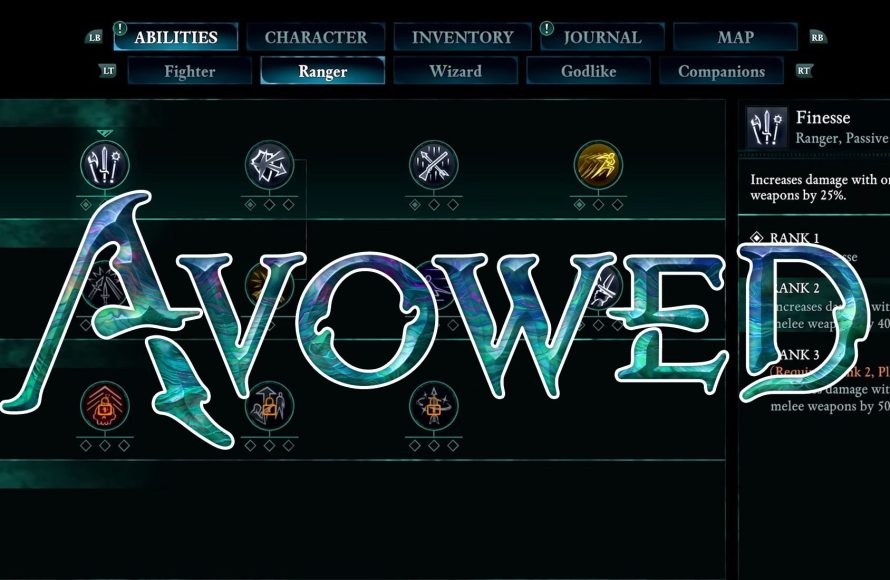
The Avowed skill tree guide will show you how to progress your character by allocating points in the game’s various skill branches, enhancing abilities and combat styles.
Navigating the progression system in Obsidian’s Avowed can feel daunting initially. Many players wonder how best to develop their chosen character. Understanding the nuances of the Avowed skill tree guide is key to creating a build that matches your preferred playstyle.
Different skill paths offer unique abilities and passive buffs. Exploring each carefully lets you craft the perfect hero for your adventures. You will gain significant benefits as you climb up the skill tree.

Avowed Skill Tree Guide
Let’s dive deep into the fascinating world of skill trees in Avowed! This guide will be your trusty companion as you navigate the many ways you can grow your character and become a powerful force in the game. Think of skill trees like a map of abilities and talents. As you play, you earn experience and level up. Each level gives you points that you can spend to learn new skills or improve ones you already have. It’s how you shape your hero into the exact type of adventurer you want to be.
Understanding the Basics of Skill Trees
Before we get into the nitty-gritty, let’s cover some fundamental ideas. In Avowed, your character isn’t stuck in one specific role. You have the freedom to mix and match skills from different trees, letting you create a style that suits your preference. There’s not just one way to play, and that’s what makes it so exciting! You get to choose what kind of abilities your character gets and how they play.
How Skill Points Work
As you move through the game, you’ll gain experience points (XP) by completing quests, defeating enemies, and exploring the world. When you collect enough XP, your character levels up. Each level up grants you a skill point. You can spend these points on the various skill trees. Each tree focuses on a specific combat style or ability, but you can invest in any tree you like.
Respecing Your Character
Don’t worry about making a permanent mistake. Avowed will likely allow you to “respec” or reset your skill points. This means you can reassign your skill points at any point in the game to try out different builds. This is very useful if you decide you don’t like your choices, or you want to try a new build. This allows experimentation without fear.
Exploring the Different Skill Trees
Avowed has several different skill trees, and each one opens up unique paths for your character. Each tree generally focuses on a different type of playstyle. Below is a list of a few of the skills trees you might find in the game:
Warrior/Melee Tree: If you enjoy close-quarters combat, this is the tree for you. Expect skills that boost your strength, melee damage, and defensive abilities. You’ll find options for powerful sword strikes, brutal axe blows, and sturdy shield blocks. This tree is perfect for players who want to be in the middle of the action.
Ranger/Ranged Tree: Prefer to fight from a distance? The Ranger tree focuses on bows, arrows, and other ranged attacks. You can expect skills that increase your accuracy, critical hit chances, and ranged damage. You might find abilities that allow you to fire multiple arrows at once, or even set traps for enemies. This is a tree for patient, tactical players.
Mage/Magic Tree: This tree opens up the mystical world of magic. You’ll find spells that deal elemental damage, heal allies, and control the battlefield. It is very likely that this tree would contain options to summon creatures or apply magical enhancements. The Mage tree will appeal to players who like using strategic thinking and versatile abilities.
Stealth/Rogue Tree: If you like to play in the shadows, the Stealth tree is your calling. Expect abilities that enhance your sneaking, pickpocketing, and backstabbing skills. You will find skills that allow you to move quickly in shadows and silently take down enemies with critical blows. This tree will satisfy players who favor strategy, stealth, and cunning.
Diving Deeper into the Warrior/Melee Tree
Let’s take a look at some of the specific kinds of skills you might find in the Warrior tree. These can include:
Offensive Abilities
Power Strike: This ability allows you to make an extra powerful attack. It could deal heavy damage with a long animation to let the player know the damage is high, and often comes with a cost in stamina to keep the ability balanced.
Whirlwind Attack: A useful skill to attack multiple enemies surrounding you. It would likely have low damage per enemy, but the area of effect would make it ideal in situations with multiple enemies nearby.
Charge: This would likely allow your character to quickly rush at an enemy, making it perfect to close distances.
Defensive Abilities
Shield Bash: A useful skill that does damage and possibly stuns enemies. Perfect to open up windows for more attacks.
Iron Skin: This might be a passive skill that will increase the amount of damage your character can withstand.
Deflect: This will likely give you the ability to block with your weapon. It would likely come with timed parry mechanic so you can’t just use it non-stop.
Passive Skills
Weapon Master: A skill that could increase your attack with a specific weapon type.
Battle Focus: A passive skill that could increase your attack power after your character is hit.
Stamina Boost: This might increase your stamina pool, allowing you to use your abilities more often.
Analyzing the Ranger/Ranged Tree
Let’s move on to the Ranger tree and its potential offerings:
Offensive Skills
Aimed Shot: This ability could allow you to charge up an attack for extra damage, and improve accuracy.
Multi-Shot: A handy skill that lets you fire multiple arrows at once.
Poison Arrows: Inflict poison to your arrows so that they do extra damage over time.
Defensive Skills
Evasive Roll: A helpful ability that allows your character to roll quickly to avoid incoming attacks.
Camouflage: A skill that allows you to blend into your surroundings to avoid detection by enemies.
Trap Master: This skill would likely let you use different trap abilities to set up ambushes and to help control the fight.
Passive Skills
Eagle Eye: This skill could increase your attack range.
Steady Hand: This skill might reduce the amount of weapon sway so you can land more hits.
Hunter’s Instinct: This could give you a damage boost when attacking enemies who are unaware of your presence.
Examining the Mage/Magic Tree
Now it’s time to explore the spells and abilities of the Mage tree:
Offensive Spells
Fireball: A classic damaging spell that sends a ball of fire at your enemy.
Lightning Bolt: This is a spell that could chain to multiple enemies dealing damage to all of them.
Ice Blast: A spell that could slow or freeze enemies, giving you the ability to control the battlefield.
Defensive Spells
Healing Touch: This ability could heal you or an ally during combat.
Shield Spell: A spell that can absorb damage so you take less damage from enemy attacks.
Teleport: A useful spell to quickly move across the battlefield.
Passive Skills
Mana Regen: This skill could increase the rate at which you get mana back.
Spell Power: This skill could make your offensive spells do more damage.
Arcane Shield: This might increase the defense of your magic shield spell.
Taking a Peek at the Stealth/Rogue Tree
Finally, let’s look at the sneaky skills in the Stealth tree:
Offensive Abilities
Backstab: A powerful attack that can only be used while sneaking.
Throwing Knives: This skill would likely allow you to throw daggers that can be used to inflict damage from a range while sneaking.
Shadow Strike: A special attack that can be used when you are invisible.
Defensive Abilities
Invisibility: This skill will likely let you turn invisible for a short time.
Distraction: A useful skill that allows you to create a distraction by making sounds or throwing objects.
Smoke Bomb: A powerful skill that will allow you to create a cloud of smoke for cover.
Passive Skills
Light Footed: This could reduce the amount of sound you make while moving.
Lockpicking: An extremely handy skill that allows you to open locked doors and containers.
Pickpocket: A stealth skill to steal from NPCs without detection.
Skill Tree Synergies
One of the most exciting parts about skill trees is how they interact with each other. You’re not confined to just one tree, and you can mix and match abilities from different trees. This allows you to get really creative with your character’s playstyle.
For example, you might combine Warrior skills with some Stealth skills to create a fast and powerful fighter who can get in close to strike before opponents even see them coming. Or, you might combine Ranger abilities with Mage abilities to create a ranged combatant who can both deal damage from a distance and control the battlefield with magic. Combining skill trees allows for a wide range of playstyles.
Tips for Building Your Character
Plan Ahead: Before you spend your skill points, think about what kind of character you want to play. Do you want to be a tank who can take a lot of damage? Or a mage who can cast powerful spells?
Experiment: Don’t be afraid to try out different skills and see how they work. Remember you can reset your points so you can try different styles out.
Consider Your Playstyle: The best skill choices are the ones that fit how you want to play the game.
Read Descriptions Carefully: Pay attention to what each skill does and what it costs to use.
Pay Attention to Synergies: See if any skills work well together. Sometimes two skills that don’t seem useful on their own will become very good when used together.
Understanding Skill Tiers and Upgrades
Within each skill tree, you might encounter different tiers or levels of skills. As you spend more skill points in a specific tree, you might gain access to higher-tier skills. These will likely be stronger, more effective, or more specialized versions of the base skills.
For example, a low-tier fire spell might simply send out a small flame. But a high-tier fire spell could send out a massive area-of-effect attack that can burn multiple enemies at once. There will likely be options to upgrade the abilities as well, for example, you might have a tree that has multiple tiers for one spell, the higher the tier the more powerful the spell gets.
Skill Synergies and Builds
Skill synergies are a very important part of how your character will work. Some skills will complement each other, making them even more effective when used in combination. For example, you might find that a certain passive ability from the warrior tree helps improve your critical hit chance when used with a spell from the mage tree.
Some players like to find unique ways to combine abilities to make specialized “builds” that can dominate the game. For instance, you might make a “battlemage” character build that combines melee attacks with magic. You might also see an “assassin” character build that combines stealth with powerful ranged attacks to pick off enemies.
The Importance of Experimentation
The key to success in Avowed is to experiment and see what works best for you. Don’t be afraid to try new things, and don’t think that one certain build is the best. The game is made to be played the way that you find most fun, and there are countless ways to play the game due to how flexible the skill tree system is.
By taking your time to learn and understand the skill trees, you will be on your way to building a powerful and unique character in Avowed. The most important thing to remember is that you should experiment with different combinations to find the playstyle that best suits you.
Skill trees aren’t just about making your character stronger; they’re also about creating your unique story. Will you be a mighty warrior, a sneaky rogue, a skilled ranger, or a powerful mage? The choice is yours, and Avowed gives you the tools to make it happen.
Avowed – Skill Trees Breakdown
Final Thoughts
This Avowed skill tree guide provides a solid foundation for character progression. Players should carefully consider their preferred playstyle when allocating points. Experimentation is also essential to find what works best.
Choosing skills that complement each other will create a more effective build. It will ultimately enhance your combat capabilities and exploration. Strategic investment in the skill tree can greatly impact gameplay.
Remember, proper allocation of skills makes a difference. This Avowed skill tree guide gives a good starting place. Analyze each branch for optimal development.

