
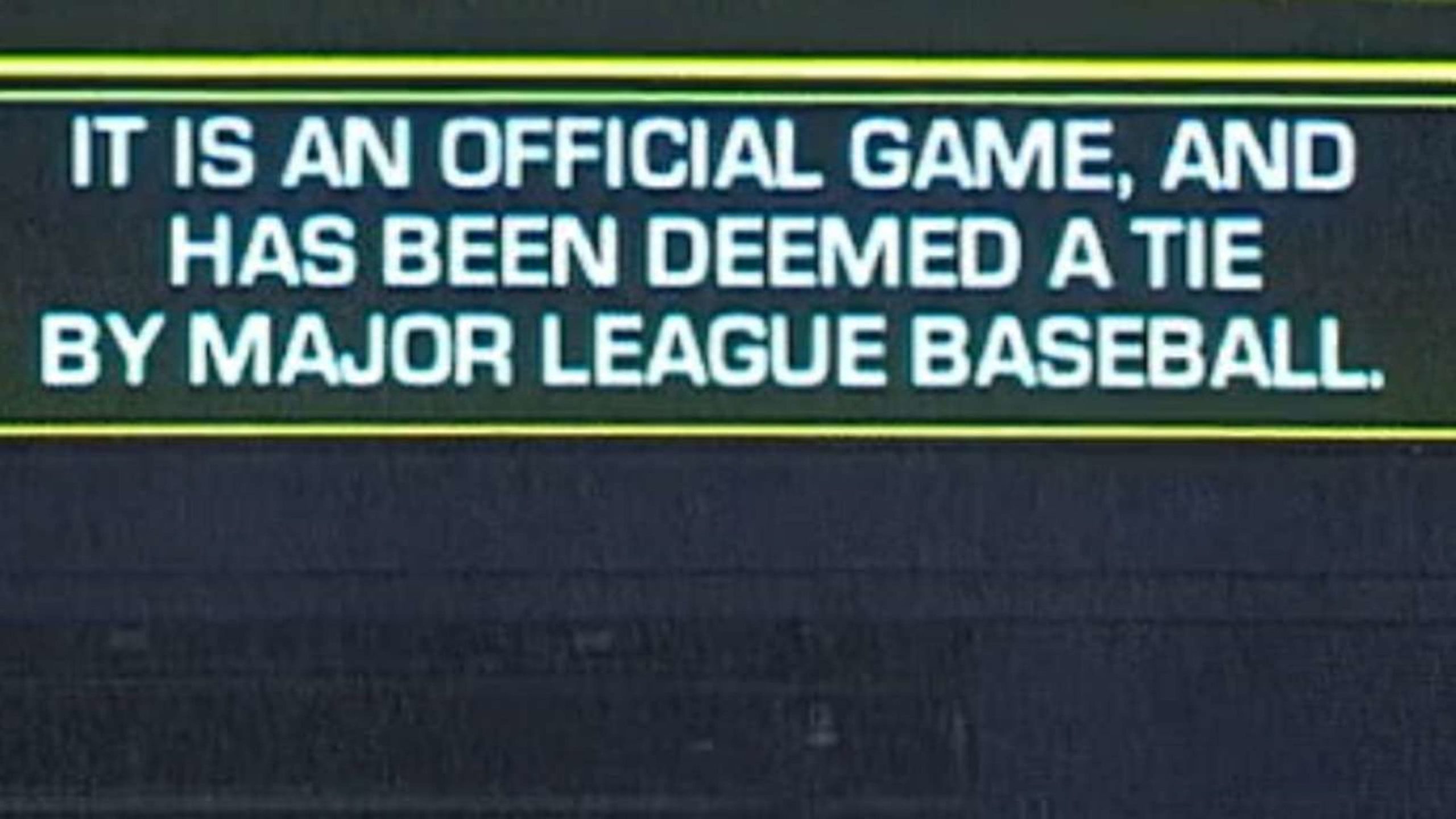
No, a World Series game cannot end in a tie.
Imagine the tension, the roar of the crowd, the sheer intensity of a World Series game. It’s hard to picture anything other than a decisive win, right? But the question, “can a world series game end in a tie” sometimes pops up. We all love the excitement of extra innings, but is there a point where the game could simply… stop?
The idea of a tie in such a high-stakes setting feels strange. Baseball rules are very clear on how to resolve games and the World Series is not an exception. So let’s settle this once and for all, diving into the rules.

Can a World Series Game End in a Tie?
The idea of a tie in a World Series game might sound strange. After all, the whole point of baseball, especially in the playoffs, is to find a winner, right? Well, while it’s definitely not the usual outcome, exploring if a World Series game can end in a tie is a fun dive into baseball’s rules and history. Let’s break down why you’re not likely to see it, but also discuss the rare situations where it technically could happen.
Understanding the Basics: Why Ties are Rare in Baseball
Generally, baseball games don’t end in ties because of a rule called extra innings. If the score is tied after the normal nine innings, the teams keep playing until one of them scores more runs in an additional inning. This means that, in the vast majority of situations, a game will always conclude with one team winning. Think of it like a super-long version of the last inning. This extra-innings rule ensures a winner is always determined, making a tie very unlikely in regular play, including the regular season and playoffs.
The Extra Innings Rule: A Safety Net Against Ties
To truly grasp why ties are rare, we have to look at extra innings. When a game is tied after nine innings, the game goes into extra innings. There is no limit to how many extra innings a game can go. It continues until one team leads at the end of an inning. That team is declared the winner. There are no ties.
-
Continuous Play: Extra innings is not a new game, but an extension of the original one.
-
Sudden Victory: The first team to have more runs at the end of an extra inning wins the game.
This rule makes it incredibly hard to have a tie. It is part of baseball’s system to create a clear winner in every contest.
The “What If” Scenarios: Rare Situations Where a Tie Could Happen
Even with the extra innings rule, there are some incredibly rare circumstances where a game could, in theory, end in a tie. Let’s delve into these unusual “what if” situations.
The Forfeit Scenario: Unforeseen Circumstances
One possible, though exceptionally rare, scenario involves a forfeit. Imagine a situation where, for some reason, a team is unable to continue playing. This could happen due to a very significant event or an unforeseen emergency, although such incidents are far beyond uncommon. For example, a severe weather condition could cause the game to be deemed unplayable, or perhaps a stadium infrastructure issue makes the field unsafe.
-
Double Forfeit: If both teams were unable to continue, a situation could exist where the game is not completed, but there is no declared winner either. This is practically unheard of but is possible.
-
Interrupted Game: If, say, a major city-wide event or weather catastrophe prevented either team from finishing the game, and if the game was already past a certain point of the innings without a winner, baseball might not have a declared result. However, they would most likely attempt to complete the game at a later date. In general the league would attempt to do all that it could to complete a game instead of leaving it as a tie, if a resolution is possible.
Again, these are extreme and very unlikely. Baseball’s goal is to complete the game and make sure there is a winner. These scenarios illustrate the technical potential of a tie, not a typical gameplay scenario.
The Suspended Game: More Likely, but Still No Tie
Another slightly more probable, yet still very uncommon, scenario involves a suspended game. A suspended game occurs when a game is interrupted due to weather (like very heavy rain), darkness, or any other situation that prevents it from continuing at the time. However, a suspended game is not the same thing as a tie.
- Resumption at a Later Date: A suspended game is always picked up again from the exact point it was stopped and completed. It doesn’t end up being a tie; they complete the game later.
- No tie outcome: No matter how much time has passed, the goal is still to find a winner in these cases, meaning a tie is still avoided.
The suspended game rule is designed to handle interruptions to the game, ensuring that no team is unfairly penalized. These interruptions don’t result in ties, though, as the game will be finished. While a suspended game makes it more likely that a game will be stopped, no team will be awarded a tie.
Why Ties Are Avoided at All Costs in Baseball
Baseball is a sport with a focus on competition and clear results. Having ties in important games would be seen as unsatisfactory for fans and players. Many strategies, rules, and norms are in place to ensure clear outcomes. This includes rules that encourage strategic play and team performance. Ties go against these core elements.
The Importance of a Clear Winner
In the World Series, the goal is to crown a champion. A tie goes against the goal of finishing the final series. The system of extra innings is designed to prevent a tie and make sure that fans witness a clear result. This maintains the excitement, prestige, and integrity of the game.
- Fan Satisfaction: Fans want to see a winner; a tie feels incomplete.
- Team Ambitions: Players compete for the win, not a tie.
- Historical Consistency: Baseball’s long tradition values definite outcomes.
The Fan and the Player Perspective
Imagine being a fan watching an intense World Series game. The game is tied going into the 12th inning. The tension is through the roof as the team with the winning score will be that much closer to being the next champion. Now imagine that game ending in a tie. The fans would be confused and disappointed. The players would feel equally let down, after all of the hard work and competition. The focus on having a clear result is very important for the integrity of the game.
For the players, winning is the ultimate goal. Ties do not offer the same sense of accomplishment. The competition and drive to succeed are the heart of the game. The extra innings rule provides this chance.
Historical Context: Has a World Series Game Ever Ended in a Tie?
Looking back, there have been no situations in World Series history where a game ended in a tie. While there were some games in the early days of baseball that could technically be considered ties because of darkness, those types of results were eliminated with the introduction of extra inning rules and better lighting at baseball stadiums. It also became common practice to finish a game the next day rather than not find a victor at all. While there may have been a few suspended games, these were always played to completion so that a winner was named.
The Evolution of Baseball Rules
The rules of baseball have changed a lot over the years. The game has adapted to improve clarity and avoid the issues surrounding ties. For example, the implementation of extra innings rules means that games do not end without a winner. Better lighting systems at baseball stadiums means it is extremely rare for darkness to stop a game. The improvements over the years all aim at ensuring that a clear winner is decided, and a tie is avoided at all costs.
Modern Baseball: Focused on Completion
The way baseball works today, especially in the World Series, is designed to make sure that every game finds a winner. The rules, the lighting in the stadiums, and the mindset of both players and baseball officials all come together to prevent a tie. There are always the extremely rare scenarios where a tie could happen, but they are very, very rare.
Key Takeaways Regarding Ties in the World Series
To summarize, while the possibility of a tie in a World Series game is not entirely impossible due to some extremely rare situations, it is extraordinarily unlikely. The rules of baseball, particularly the extra innings rule and the rules regarding suspended games, are all structured to ensure that games conclude with a winner. The concept of a tie goes against the values and traditions of the sport. The focus is always on a clear, competitive resolution.
- Extra Innings Rule: This is baseball’s main method to avoid ties.
- Suspended Games: These are not ties, but they are resumed at a later time to completion.
- Forfeits: Double forfeits, while theoretically possible, are extremely unusual.
- Historical Precedent: There has never been a tie in the history of the World Series.
Therefore, while technically feasible under rare and unlikely circumstances, seeing a tie in a World Series game would require a series of very unique and unforeseen events. The chances of witnessing such an event is highly unlikely.
In conclusion, while the technical possibility for a tie exists, the rules and structure of baseball, particularly in the World Series, make it incredibly improbable. The focus is firmly on finding a clear winner and maintaining the competitive spirit of the sport. Therefore, while technically plausible under extremely rare conditions, the likelihood of seeing a tie in a World Series game remains exceptionally low.
Can A World Series Game End In A Tie? – The Baseball Xpert
Final Thoughts
No, a World Series game cannot end in a tie. Major League Baseball rules mandate a winner for each game. They continue extra innings until one team scores more runs, effectively eliminating any possibility of a draw.
Therefore, the question of “can a world series game end in a tie” is definitively answered: it absolutely cannot. The very nature of the playoffs demands a victor. A tie would nullify the competitive aspect and the overall goal of declaring a champion.

