
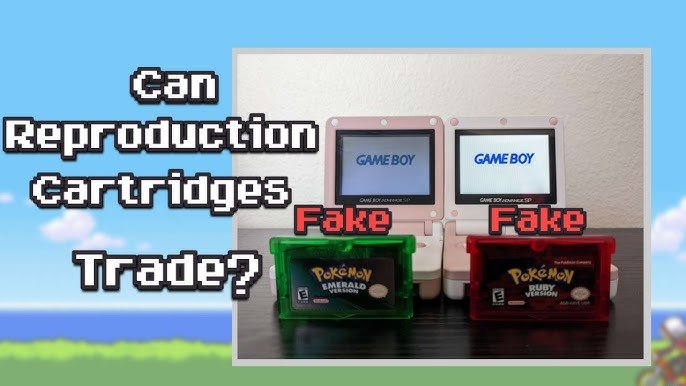
No, generally, reproduction Pokemon games cannot trade with authentic cartridges.
The world of retro gaming is fascinating, especially when we talk about Pokemon. Many fans might wonder about the capabilities of reproduction cartridges. Specifically, can reproduction Pokemon games trade like real ones?
This is a question that pops up often within the community. The desire to connect with friends and complete your Pokedex is a core part of the Pokemon experience. The unfortunate answer is that generally, reproduction Pokemon games cannot trade with original carts due to differences in their internal hardware and software.

Can Reproduction Pokemon Games Trade?
The world of Pokemon games is filled with adventure, exploration, and of course, collecting and battling! One of the most exciting parts of these games is trading with friends, showing off your prized Pokemon, and working together to complete your Pokedex. But what happens when we start talking about reproduction games – those that are not official copies from Nintendo? Can you trade Pokemon between them and legitimate games? That’s what we’re going to explore today, and it’s a question with some tricky answers. Let’s dive deep into the world of reproduction Pokemon games and their trading capabilities.
What Are Reproduction Pokemon Games?
First, let’s make sure we know what we’re talking about. Reproduction Pokemon games are unofficial copies of the original games. They are typically created by third parties and sold separately from Nintendo’s official channels. These games can look very similar to the real thing, and sometimes it can be hard to tell the difference at a glance. They might come in similar cartridges, with similar labels, and might even play the game pretty much the same. But it’s crucial to understand that they are not the official versions. They are copies.
Why Do People Buy Reproduction Games?
There are several reasons why people might opt for reproduction games. The most common reason is cost. Official versions of older Pokemon games can become quite expensive, especially those for older consoles like the Game Boy, Game Boy Color, or Game Boy Advance. Reproduction games are often available for a much lower price, making them more accessible to some players. Another reason is accessibility itself. Sometimes it might be hard to find a copy of a particular game, especially if it is a rarer release. Reproduction games can fill this gap by providing a playable version of those harder to find titles. Lastly, some buyers are simply unaware of the differences, they believe that they are buying the official product.
The Technical Hurdles of Trading with Reproduction Games
Now, let’s get to the core of the issue: can you trade? The answer is not simple yes or no. It depends on a number of factors, but it primarily comes down to how the reproduction game was made. Here’s a breakdown of the challenges:
- Software Differences: Even though reproduction games might look and feel the same as the original games when you play, they are usually created by writing new software to emulate the original. These software differences can cause compatibility issues when trying to trade.
- Hardware Differences: Reproduction cartridges often use different hardware components than the original Nintendo cartridges. This means that even if the software is very similar, the different way they are built can cause trading issues.
- Clock Functions and Event Data: Some Pokemon games rely on internal clocks for events, time-based evolutions, or day and night cycles. These functions are often not properly replicated in reproduction games. This can cause glitches or errors when trying to trade with original copies. They also have problems with event items.
- Modified Game Data: Some reproduction cartridges may have modified game data, such as altered Pokemon stats or item locations. If the game data is different enough, the game’s trading system might not recognize them as a valid partner, thus preventing a trade.
- Fake Cartridge Detection: Newer Nintendo systems can detect that the cartridge is not official, especially when trying to do online trading. This can prevent trades.
Trading Between Two Reproduction Games
You might think that trading between two reproduction games is going to be easier, but again that’s not a simple answer.
While the challenges might not be as large as trying to trade between reproduction and original, it’s not a guarantee it will work perfectly.
Here’s what you can expect:
- Similar Builds: If the two reproduction games come from the same source, they often share the same code base. This increases the chances of them successfully trading with one another as they are built to be compatible with their counterparts.
- Inconsistencies: However, even if two reproduction games are built the same way there still might be some differences, they can still contain varying bugs or glitches that can make them incompatible.
- Modified Data: Even if the two reproductions seem identical, they could have slightly modified game data that could lead to trading failure.
Specific Game Examples
Let’s look at specific Pokemon generations to get a clearer idea of trading with reproduction games:
Generation 1 (Red, Blue, Yellow) and Generation 2 (Gold, Silver, Crystal)
These classic games, made for the original Game Boy and Game Boy Color, are some of the most commonly reproduced. Trading with reproduction cartridges in these generations is very unreliable. The older hardware and simple trading system often means that you might not be able to connect, but even if you connect, the trade might fail midway and even corrupt data.
- Trading Method: Typically used the Link Cable for trading between two Game Boys or Game Boy Colors.
- Common Issues: Connection errors, trades that fail mid-process, and data corruption
Generation 3 (Ruby, Sapphire, Emerald, FireRed, LeafGreen)
The Game Boy Advance brought some more complexity. Reproduction versions for Generation 3 games often have a hard time connecting or completing trades.
- Trading Method: Link Cable between Game Boy Advances, also wireless adapters in some cases.
- Common Issues: Issues connecting, trade errors, sometimes missing animations and sounds.
Generation 4 (Diamond, Pearl, Platinum, HeartGold, SoulSilver)
These Nintendo DS games added even more trading complexities. Reproduction carts are more unstable when trying to trade with their official counterparts and usually fail.
- Trading Method: Local Wireless and Nintendo Wi-Fi Connection for online trading (the servers are now offline).
- Common Issues: Local wireless trading is mostly inconsistent with reproductions, while Nintendo Wi-Fi is completely non-functional with these games.
Generation 5 (Black, White, Black 2, White 2) and newer generations
The newer the Pokemon generation, the harder it will be for reproduction games to trade. With the 3DS and beyond, they incorporate better anti-piracy measures and network verification steps. Reproduction games trying to trade online are a definite NO, and local wireless trading is also very unreliable.
- Trading Method: Local Wireless and Nintendo Wi-Fi Connection for online trading.
- Common Issues: Inability to connect wirelessly, errors when trading, and online servers will not be accessible at all for these reproductions.
Risks Associated with Trading with Reproduction Games
Besides the chance of failure, trading with reproduction games comes with some other risks:
- Data Corruption: There’s always a risk of your saved data getting corrupted when dealing with reproduction copies. This can mean losing your game save or your Pokemon.
- Glitches and Bugs: The reproduction software might have glitches and bugs that can affect your playing experience or even cause a game crash.
- Security Concerns: There’s no way of knowing who made these copies or if the cartridges might have hidden malicious software that can harm your console or even your personal information.
- Legal Issues: Buying and playing reproduction copies are often against copyright laws and can lead to potential legal troubles, particularly when distributing or re-selling these reproductions
Identifying Reproduction Games
Being able to identify a reproduction game is very important so that you know what you are getting yourself into. Here are some telltale signs that you have a reproduction:
- Price: Reproduction games are typically sold at a much lower price than the official versions. If a price seems too good to be true, it might be a reproduction.
- Label Quality: Reproduction labels often look blurry, or the colors might be off compared to the original. Look for mistakes on the labeling or typos.
- Cartridge Shell: The cartridge might have a different shade or texture, sometimes it looks lighter and more translucent than the original version.
- Screws: The screw type or placement might differ from that of an original Nintendo cartridge.
- Packaging: Reproduction cartridges often come in generic cases, instead of original Nintendo boxes.
Is it Worth the Risk?
So, can reproduction Pokemon games trade? Sometimes. Is it reliable? No, not really. Is it a good idea? It’s debatable. If your main concern is cost, then you might be willing to take the risk of playing a reproduction copy. However, if you really want the true, intended Pokemon experience with trading capabilities with other players and you are worried about losing your data, then sticking to the official games is still the best way to go.
Buying official games guarantees you’re going to have the complete experience that the developers intended, with reliable trading and no data corruption worries. It is also a good way of supporting Nintendo and the Pokemon Company, so that they keep creating new games for us to play. If you still decide to explore the reproduction world, be sure you are aware of the risks you are taking.
The world of reproduction Pokemon games is complicated and presents a grey area in the community. While they might be cheaper and more accessible, they often come with issues and risks that might not be worth the cost. Make sure you stay informed so you can make the decision that is best for you. Always look for official games if you can, and try to avoid reproductions when possible. But most importantly, enjoy your Pokemon adventure!
Can You Trade With FAKE Pokémon Games?
Final Thoughts
Reproduction Pokémon games often present a tricky situation. Many wonder if they possess the ability to trade Pokémon like legitimate copies. The answer is complex and depends on the specific reproduction.
Some reproduction games do allow trading, while others have this crucial functionality disabled. Therefore, it’s not safe to assume all will trade. The best action is to check for user experiences before buying.
Ultimately, the question of ‘can reproduction pokemon games trade’ comes down to individual game specifics. Always confirm with sellers or online forums to determine functionality before purchasing, to avoid disappointments.

