
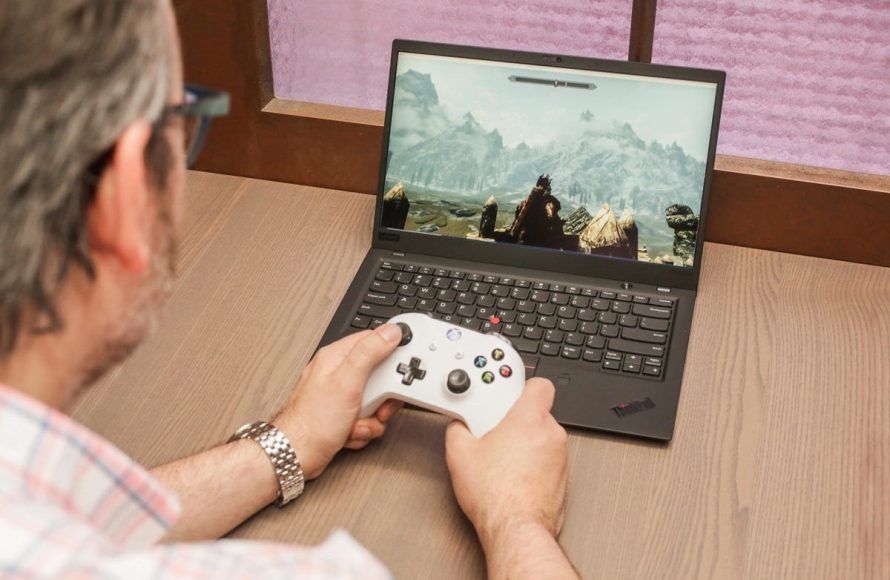
Yes, this laptop can run this game, provided the game’s minimum and recommended specifications align with your laptop’s hardware.
Ever wondered, can this laptop run this game? It’s a question many gamers face when eyeing a new title. Figuring out if your current machine is up to the task can save you frustration.
We all want a smooth gaming experience. No one enjoys lag or choppy gameplay, so understanding your laptop’s capabilities is crucial before purchasing a game.

Can This Laptop Run This Game? A Deep Dive
Ever get that exciting feeling when a new game comes out? You can’t wait to play, but then a nagging question pops into your head: “Can my laptop even handle it?” It’s a common worry for gamers, whether you’re a seasoned pro or just starting. Figuring out if your computer is up to the task can feel like cracking a secret code. But don’t worry; we’re here to help you understand what to look for and how to know if you can dive into your favorite games without frustrating lag or crashes.
Understanding the Basics: Game Requirements
Before we get into the nitty-gritty, let’s talk about game requirements. Every game has a list of minimum and recommended specifications. Think of these as a checklist for your computer. The minimum requirements tell you the very least powerful computer needed to run the game at a playable level, often at low settings with a lower resolution. The recommended requirements represent what you need to play the game at its best, with higher graphics, frame rate and better overall experience. These specs are often listed on the game’s packaging, website, or on digital storefronts like Steam, Epic Games Store or GOG. It’s very important to check these specs before buying a game, as they give you important clues to whether your laptop is suitable. This crucial step helps you avoid wasting money on games that your system can’t run properly.
Key Components: CPU, GPU, RAM, and Storage
When looking at game requirements, you’ll notice some key components mentioned over and over:
- CPU (Central Processing Unit): This is the “brain” of your computer. It does most of the thinking needed to run the game. You will often see the CPU listed in the requirements as things like Intel i5 or AMD Ryzen 5, these are just a type of CPU, and you will have to compare the listed CPU model with what you have.
- GPU (Graphics Processing Unit): This is your computer’s art department. It handles all the visuals, from the textures of the ground to the effects of explosions. This is often the most important component for gaming performance. The GPU is usually listed as brands like NVIDIA or AMD followed by a series of numbers.
- RAM (Random Access Memory): Think of RAM as your computer’s short-term memory. Games need RAM to quickly access data while they’re running. More RAM generally means your laptop can handle more tasks at once, leading to smoother gameplay.
- Storage: This is where the game files live. Games today can take up a lot of space, so making sure you have enough storage is important. Also, the type of storage like an SSD (Solid State Drive) can greatly affect loading times.
Digging Deeper: CPU Performance
The Central Processing Unit, or CPU, is vital to whether a game will run smoothly. If your CPU is too weak, the game might stutter or freeze, even if your graphics card is good. It is very important that your CPU has the right processing power to handle the game. CPUs are usually listed by series and model. For example, an Intel Core i5-12400 is a very different CPU than an Intel Core i7-8700, even if they are from the same family.
CPU Cores and Threads
CPUs often have cores and threads. Cores are like having multiple small processors in one chip. More cores allow the CPU to perform more tasks at the same time. Threads are virtual cores; they help in multitasking. For gaming, you want a CPU that has a decent number of cores and threads. A good processor will quickly process the game’s calculations and make sure it runs smoothly. If the CPU has fewer cores than what the game needs, you might experience performance problems.
Clock Speed and Generations
Clock speed, measured in GHz (gigahertz), indicates how many calculations your CPU can do per second. While a higher clock speed is generally better, it’s not the only important factor. The generation of the CPU matters just as much. For example, an Intel i5 from the 12th generation may be significantly better than an Intel i7 from the 8th generation, even if the i7 has a higher clock speed. Always pay attention to the generation and model number, not just the brand name. Make sure to compare your CPU with the game’s requirements using websites dedicated to comparing specifications.
The Power of the GPU: Graphics Card Explained
The Graphics Processing Unit (GPU) is where the real visual magic happens. This component handles all of the heavy work related to visuals. It takes a lot of processing power to render detailed environments, complex character models, and impressive lighting effects. Most of the time, when people are talking about a laptop “running a game,” the conversation is really focused on the GPU.
Integrated vs. Dedicated GPUs
There are two types of GPUs: integrated and dedicated. Integrated GPUs are built into your CPU. They are usually less powerful and are not suitable for playing high-end games. Think of it as a built-in graphics processor that doesn’t cost any extra. These integrated GPUs are fine for regular tasks like browsing the web and watching videos, but they often struggle with complex visuals. Dedicated GPUs are separate, standalone units that have their own processing power and memory (VRAM). They are much more powerful and designed for gaming. If a game says it requires a dedicated GPU, you should make sure your laptop has one and that it matches the requirements or is better. Usually gaming laptops come with a dedicated GPU, but it is important to check the model of the GPU in your laptop.
Understanding VRAM
VRAM stands for Video RAM, or Video Random Access Memory. It’s the special memory dedicated to the GPU. VRAM stores all of the images, textures, and video data needed to display the game. If your GPU doesn’t have enough VRAM, you might experience performance issues. Modern games often need a large amount of VRAM, and the amount required varies from game to game, depending on the settings and resolution at which you intend to play.
Nvidia vs AMD GPUs
The two main GPU manufacturers are Nvidia and AMD. Both companies produce excellent graphics cards. When looking at the game specifications, you might see an Nvidia GeForce RTX model or an AMD Radeon RX model listed. These are just different kinds of graphics cards made by different manufacturers. Make sure to compare the listed model with what you have in your laptop. Just like with CPUs, the number and letters after the name of the manufacturer determine the power of the GPU. You will see these model numbers differ greatly in performance. The important thing to remember is to ensure that your GPU is similar to, or better than the one listed in the game requirements.
The Importance of RAM: Memory for Smooth Gameplay
RAM (Random Access Memory) is your computer’s short-term memory. When you play a game, the game needs to constantly access lots of data. This data is stored in the RAM for quick access. The more RAM your computer has, the more quickly and smoothly it can handle these data requests. If your computer does not have enough RAM, then the game will be stored on a slower device, resulting in loading issues and stutters. Think of it as needing enough space on your desk for all your work materials – if you don’t have enough space, it slows things down.
How Much RAM Do You Need for Gaming?
The amount of RAM a game requires varies from game to game. However, generally, for modern games, you need a minimum of 8GB of RAM, and 16GB is usually the recommended amount. Some very demanding games might even recommend 32GB or more. If you only have 4GB or less, you’re likely going to experience serious problems when gaming. Also, make sure you check if your ram is DDR4 or DDR5, as these two types of ram have different data transfer speeds. If your RAM does not match the game requirements, your game will run poorly.
Storage: SSD vs HDD
Storage is where your games, programs, and files are stored on your laptop. While storage might not directly affect performance while you play, it can affect loading times and how quickly you can install or update games. Here’s the difference between the two common storage types: SSD and HDD.
Solid State Drive (SSD)
SSDs are much faster than HDDs. If you install a game on an SSD, the loading times will be significantly faster. An SSD has no moving parts, which means it can access data very quickly. They are also much more reliable and less susceptible to damage. Most new gaming laptops come with SSDs, and you will find that they often make a huge difference to your gaming experience.
Hard Disk Drive (HDD)
HDDs have moving parts and use spinning disks to store data. They are much slower than SSDs and will increase loading times. They are often cheaper per GB than SSDs and may be found in older laptops. For gaming, it is highly recommended that you use an SSD as it makes the overall experience much better.
Storage Space Requirements
Modern games often take up lots of storage space, some even exceeding 100GB. Always check the storage space requirements of a game, and ensure you have enough space on your storage device for the game. Also, you should always leave some extra storage space for your system to run properly. If your storage device is full, then your game will run into problems. It is a good idea to have a fast SSD with enough space for your frequently played games.
Beyond the Main Components: Operating System and DirectX
Besides the main components, there are some other things you need to consider when it comes to game compatibility. The operating system (OS) and DirectX versions are also important.
Operating System (OS)
Most games are designed to run on either Windows or macOS operating systems. Some games may only run on one operating system, and some may only work with a particular version of the operating system. For example, some games may only run on Windows 10 or Windows 11. Make sure the operating system of your laptop matches the game’s requirements. The game requirements will usually list the required version of Windows. Always ensure your operating system is up to date with the newest update for the best performance.
DirectX
DirectX is a collection of application programming interfaces (APIs) developed by Microsoft. Games use DirectX to interact with your hardware, particularly your GPU. The game requirements will usually list the required DirectX version. If your laptop does not have the required DirectX version, then the game will likely not run. Always make sure that your laptop has the latest version of DirectX.
Using Online Tools: Can You Run It Websites
If all of this sounds a bit complicated, there are plenty of tools online that can help you. Websites like “Can You Run It” can automatically scan your computer to determine if it meets the requirements of a particular game. It is a very helpful website that takes the guesswork out of the equation. All you have to do is to install a small program, select the game, and the website will do the analysis for you, telling you whether you meet the minimum or the recommended system requirements.
Limitations of the tools
While these tools are very helpful, they aren’t always perfect. They mainly focus on the core components like CPU, GPU, RAM, and OS. They may not take into account other factors that can affect game performance, such as drivers. Also, they can sometimes give incorrect results. However, these sites are a very valuable tool for beginners, and help users get an idea of whether a game can run on their laptops.
Troubleshooting Common Issues
Even if your laptop meets the minimum requirements, you might encounter some problems. Here are a few common issues and how to solve them.
Game Crashes
If your game crashes frequently, it could be due to outdated drivers. Make sure your GPU drivers are up to date. Overheating can also cause crashes, so make sure your laptop has proper ventilation. If you continue experiencing problems, you may need to reduce the graphics quality of your game.
Lag and Stuttering
Lag is usually caused by poor internet connection. Stuttering is usually a performance issue. To improve game performance you can try reducing your graphics quality. You can close unnecessary applications that you have open on your laptop, or even upgrade your ram if you are close to your maximum ram limit. Make sure that your laptop has good ventilation and is not overheating.
Updating Drivers
Drivers are pieces of software that help your operating system communicate with your hardware. Outdated drivers are one of the biggest reasons that games can have problems. Always ensure that your GPU drivers are up to date with the latest version from the manufacturer’s website. You can check the manufacturer’s website directly, for example, from the NVIDIA website or from the AMD website.
Adjusting Game Settings
If your game is running poorly, the first thing you should do is adjust the game settings. Lowering the graphics settings will reduce the load on your GPU and CPU. Try lowering the resolution, detail level, texture quality, shadows, and other graphic settings. This can greatly improve performance while making the game playable, even if it isn’t at the highest settings. Experiment with the settings and find what works for your laptop.
Making Informed Decisions About Gaming
Playing games on a laptop can be a fantastic experience, but it’s very important to make sure that your system can handle the game you are intending to play. Knowing the key specifications of your laptop and understanding the game requirements are vital parts of this. By comparing these two things, you can avoid wasted money, frustrations, and poor gaming experiences. In the event that your laptop is not able to run the game, you can also try to upgrade some of your components, such as your RAM. You can also try to upgrade to a more powerful laptop, or even use cloud gaming as an alternative option. The most important thing to remember is that you need to thoroughly check the game requirements to avoid purchasing a game you cannot play.
Choosing the right gaming laptop, or knowing the limitations of your existing one, involves doing some homework. Compare your specifications with the game requirements, use online tools, and be willing to troubleshoot. By doing this, you can make informed decisions and enjoy smooth, fun gaming experiences.
Can A $1 Laptop Run Fortnite?
Final Thoughts
So, after analyzing all the specifications, the laptop’s performance is likely to handle the game. The required settings are must considered before playing it.
The processor and graphics card are crucial for smooth gameplay. Checking game requirements against the laptop specs will help. Can this laptop run this game? The analysis suggests that yes, it should.

