
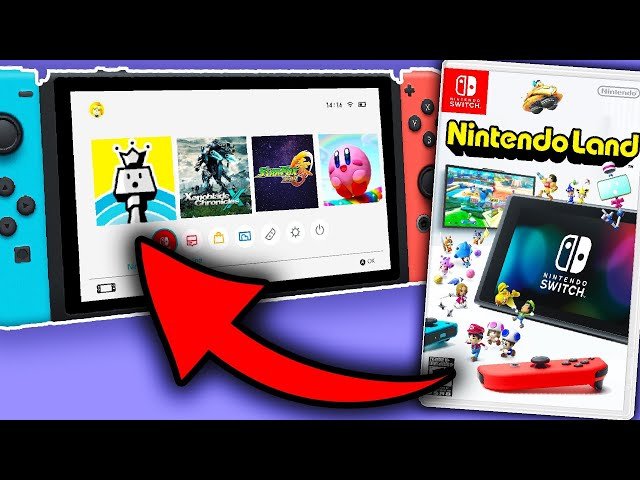
No, the Wii cannot play Nintendo Switch games.
The question “can Wii play Nintendo Switch games” often pops up amongst gamers, especially those with a fondness for older consoles. It’s understandable; we all love the idea of cross-generational compatibility. However, the hardware of the Wii is fundamentally different from the Nintendo Switch.
The Switch uses a completely different architecture and game format. The Wii and Switch are two separate console generations. Thus, you won’t find any compatibility between them.

Can Wii Play Nintendo Switch Games? A Deep Dive
Let’s get straight to the point: No, your trusty old Wii cannot play Nintendo Switch games. It’s like trying to fit a square peg into a round hole. While both consoles are made by Nintendo and offer tons of fun, they are built on entirely different technologies. Think of it like comparing a bicycle to a car – both are ways to travel, but they work in very different ways. This article will explore why the Wii and Nintendo Switch are incompatible and what makes each system unique. We’ll also touch upon why backwards compatibility, something many gamers love, isn’t always possible between consoles. Get ready to learn about the ins and outs of game consoles and why your Wii just can’t handle those exciting Switch adventures.
Understanding the Core Differences
To really grasp why Wii games can’t play on the Switch and vice versa, we need to understand the fundamental differences in their hardware. These differences run deep, impacting everything from the type of discs they use to the way they process game data and display graphics on your television. It’s not just a simple matter of inserting a different disc; the internal architecture is completely different.
The Wii’s Hardware: A Blast from the Past
The Nintendo Wii, released back in 2006, is built around a specific type of technology. It uses a custom processor and graphics chip that were considered advanced for its time. However, tech has come a long way since then. Here’s a breakdown of some key components:
- Processor: The Wii used a PowerPC-based processor. This was effective for its time but is now considered quite dated when compared to modern gaming processors.
- Graphics: The Wii’s graphics processor, sometimes called a GPU, was designed to produce standard-definition visuals. This means it wasn’t capable of the high-definition graphics that we see in modern games today.
- Storage Media: The Wii uses optical discs, specifically DVDs, to store game data. This disc format reads data with a laser.
- Controllers: One of the Wii’s defining features was its motion-sensing remote, which offered a unique way to play games.
The Nintendo Switch’s Advanced Technology
Now, let’s jump to the Nintendo Switch, which came out in 2017. This console represents a major technological leap from the Wii. It’s a hybrid system, meaning you can play it on your TV or take it with you on the go as a portable device. The technology inside is vastly different and far more capable:
- Processor: The Switch uses an NVIDIA Tegra processor, which is more akin to what you’d find in a tablet or smartphone, this processor has much more computational power.
- Graphics: The Switch’s NVIDIA GPU allows it to produce high-definition graphics. It supports resolutions up to 1080p when docked, making games look much sharper and detailed.
- Storage Media: The Switch uses game cartridges (small, solid-state cards) to store game data. Cartridges provide much faster loading times compared to traditional optical discs. The Switch also uses digital downloads for games.
- Controllers: The Switch uses Joy-Con controllers, which can be attached to the console or used separately. They also have motion controls and unique features like HD Rumble.
Why the Differences Prevent Compatibility
The significant differences in hardware architecture between the Wii and the Switch are the primary reason they can’t play each other’s games. It’s not just about the physical disc or cartridge format; it’s about how the games are coded and how the consoles process that code. Imagine trying to run a Windows computer program on an Apple computer – they’re built differently, and the instructions just don’t make sense to the other. It’s the same with the Wii and the Switch.
The Importance of Game Code
Each game is essentially a set of very complex instructions written in a programming language specific for each console. The game code tells the console exactly what to do – from how to render the graphics to how to respond to controller inputs. The Wii’s code is written for its specific processor and graphics chip, while the Switch’s code is written for its vastly different internal components. The Wii can’t read or understand the Switch’s code, and the Switch can’t read or understand the Wii’s code. It’s like two people speaking entirely different languages.
The Role of Operating Systems
Every game console needs a software layer called an operating system (OS) that manages the hardware and lets it run the games. The Wii’s OS is completely different from the Switch’s OS. Each OS is designed to support the specific hardware of each console. Because of these differences, they simply can’t interchange games. The Wii OS is built to process DVD data, graphics, and controller inputs from its era, and the Switch OS is built for its cartridge-based system, modern graphics, and various controller options.
Exploring Backwards Compatibility
You might have heard of “backwards compatibility,” which lets newer consoles play games from older ones. It’s a feature many gamers appreciate because it allows them to enjoy classic games on newer devices without needing to keep old consoles around. While it is cool, not every console supports this feature. Backwards compatibility is not a simple task; it requires a lot of engineering effort, and it’s not always feasible or cost-effective for console makers to include.
How Backwards Compatibility Works
Backwards compatibility typically requires the new console to either emulate the older console’s hardware or have some compatibility layers built into its OS to understand and run code from the older system. Emulation is a common method, where the new console’s hardware and OS pretend to be the old console, tricking older games into running on a new platform. These methods add complexity and cost, and also may not perform as well as the original console. Backwards compatibility is usually only feasible when there is a very big user-base for the older consoles that can really boost the sales of newer console, and this is only the case when a company is ready to support older games for a long time.
Why the Switch Doesn’t Support Wii Games
The Nintendo Switch does not support Wii game compatibility. The hardware differences between the two consoles are vast. The Switch’s architecture is entirely too different from the Wii’s, and therefore, emulation is not a very efficient method for trying to run Wii games on the Switch. This is a deliberate design choice by Nintendo. Instead of focusing on making the Switch compatible with Wii titles, Nintendo chose to concentrate its efforts on developing new games and features for the Switch. However, some Wii games have been re-released or remastered on the Switch, but these are essentially new versions of the game, not the original Wii code.
The Concept of Virtual Console
The Virtual Console was a feature of past Nintendo consoles, including the Wii, which allowed gamers to purchase and play older games. It’s like a digital library where you could find classics from the NES, SNES, and other older systems. While Nintendo has experimented with similar concepts on the Switch through services like Nintendo Switch Online, they are not the same. On the Switch, you get a library of games, but its library has some limitations.
The Wii’s Virtual Console
The Wii’s Virtual Console allowed players to download and play many classic titles from the NES, SNES, Nintendo 64, and even some SEGA consoles. This gave older and new gamers a chance to try out iconic games from the past. The Wii had good emulation options, making the older games run well on its platform.
Nintendo Switch Online and Retro Games
The Nintendo Switch does not have a Virtual Console in the same form as the Wii did. Instead, it offers retro game libraries as part of its Nintendo Switch Online subscription service. When you subscribe to their online service, you gain access to a growing list of retro games from the NES, SNES, and Nintendo 64, and Game Boy. It’s not a one-to-one replica of the Wii’s Virtual Console, but it’s a way to play old favorites on the Switch. They don’t offer Wii games because the jump from the Wii’s technology to the Switch is too big to make feasible. They mainly chose to provide games from their earlier consoles instead.
Navigating the Nintendo Ecosystem
The relationship between different generations of Nintendo consoles can be a bit confusing. However, each console is designed for its own time and brings something unique to the table. Understanding that there isn’t a way to play all games from older consoles on newer platforms will help you understand that this is normal with all technologies, as technologies get changed on regular basis.
Focus on the Nintendo Switch Experience
Instead of trying to find ways to play Wii games on the Switch, it’s best to focus on the games available on the Switch. Nintendo has a fantastic library of games for the system, ranging from action and adventure to puzzle and racing games. They also have a great selection of both single-player and multiplayer titles.
Exploring Other Gaming Options
If you are still eager to play Wii games, keeping your Wii console is the most direct way to do so. It’s also possible that you might find some Wii games re-released on the Switch with better graphics and gameplay. This would be an alternative option of playing them on a new console. Each console offers its own unique experience, and instead of thinking one is better than the other, try to see them as different generations of gaming consoles with different technologies.
In short, the Wii and the Nintendo Switch are two different systems with their own separate game libraries. The hardware and software differences make it impossible for the Wii to play Nintendo Switch games. The Switch is not backwards compatible with the Wii, because of hardware architecture differences. Instead of trying to play old games on newer platforms, its better to explore the games and experiences on the new platforms for better gameplay and experience.
Wii games work in the Nintendo Switch?!
Final Thoughts
Ultimately, the Wii cannot play Nintendo Switch games. They are on completely different hardware platforms with incompatible game formats. You must own a Nintendo Switch to enjoy its game library.
The Wii used discs, while the Switch utilizes cartridges and digital downloads. Therefore, there isn’t a way to make them compatible. The answer to ‘can wii play nintendo switch games’ is a clear no.

