
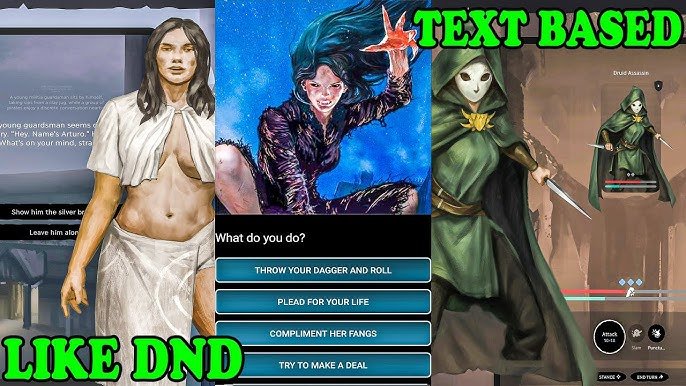
A D&D text based game is a role-playing game played through text, where players describe their actions and a game master narrates the world and consequences.
Ever dreamed of adventuring in fantastical realms, battling fearsome dragons, but without miniatures or elaborate maps? You can!
A dnd text based game provides just that. It relies on imagination and descriptive writing to bring the game to life.
This format is perfect for players who enjoy collaborative storytelling and don’t need visual aids to immerse themselves. So, gather your digital dice and get ready to type your way to victory!

D&D Text Based Game: A Deep Dive
Dungeons and Dragons, the iconic tabletop role-playing game, has evolved far beyond dice rolls and character sheets. One compelling evolution is the D&D text based game. This format offers a unique and accessible way to experience the world of D&D.
What is a D&D Text Based Game?
A D&D text based game replicates the experience of tabletop D&D through text. Instead of face-to-face interaction, players communicate and interact within the game world via written descriptions and commands.
Think of it as collaborative storytelling with rules. A Dungeon Master (DM) describes the scene, and players describe their actions.
The DM then narrates the outcome, incorporating dice rolls and game mechanics as necessary. This all happens through text, whether it’s on a forum, chat app, or dedicated platform.
Benefits of Playing D&D via Text
There are many reasons why someone might choose a text based D&D game. Let’s explore some of them.
- Convenience and Accessibility: You can play anytime, anywhere, as long as you have an internet connection and a device to type on.
- Flexible Scheduling: Text-based games eliminate the need for everyone to be online at the same time, allowing for asynchronous play.
- Focus on Roleplaying: The emphasis on written descriptions encourages deeper character development and more immersive roleplaying.
- Detailed Descriptions: The text format allows for richer and more nuanced descriptions of environments, characters, and events.
- Record Keeping: The entire game is documented, making it easy to review past events and track character progress.
Platforms for Playing D&D Text Based Games
Several platforms facilitate text based D&D. These platforms offer different features and communities.
Discord
Discord is a popular choice due to its versatility and ease of use. Many D&D groups create dedicated servers with channels for roleplaying, dice rolling, and out-of-character discussion.
Dice rolling bots can be integrated for automated results.
Forums
Traditional forums offer a structured environment for play-by-post games. Each player can create a thread for their character, and the DM can create threads for locations or events.
Forums are often a good choice for slower-paced games.
Dedicated D&D Platforms
Some websites and apps are specifically designed for online D&D, including text-based play. These platforms often include built-in character sheets, dice rollers, and world-building tools.
Examples include sites like RoleGate and others which combine elements of forums and real-time chat.
Telegram and Other Chat Apps
Telegram, Signal, and other chat apps can also be used, although they may require more manual organization. These apps offer a simple and direct way to communicate and roll dice (often with external apps or websites).
Creating a Character for a Text Based Game
Creating a character for a text based D&D game is similar to creating one for a traditional game. However, there are some key differences.
Emphasis on Backstory
A detailed backstory is crucial in a text based game. It provides the DM and other players with a foundation for your character’s motivations, personality, and relationships.
The backstory is what brings the character to life in the absence of physical presence.
Descriptive Character Sheet
While stats and abilities are important, focus on describing your character’s appearance, mannerisms, and personality traits. This helps others visualize your character in the game world.
Include details about their clothing, voice, and habitual gestures.
Consider Your Writing Style
Think about how you want to portray your character through text. Will they use formal language, slang, or a distinct dialect?
Consistent writing style helps to establish a clear and memorable character.
Being a Dungeon Master in a Text Based Game
Being a DM in a text based game requires strong writing skills and organizational abilities. Here are some tips:
Detailed Scene Descriptions
Paint a vivid picture of the environment using descriptive language. Include details about sights, sounds, smells, and textures.
Help your players fully immerse themselves in the game world.
Clear and Concise Narration
Keep your narration clear and easy to understand. Avoid ambiguity and provide enough information for players to make informed decisions.
Use formatting (e.g., bolding, italics) to highlight important details.
Manage Player Actions Effectively
Acknowledge and respond to player actions promptly. Use dice rolls to determine the outcome of skill checks and combat.
Be fair and consistent in your rulings.
Prepare Ahead of Time
Plan your sessions in advance, including key encounters, NPCs, and plot points. This will help you keep the game moving smoothly.
However, be prepared to improvise if players deviate from your plans.
Tips for Successful Text Based D&D Gameplay
Here are some tips to help ensure a fun and engaging experience for everyone involved.
- Communicate Clearly: Use clear and concise language to avoid misunderstandings.
- Be Descriptive: Provide detailed descriptions of your character’s actions and emotions.
- Respect Other Players: Be mindful of other players’ time and contributions.
- Stay Engaged: Actively participate in the game and contribute to the story.
- Be Patient: Text-based games can be slower-paced than traditional games, so be patient and understanding.
D&D Editions and Text Based Play
Different editions of D&D can be adapted for text based play. The core mechanics remain the same, but the emphasis shifts to how those mechanics are described and implemented through text.
D&D 5th Edition (5e)
5e is currently the most popular edition, known for its streamlined rules and emphasis on storytelling.
- Simplified Rules: Easier to manage and track in a text-based format.
- Emphasis on Roleplaying: Encourages deeper character interaction and narrative development.
- Wide Community Support: Plenty of resources and online tools available.
D&D 3.5 Edition
3.5e is known for its complexity and customization options.
- Detailed Character Customization: Provides a wide range of options for character builds.
- Extensive Rule Set: Requires more meticulous record-keeping in a text-based format.
- Mature Content Availability: Abundant online resources and communities.
Older Editions (AD&D, 2e)
Older editions offer a more old-school feel with a focus on dungeon crawling and challenging encounters.
- Grittier Gameplay: More emphasis on survival and resource management.
- Less Forgiving Rules: Requires careful planning and strategic decision-making.
- Nostalgic Appeal: Appeals to players who enjoy classic D&D experiences.
Creating Engaging Combat Encounters in Text
Combat in a text based game requires careful planning and descriptive narration. The DM must set the scene, describe the actions of the monsters, and resolve the outcomes of attacks and spells.
Describing the Battlefield
Begin by vividly describing the battlefield, including the terrain, obstacles, and lighting conditions. This helps players visualize the encounter and make informed decisions.
Consider using diagrams or maps to supplement your descriptions.
Narrating Monster Actions
Describe the monsters’ actions in detail, including their attacks, movements, and tactics. Use descriptive language to convey their ferocity and cunning.
Don’t just say “the goblin attacks.” Say “The snarling goblin lunges forward, swinging its rusty scimitar with surprising speed!”
Resolving Attacks and Damage
Clearly communicate the results of attacks and damage. Use dice rolls to determine the outcome of attacks, and track hit points carefully.
Be transparent about the mechanics, so players understand how the combat is progressing.
Adding Dramatic Flair
Add dramatic flair to the combat by describing critical hits, near misses, and special abilities. This helps to keep the players engaged and invested in the encounter.
“With a mighty roar, the dragon unleashes a torrent of fire, engulfing the battlefield in flames!”
Roleplaying Non-Player Characters (NPCs) in Text
NPCs are essential for creating a dynamic and believable game world. When roleplaying NPCs in text, focus on conveying their personality, motivations, and relationships with the player characters.
Creating Unique Personalities
Give each NPC a distinct personality with unique quirks, mannerisms, and motivations. This will make them more memorable and engaging.
Consider using different writing styles to distinguish between NPCs.
Establishing Relationships
Establish clear relationships between NPCs and the player characters. Are they allies, enemies, or neutral parties?
Explore the history and dynamics of these relationships to add depth and complexity to the game.
Using Dialogue Effectively
Use dialogue to reveal information about the game world, advance the plot, and develop the NPCs’ personalities. Write dialogue that is natural, engaging, and appropriate for each character.
Pay attention to tone, body language (described in text), and subtext.
Adapting to Player Interactions
Be prepared to adapt your roleplaying based on the players’ interactions. Allow them to influence the NPCs’ behavior and decisions.
This will make the game feel more dynamic and responsive.
Worldbuilding for a Text Based D&D Campaign
Worldbuilding is essential for creating an immersive and engaging D&D campaign. In a text based game, detailed world descriptions are even more crucial.
Detailed Descriptions of Locations
Describe the locations in your world in detail, including their physical features, inhabitants, and history. Use vivid language to bring these places to life in the players’ imaginations.
Think about the sights, sounds, smells, and tastes of each location.
Creating a Rich History
Develop a rich history for your world, including key events, conflicts, and cultural traditions. This will provide context for the present-day events of the campaign.
Consider creating timelines, maps, and historical documents to flesh out your world’s history.
Developing Cultures and Societies
Create diverse cultures and societies with unique customs, beliefs, and values. This will add depth and complexity to your world.
Think about the social structures, economic systems, and religious practices of each culture.
Establishing Political Landscape
Define the political landscape of your world, including the rulers, factions, and conflicts that shape its destiny. This will provide a framework for the players’ actions and decisions.
Consider creating maps of kingdoms, alliances, and trade routes.
Advanced Techniques for Text Based D&D
Once you’ve mastered the basics of text based D&D, you can explore some advanced techniques to enhance your gameplay.
Using Multimedia Elements
Incorporate multimedia elements, such as images, maps, and music, to enrich the gaming experience. These can help players visualize the game world and immerse themselves in the story.
Use cautiously to avoid slowing down the game.
Implementing House Rules
Experiment with house rules to customize the game to your group’s preferences. This can add a unique flavor to your campaign.
Be sure to communicate house rules clearly to all players.
Creating Interactive Maps
Create interactive maps using online tools to allow players to explore the game world and track their progress. This can enhance the sense of immersion and exploration.
Tools like Google My Maps can be useful for this.
Developing Custom Macros and Scripts
If you’re using a platform like Discord, you can develop custom macros and scripts to automate tasks and streamline gameplay. This can save time and improve efficiency.
Bot development can significantly enhance the player experience.
Discord TTRPG: Beyond Just Playing
Final Thoughts
Ultimately, text-based adventures offer a unique entry into role-playing. This format emphasizes imagination and collaborative storytelling.
Consider giving a dnd text based game a try. It must be an engaging and accessible way to experience Dungeons and Dragons.

