
‘Understanding your family game rules means recognizing the unspoken traditions, communication styles, and expectations that shape interactions within your family.’
Ever found yourself confused about why something feels off during a family gathering? We often operate under a set of unwritten guidelines within our families, and it’s not always obvious. Do you really know your family game rules? These hidden structures impact everything from how we argue to how we celebrate.
These unspoken rules can heavily influence relationships. It shapes our dynamics. They are deeply ingrained habits, sometimes passed down through generations without any explicit mention. They can be tricky to identify.

Do You Really Know Your Family Game Rules?
Ever sat down for a fun game night with your family, only to have it turn into a debate about the rules? You’re not alone! Family game rules, like a secret code, can be different in every house. Sometimes, those special “house rules” are passed down from generation to generation, often without anyone ever writing them down! This can make a supposedly simple game of Monopoly, Uno, or even charades, into a surprisingly complex puzzle. Let’s dive into why understanding your family’s game rules is more important (and hilarious) than you might think.
The Mystery of Unwritten Rules
Think about it. How many times have you played a board game and someone says, “Wait, we always do it this way!” only to realize you had no clue that “way” even existed? These unwritten rules are like invisible threads weaving through your family’s game time. They’re not in the instruction manual. They’re not on the game box. They live in the memories and traditions of your family. These can be anything from “free parking always gets all the money” in Monopoly to “you get three tries” during charades, even if the official rules say something different.
Why Do These Unwritten Rules Exist?
There are many reasons why families create their own set of rules. Sometimes it’s to make a game easier, especially for younger players. Maybe someone long ago misread the instructions, and everyone just went with it. Or perhaps a rule was changed to make the game more fun or more competitive. It could be a way to level the playing field if one person is particularly good at a certain game. Whatever the reason, these variations become part of the family game culture. It’s like a little secret language only your family speaks.
Let’s look at some common examples of these mysterious rules. It’s like a treasure hunt of traditions!
- Monopoly: The classic “free parking jackpot” is probably the most widespread. This means any fines or taxes paid go to the center of the board and whoever lands on free parking gets it all. Another common one is everyone taking a go at auction even if they don’t plan to buy the property.
- Uno: A popular modification is stacking draw twos or wild draw fours, so if you place a draw two on someone and the next player has a draw two of their own, they can play it and the following player must draw 4.
- Card Games (like Rummy): Many families have their own unique scoring rules, or ways to decide who gets the first turn. Some families may even add extra jokers or wild cards to the deck to make things more interesting.
- Charades: House rules for charades are super common. You might find that your family allows you to speak, give sound effects, or even draw in the air, all of which are usually forbidden according to the regular rule.
The Impact of Not Knowing
Not knowing your family’s unwritten game rules can lead to some funny, and sometimes frustrating situations. Imagine being super excited to build a hotel on Boardwalk in Monopoly, only to have someone say, “Wait, we only put two houses on each property before building a hotel. It’s how we have always played”. This sudden rule change can throw you off and change your strategy instantly. It could even lead to an argument! This is why communication and clear understanding of these rules is so important.
The Funny Side of Misunderstandings
While it can be annoying, not knowing the family rules often produces hilarious stories that become part of the family lore. Think about that time someone tried to play “draw four” on top of “draw two” in Uno and everyone started laughing, leading to a new rule. The misunderstandings make the games more memorable and enjoyable. These quirks of your family are things you will cherish for years to come, even the moments of rule-based chaos!
Navigating Family Game Rules
So, how do you avoid these game rule catastrophes? How do you make sure everyone is on the same page before the first card is dealt or the first dice is rolled?
Ask Questions Before You Begin
This might seem simple, but it’s crucial. Before diving into a game, take a moment to ask, “Are there any special family rules we need to know about?” or “How do we do this in our house?” This simple question can save a lot of trouble and avoid those awkward moments where you think you’re winning, only to realize you have not been following the correct game rules.
Start the Game With a Quick Recap
After asking about the rules, quickly repeat them back to everyone. “So, in our version of Monopoly, free parking has all the money and you have to pass the go three times before buying.” This ensures that everyone is on the same page and there is no confusion. This small step can save a lot of time and energy during the game.
Be Open to Compromise
Sometimes, different people have different ideas about the best way to play. Instead of insisting that your way is the right way, be open to compromise. Maybe this time, you try one person’s rule, and next time, you try someone else’s. It’s all about having fun together. Games are about bonding with each other, so try to be flexible in your attitude when you play them with your family.
Write Down Your Family Game Rules
This might seem like overkill, but it can be a game-changer! Create a simple list of your family’s rules for each game. It can be just a small piece of paper kept with each game or a digital document stored on your computer. These aren’t formal documents. This will serve as an official reference so you won’t have to re-explain the same rules every time. It will also be a fun and unique artifact to have.
The Benefits of Knowing
Understanding your family’s game rules isn’t just about avoiding arguments. It’s also about preserving family traditions. These unique ways of playing games become part of your family’s shared story. When you play a game “the way we always have,” you are connecting to the past. It’s a fun way of showing your family’s values and also connecting different generations in your family through some silly game rules that everyone agrees upon.
Examples of Family Game Rules in Action
Let’s look at some more specific examples of how family game rules can differ.
Monopoly Mayhem
We have already touched on the free parking money jackpot, but that’s not the only way Monopoly can change!
- Some families allow you to buy properties when you land on them at auction price if you don’t want to be outbidded.
- Some families allow loans to be given from the bank, but with an interest of course.
- Some families allow you to get extra money when you land on “Go” in order to make the gameplay more interesting.
These house rules can change how you play the game, making it more exciting and unpredictable.
Card Game Capers
Card games are ripe for rule variations. Here are some scenarios:
- In the game of Crazy Eights, some families have rules about how many cards you can play at one time, and some even make up their own special cards with special abilities.
- In Rummy, families may have very specific scoring systems, some prefer to play by total points, while others like to play by rounds.
- Different families may disagree on how to handle the case of a missing card or if someone accidentally shows their hand. Some families play it very strictly by rules and some are more relaxed about this.
These modifications make the familiar rules of the game much more personalized and unique to your family.
Charades Chaos
Charades is another game that is always modified by family traditions. Some popular variations:
- Some families allow speaking, while some do not. If you do, some may restrict the speaking to only certain words.
- Some may allow you to make any sound effect you want, while other families are very particular about this and do not permit it.
- The time given for someone to act out a word or phrase will vary family by family.
These differences add an exciting twist to an already interesting game.
The Psychology Behind Family Game Rules
Family game rules aren’t just random things. They often tell us something about how your family operates. These rules may reflect your family’s sense of fairness, competitiveness, or even a sense of fun. A family that adds extra twists to the game may like to make things more unpredictable or difficult. A family that makes simpler rules might prioritize ease and inclusiveness for everyone. Understanding these rules can give you insight into your family dynamics. It’s like a mini-peek into your family’s personality. The little choices that everyone agrees upon, even if there is a little argument about it sometimes, speaks volumes about what your family values.
Tradition and Change
Family game rules are a combination of tradition and change. Some rules have been passed down for generations, while others are created on the fly. It’s like a continuous evolution of your family traditions, all happening within a game night! It’s important to remember that change is okay. Some rules get outdated, some no longer make sense, and some need to be changed to suit the new players in the family.
Allowing for some modifications keeps the traditions relevant and fun. It allows the new generations to also add their twist to existing traditions and make new memories that can be passed on to the next generation. It is a healthy way of creating something new while also keeping the previous traditions alive.
Making Game Night More Enjoyable
Understanding your family game rules is key to having enjoyable game nights. It’s not about who wins or loses, but about spending time together. When you know and respect everyone’s preferences, you avoid arguments and focus on bonding. The laughter, the silliness, and those tiny battles over game rules all contribute to your family’s story. So next time you get together for a game, take a moment to ask and be aware of the little quirks that makes your family’s game night so special!
Remember, these aren’t just games. These are opportunities to connect, to laugh, and to create memories with the people you love. So, do you really know your family game rules? Maybe now is the time to find out!
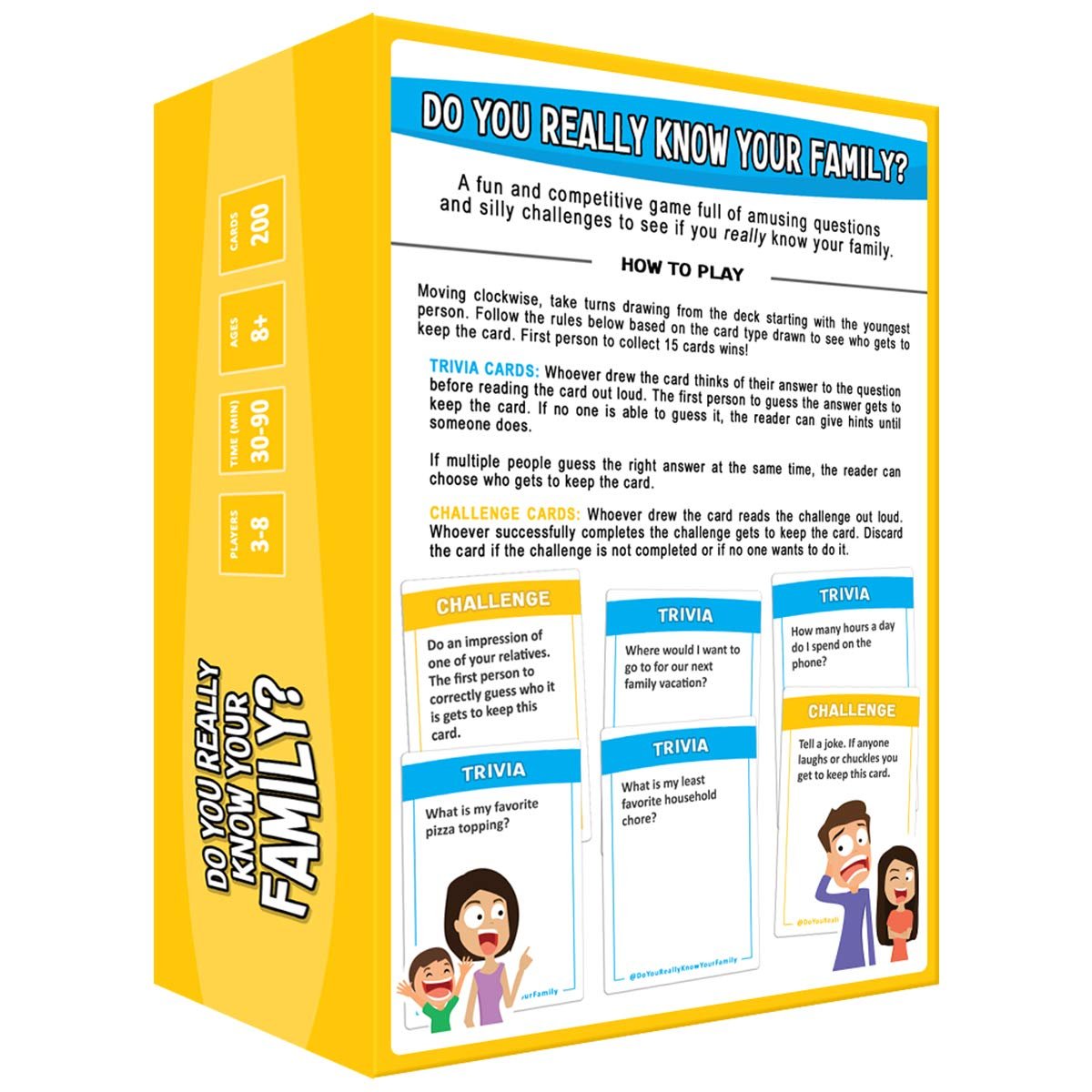
Do You Know Your Family Game Review
Final Thoughts
Ultimately, understanding unspoken family rules is key to smoother interactions and reduced friction. We must actively consider these dynamics for better relationships. Identifying them allows for healthier communication and boundaries.
Do you really know your family game rules? Reflecting on those unwritten codes can improve your home life. Ignoring them might cause unnecessary stress and misunderstandings. It is vital to be aware of the family rules.

