
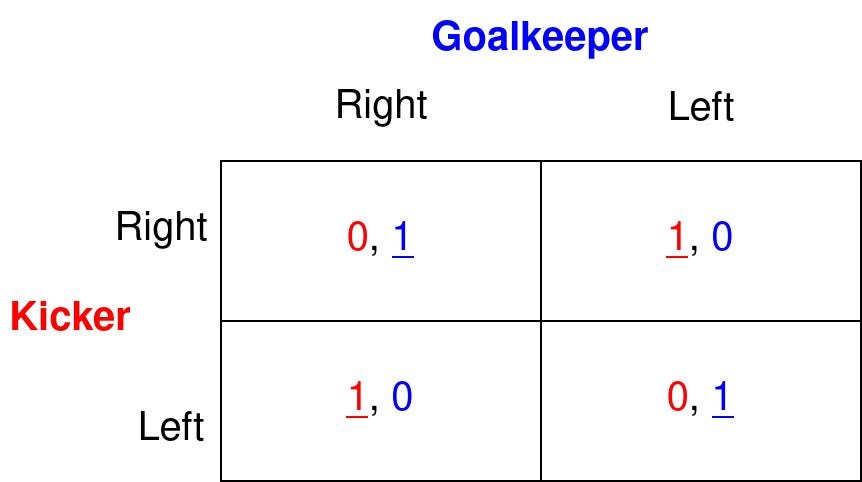
No, zero sum games do not always have an expected payout of zero; the expected payout depends on the strategies employed by players.
Have you ever pondered, do zero sum games have an expected payout of zero? It’s a common misconception that because one player’s gain is another’s loss, the overall expected outcome must always be nil. This idea seems logically sound at first glance.
However, the crucial element to consider is the strategies used by each player. The expected payout shifts based on these tactics, not just the nature of zero-sum scenarios. A game can be zero-sum but the expected return will vary.

Do Zero Sum Games Have an Expected Payout of Zero?
Let’s dive deep into the fascinating world of zero-sum games and explore whether their expected payout always lands at zero. It’s a concept that often confuses people, and we are going to break it down step-by-step. We will look at various scenarios and see how the math actually works. This will help you grasp the idea that zero-sum doesn’t automatically mean no one can win or lose, but rather that the total gain always equals the total loss in each instance.
Understanding Zero-Sum Games: The Basics
Before we get into the expected payout, it’s important to have a solid handle on what a zero-sum game actually is. Imagine a game where for every win, there’s a corresponding loss. The gains of one player directly match the losses of another player. Think of a simple coin toss where one player wins the dollar of the other player, or a chess match. The total amount of “stuff” stays the same throughout the game. If we assign positive values to gains and negative values to losses, the sum of all outcomes will always equal zero in these type of games.
Here are some key characteristics of a zero-sum game:
- Fixed Resources: The total resources being played for remains constant throughout the game.
- Direct Trade-Off: One player’s gain is equivalent to another player’s loss.
- No Value Creation: No new value is created within the game, only transferred between the players.
These types of games exist in various contexts. While many real-world interactions aren’t perfectly zero-sum, understanding the concept helps in analyzing decision-making.
Expected Value: Averages and Probabilities
Now, let’s introduce the concept of “expected value.” Expected value is a mathematical calculation that helps us determine what the average outcome of a scenario is. It’s not what will happen every single time. Instead it’s an average calculated over very many repetitions of a certain type of scenario.
Here is how we calculate expected value:
- Identify Possible Outcomes: List all possible results that could occur.
- Determine Probabilities: Find out how likely each outcome is.
- Assign Values: Give each outcome a numerical value representing its gain or loss.
- Multiply and Add: Multiply the value of each outcome by its probability, and then add all those results together.
The final result is your expected value. It represents what you can expect to gain or lose on average over many trials. For example, if you flip a fair coin, the probability of getting heads (and winning $1) is 50%, and the probability of tails (and losing $1) is also 50%. The expected value would be (0.5 $1) + (0.5 -$1) = $0. This means if you play this coin flip game many times, on average, you neither win nor lose money.
Does Expected Value Always Equal Zero in Zero-Sum Games?
Here’s where things get interesting. While every instance of a zero-sum game results in a net gain of zero (the combined gains and losses always equal zero), this is not the same as the expected value for each player individually always being zero. The expected value of an individual player can be zero, positive, or negative, even in zero sum games. The sum of all players expected values will always equal zero.
It’s crucial to differentiate between the combined total result and the individual expected value of any one player in particular.
Fair Zero-Sum Games
Let’s look at a very simple, fair game. A fair game is one where each player has equal probability of winning. A classic example is a coin flip: one person wins a dollar when it comes up heads and the other person wins a dollar when it comes up tails. It is an obvious zero sum game where a dollar changes hands. The chance of winning is 50%, and the chance of losing is also 50%. If we compute the expected value of such a game, it’s: (0.5 $1) + (0.5 -$1) = $0.
In this scenario, every individual outcome sums to zero; on each flip, one player gains a dollar and the other loses a dollar. And the expected value of the game for either player is also zero. These kinds of games, where all players have an equal probability of winning and the expected value for each player is zero, are often called “fair” zero-sum games. We expect no one to win, in average, and we expect no one to lose, on average.
Zero-Sum Games with Unequal Skill Levels or Information
But what happens when games are not “fair?” In many real-world scenarios, the players are not equal. Suppose a professional chess player plays against a novice. Is this still a zero sum game? Yes. One player will win and one player will lose (ignoring draws), and therefore the sum total of the wins and losses of both players will be zero. Suppose they each put in $10 for the winner, and the winner takes all 20 dollars. However the expected value of this game for each player is drastically different.
In this case, let’s assume that the experienced chess player is highly likely to win – perhaps 99% of the time. The novice, therefore has a 1% chance of winning. The winnings are $10 of the novice’s money and $10 of the expert’s money, the winnings are $20 total. For the experienced player, the expected value is: (0.99 $20) + (0.01 -$0) = $19.80 (the minus zero here is an abuse of notation, we should instead include the case in which he doesn’t win, and the winnings are negative 10. But for the expert’s value calculation, we’ve only shown the winnings part here, we will see the full calculation of both cases below.) The expected value of the game for the inexperienced player is much lower. (0.01 $0) + (0.99 -$20) = -$19.80 (same abuse of notation as above, but again we are only seeing his losses here). The expected value is not zero for either of the players even though it’s a zero-sum game.
Let’s calculate the complete expected value of each player, to avoid abuse of notation, or misinterpretations.
- Expert player expected value: (0.99 $10) + (0.01 -$10) = $9.80 (where $10 is the money that they win, and -$10 is the money they lose.)
- Novice player expected value: (0.01 $10) + (0.99 -$10) = -$9.80 (where $10 is the money they win, and -$10 is the money they lose.)
The key takeaway is that, in these unequal-skill zero sum games, the combined results are still zero but the expected value for each player can be vastly different.
Here’s another example: suppose you are flipping a coin against a person who has an unfair coin, which will land on heads 99% of the time. It’s a zero-sum game where one player’s gain is another player’s loss. The sum of the gains and losses across each instance of coin flipping is zero, but the expected value for the person with the fair coin will be much lower.
The Impact of Strategy
The presence of a strategic element can drastically alter the expected value of a zero-sum game. Games like poker, for instance, are zero-sum. One player wins what the other players lose. However, the skill and strategy involved can give a skilled poker player a significant edge. For a novice, the expected value might be negative, since they are more likely to lose money. The more skilled poker player, using good strategy, will have a higher, sometimes significantly higher, positive expected value.
Even in a purely zero-sum situation with no additional factors, strategic play can change the player’s expected value of the game to be better than random. Suppose you and your friend each have a closed hand. The only possibilities for each of you is showing one finger or two fingers. You both show the hands at the same time. If the number of fingers both of you show is even, your friend wins one dollar from you. If the number of fingers both of you show is odd, you win one dollar from them. This is a zero sum game. If you play completely at random, your expected value is zero. And your friend’s expected value is also zero. However, you could choose a strategy of showing one finger 75% of the time and 2 fingers 25% of the time, and your friend might choose a strategy of showing 1 finger 25% of the time and 2 fingers 75% of the time. In this case, the expected value of the game changes depending on the strategies each of you choose. This strategic element adds a layer of complexity and can dramatically influence individual player’s expected outcome.
Examples of Zero-Sum Games
Let’s look at a few more examples to solidify the concept. This time, let’s consider how these games play out in more detail:
- Market Trading: For every buyer who earns a profit in trading, there’s a seller who lost money and vice-versa. This is not always entirely true, since market making takes place and other considerations occur, however for the purposes of this discussion, this simplified example will serve. The combined total gain of all traders and all loss of all traders are zero. However, traders can have a positive or negative expected value depending on the strategy they use, how good they are, and their access to tools or information.
- Competitive Bidding: In an auction, one participant wins, but all others lose the bid amount. Although one player gets the object, the sum total of the money spent by the other players is zero, and the total amount of money spent by the players is the same amount gained by the seller.
- Sports Competitions: In sports with a single winner, such as chess or tennis, one player’s victory is directly equal to the other player’s loss. Again, the individual expected value for each player can vary considerably.
In each of these cases, the total net result across all participants is zero. However, individuals can experience different expected values based on skill, strategy, and other factors.
The Real World: How Zero-Sum Concepts Matter
While many real-world situations are not perfectly zero-sum, the idea can be useful to understand. Thinking about zero-sum scenarios helps one realize the trade-offs in competition. For example, if a business increases market share, it is likely doing so at the expense of competitors. While the economy might not be perfectly zero-sum, resources often can be limited, so there is often a competitive aspect, which can be viewed through a zero-sum lens. Understanding when a game is close to zero-sum can help you see these trade-offs and make better decisions.
Beyond Simple Games: Complexities and Nuances
It’s important to note that real-world scenarios are very often far more complex than simple coin flips or chess matches. Many situations have elements of both zero-sum and non-zero-sum dynamics. For instance, in a business deal, while one company might gain more in terms of profit, both sides might benefit in other ways. Sometimes collaboration and cooperation can lead to overall gains for everyone involved (such as an agreement to trade with one another, each specialized in a specific area), but competition can force a zero-sum game. Also, in many cases there is “value” lost by both parties due to time or resources. These situations are not strictly zero sum.
Also, zero sum games are more common in situations where resources are strictly limited. If the amount of “value” is not limited, then it is more likely to be a non-zero sum game. The important takeaway is to understand how and when the games are zero sum and also to recognize the many situations in real life where zero sum games do not apply.
Furthermore, even in games which are generally seen as zero-sum, the rules of the game can create situations where the overall value doesn’t remain constant. For example, an auction might have a “reserve price” which if no bid reaches, no value is exchanged, and in that instance, it may not be considered zero sum.
In summary, while in each instance of a zero-sum game, the total gain plus the total losses equals zero. The concept of “expected payout” as it pertains to an individual is more nuanced. While many types of zero sum games, such as the fair coin flip, may indeed give an individual player an expected value of zero, that does not mean that all players in all zero sum games have an expected value of zero. A player with a higher skill can have a higher positive expected value, while the less skilled player may have a much lower expected value, and sometimes even an expected value of below zero. In any case, the sum of the expected values of all the players in any zero sum game is always zero.
By understanding these distinctions, we can have a much more comprehensive view of decision-making under different circumstances.
Guide to Game Theory – zero-sum games
Final Thoughts
Essentially, in a zero-sum game, one player’s gain directly equals another’s loss. This fact alone does not guarantee an expected payout of zero. The ‘expected payout’ incorporates the probability of each outcome.
The payout’s expectation can be positive or negative for a given player based on their odds. Therefore, while individual plays might sum to zero, the overall expected value might not. do zero sum games have an expected payout of zero is not always true, expected payout for a player can differ.

