
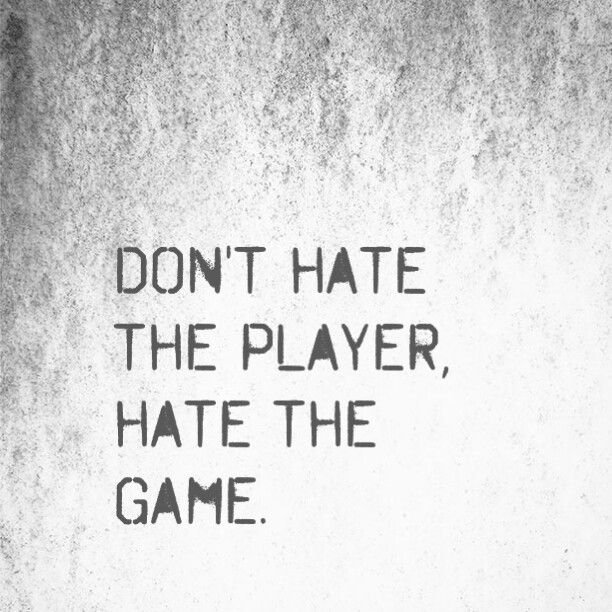
‘The idiom “don’t hate the player hate the game” suggests focusing criticism on the system or rules that influence behaviour, rather than blaming individuals operating within it.’
We’ve all been there, haven’t we? Seeing someone succeed using tactics we might not agree with, or watching a situation unfold where someone appears to be taking unfair advantage. It’s easy to get caught up in frustration, directing that negativity towards the person. But before you do, maybe it’s wise to consider what this saying tells us.
“Don’t hate the player hate the game.” This isn’t a pass for bad behaviour, but a prompt to examine the structures that permit or encourage it. Let’s delve into why this idea is so important.

Don’t Hate the Player, Hate the Game: Understanding the Real Issue
We’ve all heard the saying, “Don’t hate the player, hate the game.” It pops up everywhere, from sports to video games, and even in everyday life. But what does it really mean? At its core, it’s about recognizing that people’s actions are often shaped by the rules and systems they operate within. Instead of blaming individuals for their behavior, we need to look at the bigger picture and identify the things that might be causing problems. Let’s dive deep into this idea and examine how it applies to different situations.
The Core Meaning: System vs. Individual
This phrase emphasizes the difference between the person and the situation they are in. It is essential to understand that someone’s choices, even if they seem unfair or wrong, often come from how the system is set up. Imagine a video game where you must use specific strategies to win. If someone uses those strategies effectively, they aren’t necessarily ‘bad.’ Instead, the game’s rules made that the best path to success. When we “hate the player,” we are just reacting to what we see on the surface, without understanding the true reasons.
Recognizing Systemic Influence
Consider a school where the only thing that seems to matter is test scores. Students might feel compelled to cheat or engage in unhealthy study habits to get top grades. Instead of blaming the students for being dishonest or stressed, we could ask if the system itself—the emphasis on high-stakes testing—is part of the problem. A broken system often leads to undesirable actions from people within it.
- Focus on the root cause: Instead of focusing on a specific individual, we should examine the environment or system for issues that contribute to the problem.
- Understanding motivation: Often, actions that seem negative come from pressure created by the existing rules of the game.
- Promotes empathy: Looking at the “game” helps us understand why people behave the way they do, encouraging compassion and fairness.
How “Hate the Game” Applies to Sports
The phrase is most commonly heard in the sports world. It could mean that specific strategies or rules are encouraging some behavior that many fans don’t like. In basketball, some might complain about the rise of ‘flopping,’ where players pretend to be fouled to get an advantage. Instead of getting angry at these players, “hate the game” suggests the problem is with the rules that incentivize such actions. Sometimes, the design of the sport itself may lead to people using tactics that are technically legal, but perhaps not in the spirit of good sportsmanship.
Specific examples:
- Excessive fouls in basketball : If the rules make it beneficial to commit a certain type of foul often, players will likely do that. The issue is not the player, it’s with the rules.
- Time wasting in soccer : If a team is winning, the game allows time wasting and the winning team does it. This is not the fault of the players, but the rules and the system.
- Strategic rule interpretations : Some coaches push the limits of rules to gain a slight edge. Instead of blaming their approach, we could examine if these rules need to be revisited.
“Hate the Game” in Business and the Workplace
This idea of “hate the game” also applies to work. Imagine a workplace culture that encourages employees to constantly compete against each other for recognition or promotions. Such a system might result in less teamwork, and backstabbing. Here, the problem is not that people are naturally bad, but that the game they are playing encourages behaviors that aren’t ideal. If a business emphasizes only short-term profits, the employees may be pushed to make questionable choices.
Examples in the Workplace:
- Performance metrics: When companies overly focus on individual metrics, it might push people to chase numbers rather than collaborative work.
- Limited resources: When there is always a shortage of resources, or time people will fight for them, leading to a tense environment.
- Lack of transparency: If workers are not aware of decision-making processes, they might act out of frustration or distrust.
The problem usually isn’t the people working in those systems. By understanding the system at hand, we can find ways to make it fairer, more efficient, and better for everyone. If you are working in a competitive or stressful environment, it’s likely not because you are bad at your job, but you are being affected by the way the workplace is designed.
Social Issues and “Hate the Game”
Beyond sports and the workplace, “hate the game” applies to larger social and political issues. Consider situations where people are trapped in cycles of poverty or crime. Rather than blaming them for their circumstances, we should explore what systems create and perpetuate these issues. Things such as a lack of educational opportunities, job market inequality, and discriminatory laws can be factors that create a cycle. To make the changes that really matter, it’s important to see past the symptoms and look at the root of the issues.
Examples of Social Issues:
- Poverty: Poor people are often the victims of a flawed system and not necessarily victims of their poor choices.
- Discrimination: Systemic bias based on race, gender or religion can restrict access to opportunities for certain people, creating a challenging playing field.
- Environmental Degradation: Companies that pollute our earth, often do so because they are following the laws and guidelines and not necessarily because they are evil.
Looking at the larger context helps us understand the real causes of complex social issues. We need to address the underlying systemic issues that cause people to struggle, instead of just blaming the person.
When is “Hate the Player” Actually Appropriate?
While it’s important to avoid blaming people without understanding the context, sometimes “hate the player” is actually the correct response. This generally applies when someone is intentionally acting in bad faith, even when the system is fair. If a player purposely cheats despite the rules being fair, then the negative response is appropriate. It’s important to make the distinction between someone operating in a bad system and someone using the system to justify their bad behaviors.
Situations where “hate the player” is justified:
- Intentional cheating: When someone intentionally breaks the rules for personal gain.
- Exploitation: When someone is taking advantage of others, even if the system allows it.
- Harassment: When an individual causes harm to others in the process of the game.
The most important is to analyze and understand the situation before making any judgments. We should ask whether the person is making their choices under a bad system or they are intentionally acting against the spirit of fair play.
How to Change the Game: Taking Action
Once you understand that the problem isn’t always the person, the next step is to look at changing the game. This involves identifying the broken systems and pushing for a better design. This can mean advocating for different policies, creating fairer rules, or developing a better work culture.
Ways to improve the system:
- Policy changes: Push for new laws or regulations that make the playing field more fair.
- Cultural shifts: Educate people about the need for compassion and fairness.
- System redesign: Make the systems easier to understand, more transparent, and beneficial for all.
Improving the game can be slow and might require effort, but it’s essential to create a better world for everyone. We can start by critically examining the system and working to make it better for everyone involved.
The Power of Empathy: Walking in Another’s Shoes
The phrase “don’t hate the player, hate the game” is also a powerful reminder to approach situations with empathy. It asks us to try to understand the motivations and challenges that people are facing. We should try and understand the choices people make, even if we disagree with them. By acknowledging that the system affects us all, we can begin to find common ground and work for solutions.
Benefits of Empathy:
- Better communication: Helps people understand each other better.
- Reduced conflict: Understanding each other reduces arguments.
- Stronger relationships: When you are empathetic, your relationships grow.
- More effective solutions: Understanding the situation and the person, leads to better solutions.
Ultimately, by being aware of “don’t hate the player, hate the game,” we become more understanding and effective in solving the problems and improving our world. Instead of focusing solely on the people who are in the system, we need to evaluate the system itself and make needed changes. The main idea here is to be fair, see past the surface issues and make better decisions for all.
By understanding the system and being empathetic, we can help to create a more equitable and better world for everyone. This perspective reminds us that individual actions are influenced by wider systems and encourages us to focus on addressing the root causes of issues. By making changes to the systems that shape our lives, we can move closer to true fairness.
Don't Hate the Player
Final Thoughts
Ultimately, people react based on the system they operate within. Focusing blame solely on individuals overlooks the bigger picture of flawed structures. We must analyze how the rules themselves contribute to certain outcomes.
‘Dont hate the player hate the game’ is very important when we look at systemic issues. Individuals are often just reacting to the incentives or constraints they face. Therefore, constructive change demands an examination of those underlying rules and the system.

