
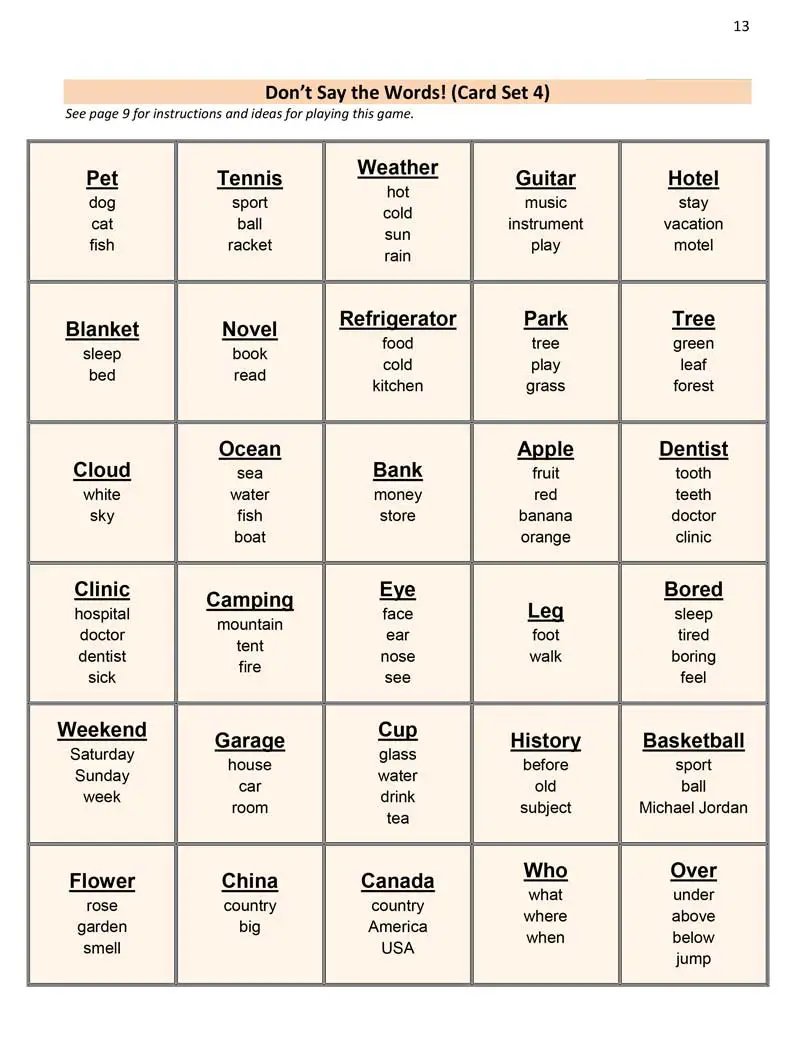
The objective of the ‘don’t say that word game’ is to get your teammates to guess a word or phrase without using a set of forbidden words.
Ever played a game where you feel the pressure of choosing the right words? This is exactly what the ‘dont say that word game’ brings to the table! It’s a fun way to test your vocabulary and thinking skills in a very creative way.
You need to guide your team without uttering the forbidden words, and it makes a simple game so tricky and hilarious. The core idea is to make them guess the word you have in mind.

The Hilarious World of the “Don’t Say That Word” Game
Have you ever played a game where you absolutely, positively, cannot say a specific word? It sounds easy, right? Well, think again! The “Don’t Say That Word” game, sometimes called “Taboo,” “Forbidden Word,” or even “Password” in different forms, is a fantastic party game that can turn a quiet gathering into a room full of laughter and ridiculous situations. The basic idea is simple: one person tries to get their teammates to guess a secret word or phrase, but they have a list of forbidden words they cannot say! It’s a challenge of quick thinking, creative explanations, and sometimes, pure dumb luck. Let’s dive deep into why this game is so much fun and how you can become a “Don’t Say That Word” champion.
Why This Game is So Popular?
So, what makes “Don’t Say That Word” so incredibly popular? It’s not just another board game sitting on a shelf. There’s a reason why people bring it out at parties, family gatherings, and even classroom events! Here are a few key reasons why this word game is a hit:
- It’s Easy to Learn: The rules are super simple. You don’t need a long rule book or complicated instructions. This makes it accessible for players of all ages, from kids to grandparents.
- It’s Great for Groups: Whether you have a small gathering of friends or a large party, this game works. It promotes teamwork and interaction among players.
- It’s Hilariously Challenging: The real challenge isn’t about knowing the answer, it’s about how you get there without using the forbidden words. This often leads to funny explanations and amusing moments.
- It Sparks Creativity: To get around the taboo words, you need to think outside the box. Players get very creative with their descriptions and gestures, which is always entertaining.
- It’s Fast-Paced: Rounds move quickly and keep everyone involved and energized. There’s rarely a dull moment.
- It Encourages Laughter: Ultimately, the game is designed for fun. Mistakes, strange clues, and the pressure of time all combine to create a lighthearted and funny atmosphere.
The Basic Rules: How to Play
Now that you know why it’s so fun, let’s talk about how to play “Don’t Say That Word”. While variations exist, here’s a general guideline:
- Form Teams: Divide everyone into two or more teams. This game works best with at least four players.
- Pick a Clue-Giver: Each team chooses one person to be the clue-giver for each round.
- The Secret Word/Phrase: The clue-giver receives a card, piece of paper, or digital prompt with a secret word or phrase they must get their teammates to guess. The clue-giver cannot look at the list of forbidden words before reading the secret word.
- The Forbidden Words: Each card also includes a list of forbidden words directly related to the secret word. The clue-giver cannot say those words while trying to give clues.
- Clue Time: The clue-giver has a limited amount of time (usually a minute or two) to get their team to guess the secret word/phrase. They can use any words except the forbidden words.
- Guessing: The team guesses the secret word based on the clues provided.
- The Buzzer/Penalty: If the clue-giver uses a forbidden word, another team member will ring a buzzer or indicate a penalty, ending the turn, and no point will be given for the turn. The next team begins their round.
- Scoring: Each correctly guessed word is worth a point. The team with the most points at the end of the game wins.
Variations and Twists on the Game
The core concept of “Don’t Say That Word” is simple, but it’s also flexible! There are many ways you can add twists to make it even more interesting. Here are a few ideas:
Time Limits
The standard game has time limits for the whole round, but you can adjust them to make the game harder or easier. You could make the time limit shorter for experienced groups or longer for younger players.
Different Themes
You can create cards for a specific category like “animals”, “movies”, or “famous people.” Theme rounds can be really fun and keep things fresh.
Actions and Sounds
Instead of just saying words, you could incorporate acting out clues (think charades) or making related sounds to get your teammates to guess, with a set of actions and a set of sounds that are taboo, making the game harder.
Drawing the Clues
In this version, the clue-giver needs to draw out clues, while also avoiding the forbidden words.
Point System Twists
Consider giving bonus points for particularly creative clues or adding a penalty, like losing a point, if a forbidden word is said.
Silent Clues
For an extra challenge, the clue-giver cannot speak at all and can only communicate through gestures, sounds, and acting.
The “Hot Potato” Rule
When a forbidden word is used, the turn doesn’t stop. The team loses a point. Play continues with the next person on the team giving the clue. This creates more pressure, leading to more laughter.
Individual Play
Instead of teams, every person for themselves can play, and the player with the highest number of correctly guessed cards wins.
How to Create Your Own “Don’t Say That Word” Cards
While you can purchase commercially made “Don’t Say That Word” games, making your own is easy and fun! Plus, you can tailor the game to your group or interests. Here’s how:
Decide on a Theme (Optional)
If you want, you can choose a theme like “sports,” “food,” “holidays,” or even a specific book or movie. This can help narrow down ideas. If you like a general mix of words, you can skip this step.
Choose a Secret Word or Phrase
Think of a word or phrase that will be fun to guess. It should be something well known to your group but not too easy. Example – “Swimming pool.”
List the Forbidden Words
This is key to the game! Think of words that people would likely say when describing the secret word. For example, if the secret word is “swimming pool” the forbidden words could be: “water”, “swim”, “pool”, “dive”, or “summer”. Aim for 3-5 forbidden words, depending on the secret word’s complexity.
Write it Out
Write each card with the secret word on top, followed by the list of forbidden words underneath. If you’re making digital cards, you can use a document or presentation software. If you’re making physical cards, use index cards or paper cutouts. You can even get creative with design, using colors or themed pictures.
Test the Cards
It’s always a good idea to test out your cards first, making sure they are challenging but not impossible. You may need to adjust some forbidden word lists or choose new secret words.
Tips and Tricks for Success
Want to go from a casual player to a “Don’t Say That Word” master? These tips can help:
Think Abstractly
Instead of focusing directly on the secret word, try thinking about its qualities, where you might find it, or other related ideas.
Use Synonyms Carefully
While you can’t use forbidden words, you can use similar words. But sometimes, the more obvious synonyms will be related to the forbidden word, so you need to be careful. Think about words that are less direct. For example, instead of saying “wet” when “water” is forbidden, say “moist.”
Don’t Be Afraid of Nonsense
Sometimes, the best clues sound silly or nonsensical. Using unusual descriptions or bizarre comparisons can be a great way to go around the forbidden words.
Observe Others
Watch how other players give clues. Pay attention to their strategies and see what works well. Learn from the best and avoid using strategies that do not work.
Practice Makes Perfect
The more you play, the better you will become. The more you challenge yourself in finding creative ways to give clues, the more your vocabulary expands. The game gets easier after a few rounds as your brain figures out how to think about words differently.
Pay Attention
Listen to the clues carefully. Sometimes, the clue is more direct than you might think. The clues may seem to confuse the other players, but may be clear if you listen carefully.
Embrace the Chaos
“Don’t Say That Word” can get very silly. Embrace the chaos, laugh at the funny mistakes, and have fun!
“Don’t Say That Word” in Education
The “Don’t Say That Word” game isn’t just great for parties; it also works well in educational settings. It provides many benefits, especially in language learning and critical thinking:
Vocabulary Building
The game forces players to think of synonyms and descriptive words, which is great for building vocabulary. They need to find new ways to describe ideas, which helps them learn new words.
Thinking on Your Feet
Players need to react quickly when they cannot use a specific word, helping them develop their quick thinking skills.
Creative Problem-Solving
Finding ways to describe something without using certain words challenges the students to think creatively and find new solutions. This encourages them to think outside the box, which is an important life skill.
Teamwork and Communication
The game encourages teamwork and communication, as people have to work together to succeed. Teamwork skills are essential for collaborative work in any area.
Language Skills
For students learning English or any other language, the game is a great way to practice new words and phrases. They can learn to think on their feet in a different language, which makes them more fluent and helps their understanding of the language.
Engaging Learning
Learning through games makes education more enjoyable and engaging, leading to better learning results. This is especially helpful for students who find traditional lessons boring.
“Don’t Say That Word” For Different Age Groups
This word game is suitable for many different age groups, with some adjustments. It’s a game that can evolve as children grow, making it a great choice for families.
Preschoolers and Early Elementary School
For younger children, use very simple words and fewer forbidden words. You can use pictures instead of written words for visual aid. You can also simplify the rules and allow extra time for clues and guesses. The focus is on introducing the fun of the game and learning the basic rules.
Late Elementary and Middle School
At this age, children can handle more complex words and more forbidden words. They also appreciate the competitive aspect of the game. You can introduce team play and keep score. They can handle themes and more nuanced clues.
High School and Adults
High schoolers and adults can handle complex topics, specialized themes, and subtle forbidden words. They enjoy the creativity, competition, and social aspects. This is where the game becomes more strategic and requires more abstract thinking.
The Social and Emotional Benefits
Beyond fun and mental stimulation, this word game offers social and emotional advantages:
- Laughter and Joy: Playing the game produces laughter, which has been proven to reduce stress and create positive emotions.
- Connecting with Others: It is a social activity that promotes connection and engagement among people.
- Handling Mistakes: Players make mistakes when playing, and the game teaches players to handle those mistakes with humor and grace, as well as the skill to quickly find an alternative.
- Boosting Confidence: When a player finds a great way to get a word across, they feel proud and confident. It promotes creative expression.
Where to Play “Don’t Say That Word”
This game is so versatile, you can play it just about anywhere!
- At Home: It’s a fantastic family game for a night in.
- Parties: It’s a classic icebreaker and party game for gatherings of all sizes.
- Classrooms: Great educational tool as discussed before, engaging the students in a fun way.
- Camping Trips: A great way to entertain when you have no electronic devices.
- Travel: Small, compact and easy to bring anywhere, making this game an ideal travel game.
Ultimately, the magic of “Don’t Say That Word” lies in its simplicity. It’s a game that anyone can understand and that consistently generates laughter and interaction. It’s more than a simple word game, it’s a tool for building friendships, enhancing creativity, and, most of all, having a whole lot of fun. So, next time you’re looking for a fun activity, give “Don’t Say That Word” a try. You might be surprised at how enjoyable it can be!
DON'T SAY IT! Word Game from Pressman Instructions + Review!
Final Thoughts
Ultimately, the ‘dont say that word game’ provides simple, yet engaging fun. It requires quick thinking and strategic word choices. Players must be clever to avoid the forbidden term.
This game offers a great way to improve vocabulary and communication skills. It’s a fantastic activity for various ages. You must try playing ‘dont say that word game’ for a guaranteed laugh.

