
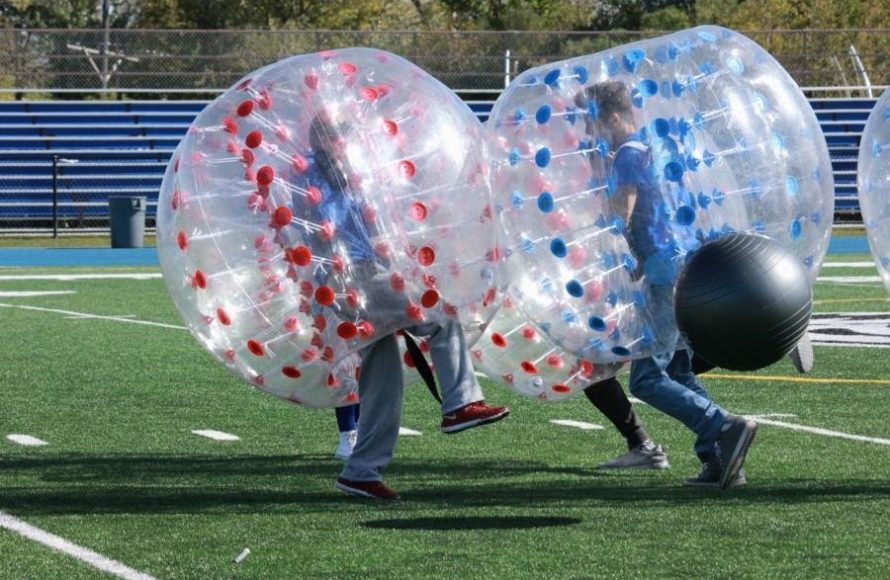
Fun assembly games involve quick, engaging activities that promote teamwork, communication, and problem-solving, often with minimal resources and setup.
Need a quick boost for team morale? Thinking about how to make those company-wide gatherings more than just dull announcements? Let’s explore some exciting ways to inject energy and laughter into your next meeting.
We’ve gathered a collection of ideas for fun assembly games that are sure to get everyone involved. These activities are designed to foster collaboration and make those large group meetings something people actually look forward to.
Get ready to turn those potentially tedious gatherings into opportunities for connection and shared fun!

Fun Assembly Games
Assembly games are fantastic for team building and injecting energy into any gathering. They can be quick icebreakers or longer, more involved activities. The key is to choose games that are appropriate for the group size and the amount of time available.
Games encourage collaboration and communication. These are essential skills for any successful team.
Quick Icebreaker Assembly Games
These games are perfect for starting a meeting or workshop. They’re designed to get people moving and interacting quickly. They help set a positive and engaging tone.
Human Knot
This classic icebreaker is always a hit. It encourages communication and problem-solving.
To play, have everyone stand in a circle, shoulder to shoulder. Have them reach across the circle and grab two different people’s hands.
Now, without letting go, the group must untangle themselves into a circle. It can seem impossible, but with teamwork and communication, it can be done!
Line Up
This is a simple game that can be adapted in many ways. The goal is to line up in a specific order without talking.
Possible variations include lining up by birthday, height, or shoe size. The lack of verbal communication forces people to find creative ways to communicate.
Two Truths and a Lie
A great game for getting to know each other. Each person shares three “facts” about themselves – two true and one false.
The others must guess which statement is the lie. It’s a fun way to uncover surprising details about colleagues.
Team Building Assembly Games
These games require more collaboration and strategic thinking. They’re designed to build trust and improve teamwork. They can be longer and more involved than icebreakers.
Egg Drop Challenge
A classic STEM challenge that encourages creativity and problem-solving. Teams must build a contraption to protect an egg from breaking when dropped from a height.
Materials can include straws, tape, cardboard, and bubble wrap. This game promotes innovation and resourcefulness.
Marshmallow Challenge
Another popular team-building activity. Teams must build the tallest free-standing structure using spaghetti, tape, string, and a marshmallow.
The marshmallow must be on top of the structure. This highlights the importance of planning and iteration.
Blindfolded Obstacle Course
This game requires trust and communication. One person is blindfolded, and their teammate must guide them through an obstacle course using only verbal instructions.
It’s a great way to improve listening skills and build trust between team members.
Human Bingo
Create bingo cards with squares like “Has traveled to another continent” or “Can play a musical instrument.” Participants mingle and find people who match the descriptions to get their squares signed.
The first to get bingo wins. It’s a fun way to encourage interaction and discover common interests.
Games Focused on Communication
Effective communication is essential in any assembly environment. These games help improve clarity and listening skills. They’re suitable for teams that need to collaborate closely.
Telephone
A simple but effective game to highlight how messages can get distorted. One person whispers a message to the next, and so on down the line.
The last person announces the message, which is often very different from the original. This emphasizes the importance of clear and concise communication.
Picture This
One person describes a picture or object without showing it. The others must draw what they hear based on the description.
This game highlights the challenges of conveying information accurately. The differences in the drawings often lead to hilarious results.
Story Chain
One person starts a story with a single sentence. Each person adds a sentence to continue the story.
This encourages creative collaboration and active listening. The stories can become increasingly bizarre and entertaining.
Assembly Line Simulation Games
These games simulate an assembly line process. They’re great for teaching lean manufacturing principles and improving efficiency. They provide hands-on experience with process improvement.
Paper Airplane Assembly Line
Teams set up an assembly line to produce paper airplanes. They can experiment with different configurations and processes to improve speed and quality.
This game illustrates the benefits of specialization and division of labor. It also helps identify bottlenecks in the process.
Cookie Decorating Assembly Line
Similar to the paper airplane game, but with cookies. Teams decorate cookies in an assembly line fashion, focusing on efficiency and consistency.
This adds a fun, edible element to the exercise. It’s a sweet way to learn about process optimization.
Building Blocks Assembly Line
Using building blocks (like LEGOs), teams create an assembly line to build a specific model. They focus on optimizing the steps and minimizing waste.
This is a more structured simulation that allows for precise measurement of efficiency.
Outdoor Assembly Games
These games are perfect for larger groups and outdoor settings. They encourage physical activity and teamwork in a more expansive environment. They are ideal for company picnics or team retreats.
Rope Course Challenges
Rope courses offer a variety of challenges that require teamwork and problem-solving. They can range from low-to-the-ground obstacles to high-flying adventures.
These activities build trust and encourage participants to support each other.
Scavenger Hunt
Create a list of items or tasks that teams must find or complete. The first team to complete the list wins.
This encourages exploration, teamwork, and problem-solving. The clues can be tailored to the specific location or company.
Field Day Games
Organize classic field day games like sack races, three-legged races, and tug-of-war. These activities are fun, competitive, and get everyone moving.
They promote a sense of camaraderie and friendly competition.
Virtual Assembly Games
With remote work becoming more common, virtual assembly games are essential. These games can be played online and help remote teams connect and collaborate. They’re great for maintaining team spirit and building relationships.
Online Escape Rooms
Many online escape rooms are designed for teams to solve puzzles and escape a virtual room. This requires communication and collaboration.
It’s a fun and engaging way to test problem-solving skills.
Virtual Team Trivia
Organize a trivia game using online platforms. Teams compete to answer questions on various topics.
This is a fun way to test knowledge and encourage friendly competition.
Online Pictionary or Charades
Adapt classic games like Pictionary or Charades for online play. Use video conferencing tools to communicate and share drawings.
These games are simple, fun, and require minimal preparation.
Murder Mystery Games
Many online murder mystery games are available. Teams work together to solve a crime by analyzing clues and interviewing suspects.
This encourages critical thinking and collaborative problem-solving.
Customizing Assembly Games
The best assembly games are those that are tailored to the specific needs of the group. Consider the team’s size, skills, and goals when choosing or adapting a game. Customization enhances engagement and learning.
Adapting Existing Games
Modify existing games to better suit the team’s needs. Change the rules, materials, or goals to make the game more relevant and engaging.
This allows you to tailor the experience to specific training objectives.
Creating New Games
Design new games from scratch based on the team’s challenges and goals. This allows for maximum customization and relevance.
Involve the team in the game design process to increase engagement and ownership.
Incorporating Company Values
Incorporate company values into the assembly games. This reinforces the company’s culture and promotes alignment.
For example, a game could reward teamwork, innovation, or customer focus.
Benefits of Assembly Games
Assembly games offer a wide range of benefits for teams and organizations. They improve communication, collaboration, and problem-solving skills. Games also boost morale and create a more positive work environment.
Improved Communication
Games encourage clear and effective communication. Participants learn to listen actively and express themselves clearly.
This leads to better understanding and fewer misunderstandings.
Enhanced Collaboration
Many assembly games require teamwork and collaboration. Participants learn to work together to achieve a common goal.
This strengthens relationships and promotes a sense of shared purpose.
Stronger Problem-Solving Skills
Assembly games often involve solving puzzles or overcoming challenges. Participants learn to think critically and creatively.
This improves their ability to solve problems in the workplace.
Increased Morale
Assembly games are fun and engaging. They can boost morale and create a more positive work environment.
This leads to increased motivation and productivity.
Choosing the Right Assembly Games
Selecting the appropriate assembly games is crucial for achieving the desired outcomes. Consider the team’s size, skills, goals, and available resources when making your selection. A well-chosen game can make a significant difference in team dynamics and performance.
Consider Team Size
Choose games that are appropriate for the size of the team. Some games work better with small groups, while others are better suited for larger groups.
Ensure that everyone has the opportunity to participate and contribute.
Assess Team Skills
Select games that align with the team’s skills and interests. This will increase engagement and motivation.
Avoid games that are too difficult or too easy.
Define Clear Goals
Establish clear goals for the assembly games. What do you want the team to learn or achieve?
Choose games that will help you achieve these goals.
Evaluate Available Resources
Consider the available resources, such as time, space, and materials. Choose games that can be played with the resources you have.
Don’t try to play a game that requires more resources than you have available.
Tools and Resources for Assembly Games
There are many tools and resources available to help you plan and execute assembly games. These include online platforms, game kits, and instructional materials. Utilizing these resources can save time and effort.
Online Platforms
Use online platforms to find and organize assembly games. Many websites offer a variety of games and activities.
These platforms often include instructions, materials lists, and tips for running the games.
Game Kits
Purchase game kits that include all the necessary materials for specific assembly games. This can save time and effort in gathering supplies.
These kits are often designed for specific age groups or skill levels.
Instructional Materials
Utilize instructional materials, such as videos and articles, to learn how to play assembly games. This can help you understand the rules and strategies.
These materials can also provide tips for adapting the games to your specific needs.
Examples of Assembly Games in Different Industries
Assembly games can be adapted for various industries and settings. Here are some examples of how different industries can use assembly games to improve teamwork and efficiency.
Manufacturing
In manufacturing, assembly line simulation games can be used to improve efficiency and identify bottlenecks in the production process. This can lead to increased productivity and reduced costs.
Teams can experiment with different configurations and processes to optimize the assembly line.
Software Development
In software development, collaborative coding games can be used to improve teamwork and communication. This can lead to higher quality code and faster development cycles.
Teams can work together to solve coding challenges or build software applications.
Healthcare
In healthcare, team-based simulation games can be used to improve communication and coordination among healthcare professionals. This can lead to better patient outcomes and reduced medical errors.
Teams can practice responding to medical emergencies or managing complex patient cases.
Education
In education, collaborative learning games can be used to improve student engagement and teamwork. This can lead to better academic performance and social skills.
Students can work together to solve problems, complete projects, or learn new concepts.
Cup Head Challenge – Quick Game for Any Group or Party #partygames #crowdgames #familygames
Final Thoughts
So, next time you’re planning a team event, remember the power of play!
Fun assembly games boost morale, build connections, and make teamwork enjoyable. These activities are a must for improving communication within any group setting.
Ultimately, incorporating fun assembly games ensures better collaboration and a more engaged, productive team. Don’t underestimate the value of these exercises!

