
No, Nintendo has not directly developed an M-rated game.
The question, “has Nintendo ever made an M rated game,” often surprises people. Most associate Nintendo with family-friendly fun, colorful characters, and gentle gameplay. However, the gaming world is complex, and ratings can sometimes blur the lines.
While they’re known for franchises like Mario and Zelda, their history also includes publishing games from other developers. So, the reality of Nintendo and mature content is a bit more nuanced than it appears.

Has Nintendo Ever Made an M Rated Game?
That’s a question many gamers, especially parents, often wonder. Nintendo is famous for its family-friendly games, characters like Mario, Zelda, and Animal Crossing. These franchises are designed to be enjoyed by everyone. But the Entertainment Software Rating Board (ESRB) gives games different ratings, like “E” for Everyone, “T” for Teen, and “M” for Mature. The “M” rating means the game is generally suitable for ages 17 and up, and often contains content like violence, blood, strong language, and suggestive themes. So, does Nintendo, the company synonymous with wholesome fun, ever create games with this mature rating? The answer is more complicated than a simple yes or no, and we’re going to take a close look at the fascinating history of Nintendo’s relationship with mature content.
The Rare Exceptions: Nintendo’s M-Rated Titles
It’s true that M-rated Nintendo-published games are rare. Very rare. The company historically shies away from content that could be deemed inappropriate for younger audiences. This strong focus on family entertainment has built Nintendo’s reputation. However, there have been a few times when Nintendo broke the mold and dipped into “M-rated” territory, it’s important to remember that the “M” label is determined by the ESRB in North America. Other regions have their own rating systems, sometimes with slightly different thresholds for what constitutes a mature rating. Therefore, a game rated “M” in North America may not be rated similarly in other places. So, let’s dig into some of these exceptions.
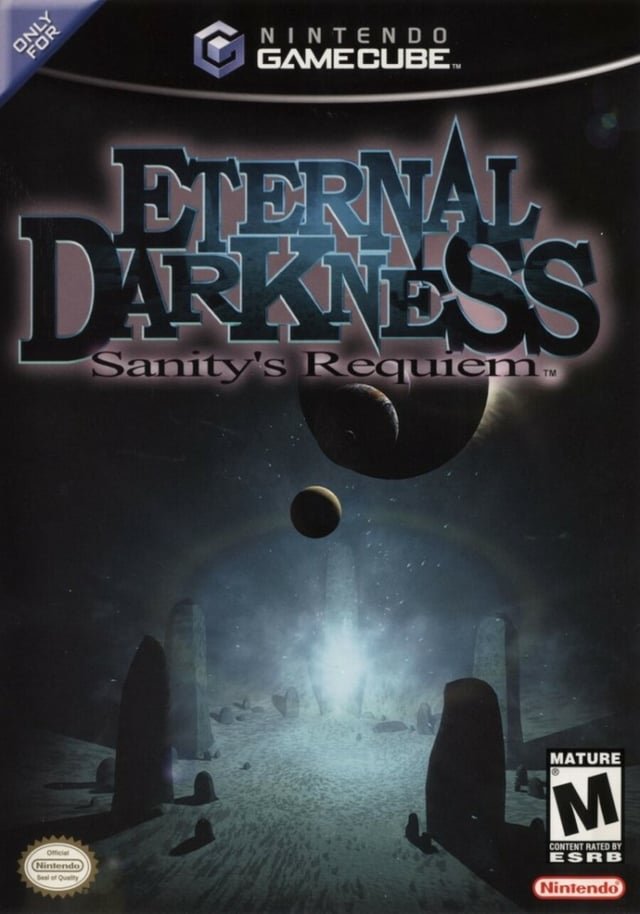
Eternal Darkness: Sanity’s Requiem – The GameCube’s Horror Gem
One of the most famous examples of an M-rated game published by Nintendo is Eternal Darkness: Sanity’s Requiem for the Nintendo GameCube. This survival horror game, developed by Silicon Knights, is renowned for its innovative “sanity effects”. The game messes with you, the player, through visual distortions, fake controller malfunctions, and even fake game restarts to represent your character losing their mind, and that’s why it received a mature rating. This psychological horror was unlike anything else Nintendo had ever published. While it features some violence and disturbing imagery, it is more focused on atmosphere and mental tension than gore. It is the game that people often bring up when this topic is discussed, showing just how big of an impression it made when Nintendo stepped outside its normal boundaries.
Geist – Another GameCube Venture into the Mature
Another GameCube game that pushed the boundaries for Nintendo is Geist. In Geist, you play as a newly deceased secret agent whose soul is ripped from his body. This game, with a focus on horror and dark themes, is a far cry from the vibrant world of Mario or Zelda and offers players a unique gameplay experience. It allows players to possess enemies in order to solve puzzles and move forward, it featured some violence and spooky themes and earned an “M” rating from ESRB.
Condemned 2: Bloodshot – A Brief Nintendo Partnership
It’s important to mention that there are instances of games that were rated “M” but are not entirely owned and published by Nintendo, for example, Condemned 2: Bloodshot. While Nintendo did publish it on the Wii, the game itself was developed by Monolith Productions and the publishing rights were co-owned by SEGA. This game was much more violent than your standard Nintendo game. It involved brutal melee combat and its dark psychological themes, contributing to its “M” rating. However, since Nintendo’s role was as a co-publisher rather than the primary developer or owner, this serves as an important distinction when discussing Nintendo’s own development choices.
Why So Few M-Rated Games from Nintendo?
Now, given that there are a few examples, the key question arises, why doesn’t Nintendo venture into “M” rated territory more often? There are several reasons that this is case:
- Brand Identity: Nintendo has very carefully cultivated an image as a family-friendly company. Their iconic characters and games are appealing to players of all ages, and M-rated games could potentially tarnish that image. Nintendo is aware that people associate their name with a particular kind of gaming experience and they don’t want to mess that up.
- Target Audience: Nintendo has traditionally focused on a very broad market with both children and adult audiences, not just adult gamers, and producing mature content would alienate a large part of their core audience, especially the family market. Games with M ratings could be difficult to market to the general public that may have younger children.
- Internal Policies: Nintendo has likely made an internal decision to avoid mature content as a general rule. They are a Japanese company, and Japanese culture often places emphasis on morality and wholesome content. This could influence the kind of games they choose to develop and publish.
- Platform Focus: Nintendo has always focused on creating hardware platforms that are user-friendly and accessible to everyone, a game with mature content could be perceived as out of step with the overall image of Nintendo and its gaming consoles.
The “T” Rating: Nintendo’s Comfort Zone
While “M” rated titles are rare, Nintendo does venture into the “T” for Teen category quite often. This rating allows them to explore slightly more mature themes and gameplay mechanics while staying within a range that’s acceptable to most families. Many games in the Zelda franchise, for example, receive “T” ratings for their fantasy violence and sometimes dark themes. But there’s still a very clear and deliberate difference in tone and content compared to an M-rated game.
Examples of “T” Rated Nintendo Games
Here are some of Nintendo’s most popular games that are rated “T” for Teen:
- Most games in The Legend of Zelda series: These games often have mild fantasy violence, but they rarely push the boundaries to become M-rated.
- Fire Emblem series: These strategy RPGs often include combat scenarios and some mild suggestive themes.
- Metroid Prime series: These first-person adventure titles contain intense violence but avoid the explicit content found in M-rated games.
The Evolving Gaming Landscape
The video game industry changes all the time. With new game development techniques emerging and the increasing push for realism, it would be interesting to see how the industry continues to evolve. With time, the boundaries of “safe” content may shift. However, Nintendo seems committed to its current course with their game and platform design, and it does not seem likely that we will see Nintendo regularly releasing M-rated games in the near future.
The Rise of Indie Games
It’s also worth noting that while Nintendo itself may not frequently publish M-rated games, their platform, the Nintendo Switch, plays host to hundreds of independent games that do carry an “M” rating. Many developers who want to create a more mature experience find their audience through independent releases on the Switch. These titles demonstrate that there’s a desire and market for more adult-oriented content on Nintendo platforms, even if it’s not directly produced by Nintendo themselves.
The Future of Nintendo and Mature Content
While the future is never certain, it’s doubtful that Nintendo will drastically change its current approach when it comes to mature content. Their core brand and target audience remain rooted in family-friendly fun. However, Nintendo has shown that it is willing to publish the occasional mature title, provided it brings an innovative or engaging experience that appeals to their overall design and standards. It’s always important to remember that the video game market and the audience continues to evolve, and it will be interesting to see how this will impact Nintendo’s decisions in the future.
In conclusion, while Nintendo is mostly known for its family-oriented games, there have been a few exceptions where they dipped their toes into “M” rated territory. These games demonstrate that Nintendo is willing to take risks, while also understanding their role in the market and preserving their image as a family-friendly company. While they do not focus on the M rating very often, Nintendo often produces high-quality games, with most being in the E or T rating spectrum.
M Rated Nintendo 64 Games (feat Resident Evil 2, Doom 64, Conkers Bad Fur Day)
Final Thoughts
Nintendo’s history is primarily with family-friendly titles. They rarely venture into mature content. This careful strategy has built their brand.
The question “has nintendo ever made an m rated game” often surfaces. Their focus usually remains on E or T rated experiences. This careful curation is a must.
The answer is no; Nintendo has never published a first-party game rated M by the ESRB. They may co-publish some that receive an M, but that is a separate case.

