
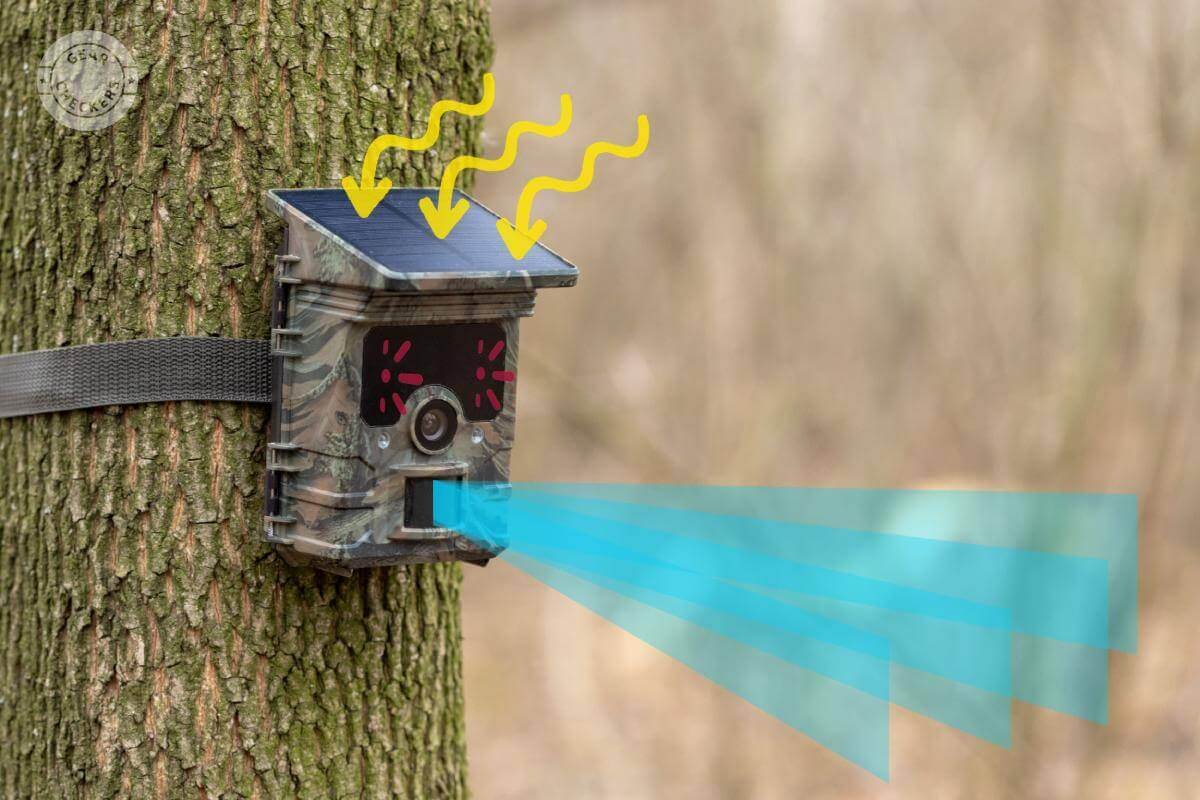
Game cameras use motion sensors to detect movement, triggering a camera to capture images or videos.
Ever wondered how those incredible wildlife photos appear seemingly out of nowhere? It’s all thanks to game cameras strategically placed in the wild. These clever devices automatically record when animals pass by.
They have a specialized ability to sense movement, and then quickly capture that moment. Now, you might be curious about exactly how do game cameras work? Well, the magic lies within their sensors and camera capabilities.

How Do Game Cameras Work?
Ever wondered how those cool pictures of deer, foxes, and maybe even a bear end up on the internet? Chances are, they were captured by a game camera! These clever devices are like little outdoor photographers, patiently waiting to snap a picture (or video) when something interesting walks by. Let’s dive into the exciting world of game cameras and see how they actually work.
The Basics of Game Camera Functionality
At their core, game cameras are designed to automatically capture images or videos of wildlife (or any moving object) without needing someone to constantly be there pushing the button. They do this using a combination of sensors, lenses, and storage. Think of it like a tiny, super-powered security camera for the wilderness.
The Magic of Motion Detection: PIR Sensors
The most important part of a game camera is its motion sensor. Most cameras use something called a Passive Infrared (PIR) sensor. These sensors are like little heat detectors. They don’t “see” with light, like your eyes. Instead, they pick up on changes in heat patterns. When a warm-blooded animal (like a deer or a squirrel) enters the sensor’s range, it causes a change in heat that the PIR sensor notices. It’s like having an invisible tripwire set up in front of the camera. This is how a game camera starts recording without needing a person to push the button.
Let’s break it down further:
- Passive: The sensor is ‘passive’ because it doesn’t emit any energy to detect movement; it only receives energy (heat) from the environment.
- Infrared: Infrared light is a type of light that we can’t see, but it is present in heat. All warm objects emit infrared radiation, and the PIR sensor picks up on this.
- How it works: The sensor has multiple detectors. When heat from an animal moves across the sensor’s range, it creates a change in the electrical signal. The camera then takes the picture or video.
The Lens and Image Sensor: Capturing the View
Once the PIR sensor detects movement, the camera’s lens and image sensor get to work. The lens is like the eye of the camera, focusing the light onto the image sensor. The image sensor is a small grid of tiny light-sensitive cells. When light hits these cells, they create an electrical signal, which is then processed into a digital image. It’s similar to how your smartphone’s camera works, just designed for outdoor and tough weather.
Important things to note about lens and sensor:
- Lens Quality: A good lens is very important for clear pictures and videos. Better quality lenses will capture more light and result in better images, especially at night.
- Image Sensor Size: Larger image sensors are generally better at capturing light, which means they perform well in low-light situations and can produce better image quality.
- Resolution: This determines how detailed the pictures and videos will be. Higher resolution means you can see more detail. Resolution is often measured in megapixels (MP).
Powering the Camera: Battery Life
Game cameras are meant to work independently for long periods of time in the woods, far away from power outlets. They depend on batteries as their power source. Most game cameras use standard AA or C batteries. Some, more advanced models, might have rechargeable batteries or even connections for external power. Battery life is a very crucial point when you’re shopping for a game camera. Camera setup will affect the battery life, frequent video recording will drain batteries faster than capturing images. Camera features, such as Wi-Fi or Bluetooth, can also reduce battery life.
Tips to maximize battery life:
- Use high-quality batteries: Alkaline batteries are a solid choice. Lithium batteries last longer, particularly in cold temperatures, and are great for longer deployments, they are slightly expensive, but very beneficial for longer deployments.
- Adjust settings: Reduce the frequency of recordings and the length of videos, adjust the sensitivity of the PIR sensor so that it is not triggered by leaves and plants waving in the wind.
- Consider an external power source: If your camera is in one spot for a long time, you can use a solar panel or other external power to keep the camera running.
Image and Video Storage
All the photos and videos that your game camera captures have to be stored somewhere. Most of them use SD (Secure Digital) cards to store data. These cards are like tiny, portable hard drives. The size and speed of the SD card determine how many images and videos you can save and how fast the camera can record.
Key things to consider:
- SD Card Size: Choose the card based on the length of time you’ll leave the camera out and the resolution you use for photos and videos. A 32GB or 64GB card can store thousands of images, or several hours of video.
- SD Card Speed: The speed of the card matters for videos; faster cards can record and save video without any problems.
- Formatting the card: Make sure you format your SD card in the camera before you start using it for the first time.
The Trigger Speed: Capturing That Quick Movement
Trigger speed is the time it takes between the motion sensor being activated and the camera capturing the picture or starting to record a video. A fast trigger speed will capture animals that move quickly in front of the camera. If the trigger speed is slow, the animal might already be out of the field of view before the camera takes a photo. For best performance, choose a camera with fast trigger speeds, especially if you plan to photograph fast-moving animals. A trigger speed of less than 0.5 seconds is a great start for most scenarios.
Night Vision: Seeing in the Dark
A lot of animals are most active at night, so game cameras need to capture images in the dark. That’s where night vision comes in. Here’s how they do it:
Infrared (IR) Flash
Most game cameras use infrared (IR) LEDs to illuminate the scene at night. These LEDs emit infrared light that is invisible to the human eye and most animals. There are two types of IR flash:
- Low-Glow IR: Produces a subtle red glow that’s slightly visible at night. It can result in clearer images, but animals might notice the glow if they are close.
- No-Glow IR: This is completely invisible to the naked eye. It doesn’t spook the animals, but often produces images that have less details.
Image Processing
Game cameras use advanced image processing techniques to produce clearer pictures in low-light conditions. This can include sharpening, noise reduction, and adjusting contrast, to make images clearer.
Camouflage: Blending In
Game cameras are often placed in natural settings, so it’s essential that they blend in. Most game cameras come with camouflage patterns on their housing, which helps them hide from both animals and people. Colors include green, brown, and grey. Choosing a camera with effective camouflage will make it less likely to be noticed by any intruders, this is also good for the animals as they are less likely to be scared by something new in their environment.
Durability: Weatherproofing
Game cameras are made to survive harsh conditions, such as rain, snow, and heat. Most cameras have weatherproof housing, that protects the internal electronics from the elements. Look for cameras that have at least an IP rating of 54 or higher, which means they are resistant to water, dust, and other common outdoor issues.
Additional Features
Beyond the basic functions, many game cameras come with added features. Here are a few examples:
- Time-lapse Mode: Allows the camera to take photos at set intervals, like every hour, and this helps to observe changes over a longer period of time.
- Video Recording with Audio: Records video with sound, giving you a more detailed picture of what’s happening.
- GPS Tagging: Automatically tags photos with GPS coordinates, which can be very helpful for you to track the location of your game camera, especially if you are using multiple cameras.
- Wireless Connectivity: Some cameras offer Wi-Fi or Bluetooth connectivity to transfer images and videos to your phone or other devices.
- Cloud Storage: Some cameras provide cloud storage options, so your data is safe even if your camera gets stolen or damaged.
Setting Up Your Game Camera: Placement Matters
Knowing how a game camera works is important, but knowing where to place it is just as important. The best place to set up your camera depends on the purpose. Here are a few common practices:
- Game Trails: Place the camera on or near trails animals often use.
- Feeding Areas: If you know that animals come to eat in a certain area, place a camera nearby to catch their behavior.
- Water Sources: Animals need water, so placing cameras near creeks, ponds, or lakes is a good way to capture different species.
- Openings: Placement at the edges of open areas can provide good images and video quality.
- Away from Direct Sunlight: Direct sunlight can affect image quality and battery life.
- Secure the Camera: Secure the camera with a cable lock to prevent theft and make sure the camera is firmly mounted on a tree.
In conclusion, game cameras use a blend of technology, including PIR sensors, high-quality lenses, image sensors, IR flash, and storage solutions to capture pictures and videos of animals or other moving objects in their natural habitat. These devices are designed to be durable, energy-efficient, and stealthy. They are a great tool for observing nature and learning about wildlife, or for keeping an eye on your property. By understanding the different components and features, you can get the most out of your game camera and capture amazing photos and videos.
How Do Cellular Trail Cameras Work
Final Thoughts
Game cameras use motion sensors to detect movement. These sensors trigger the camera to take photos or videos. Infrared LEDs provide illumination for night captures. The collected images and video are then saved to a memory card.
Essentially, this is how do game cameras work. They capture wildlife activity automatically. These cameras offer valuable insight to wildlife movement.

