
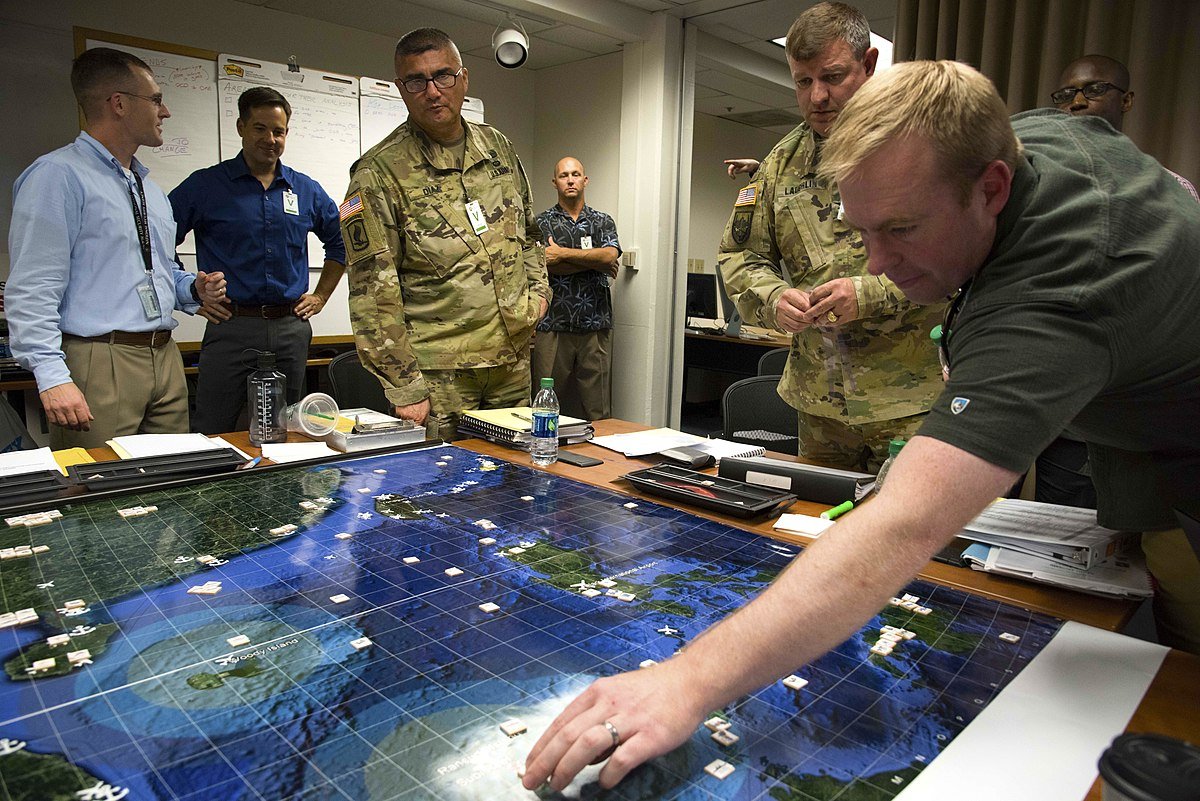
War games work by simulating conflicts using rules and scenarios, allowing participants to explore strategies and potential outcomes without real-world consequences.
Ever wondered how military strategists prepare for the unimaginable? The answer often lies in war games. These complex simulations provide a safe environment to test ideas. They allow participants to experience the chaos of combat. This is all done without risking lives or equipment.
The core of these exercises is to understand how different tactics and decisions might play out. They involve creating specific scenarios and rules. Then the participants, acting as various forces, implement their game plans. That’s how do war games work in a nutshell. These simulations are invaluable for learning and adapting.

How Do War Games Work?
Have you ever wondered how generals and military leaders plan big operations? They don’t just jump into battle blindly! A big part of their planning involves something called “war games.” These aren’t the kind of games you play on a video game console or with a board. Instead, war games are serious simulations that help people practice and figure out the best strategies for different situations. Let’s explore how these interesting and important games work!
What Are War Games?
At their core, war games are simulations of conflicts. Imagine it like a giant, complex game of chess, but instead of just a few pieces, you have whole armies, ships, and even entire countries involved. These simulations try to recreate real-world situations, from small skirmishes to large-scale wars. The main goal is to learn, test ideas, and improve decision-making. It’s like a practice run before the real thing, but without any real danger. They help military personnel understand the possible outcomes of their decisions.
Why are War Games Important?
War games provide a safe and controlled environment for learning. They allow people to make mistakes without any serious real-world consequences. This is really important because in a real war, a mistake can be very dangerous, even deadly. Think of it like practicing for a sports game, or running through the choreography for a dance recital. By practicing different scenarios, war games improve strategic thinking and the decision-making processes of the participants. This is why militaries, governments, and even some businesses use war games.
Types of War Games
War games come in many forms, and each type is made to focus on a certain aspect of conflict. Here are some common types:
Manual War Games
These are the original way of war gaming, and they often involve maps, charts, and physical markers to represent different units. People physically move these markers around the map as they play out the scenario. This type of war game requires a lot of manpower and can be a very hands-on way of understanding conflict. It’s like playing a big, real-life board game where you are moving all the pieces and discussing each move.
How Manual War Games Work
- The Scenario: The game starts with a specific situation, like a border dispute or a natural disaster.
- The Map: A map is created with terrain features like mountains, rivers, and cities.
- The Markers: Small pieces, like blocks or miniatures, are used to represent troops, vehicles, and equipment.
- The Rules: A set of rules dictates what each piece can do, the results of battles, and how the game progresses.
- The Players: Teams of people take on different roles, such as army commanders or political leaders.
- Moving Pieces: Players move their markers on the map based on the scenario and rules, making decisions that they believe will lead them to success.
- Discussions and Decision-Making: Throughout the game, players discuss their plans, make decisions, and track the outcome of their actions.
Computer-Assisted War Games
As technology has gotten better, war games have moved to computers. These games use software to simulate the conflict, which can do things like calculate battle outcomes and track unit movements. This makes them faster and more accurate than manual games. Computer-assisted war games can also be used to simulate complex situations that would be very difficult to do manually.
How Computer-Assisted War Games Work
- The Software: Special computer programs simulate battles and track changes in the game.
- The Data: Data about troops, equipment, and terrain are put into the computer.
- The Players: Participants use computers to give commands and move their units.
- The Simulation: The computer calculates the results of actions based on the data and programmed rules.
- Analysis: The computer generates reports and data for participants to review and learn from.
Hybrid War Games
Sometimes war games mix manual and computer elements. For example, you might have a computer managing some aspects of the game, while players still use maps and markers to visualize the situation. This is a good mix of hands-on interaction and the speed and complexity offered by a computer. This blending of methods helps create more realistic and engaging training experiences.
Key Components of a War Game
Regardless of the specific type, all war games share some key elements that are very important to their success:
Scenario Design
A well-made war game begins with a well-defined scenario. This scenario describes the situation, including the goals of each side, the forces involved, and the environment. It’s basically the story that sets up the game and provides the context for the game. A good scenario should be believable and challenging and based on actual data to provide a useful experience.
The Players
The participants in a war game are usually made up of teams, each of whom represent different groups, like a military force, a political party, or an organization. Each team has its own set of goals and resources. This helps participants learn how their own decisions impact the whole situation. It encourages collaboration and communication skills. The people playing war games are a big factor in how useful the game is.
Rules and Mechanics
Every war game has a set of rules that tell participants how to proceed. These rules dictate how battles work, how resources are used, and how the game is won. A good set of rules should be balanced and fair, ensuring that all players have an equal opportunity to succeed. Rules help create a clear understanding of the boundaries and possibilities within the simulation, which helps maintain realism.
Data and Analytics
War games produce a large amount of data about the decisions made and the resulting outcomes. This data is analyzed to see what strategies worked and what didn’t. This is how the players learn from the simulation and find ways to improve for real-world situations. The ability to gather and analyze the data is crucial for the learning process in war games.
The Process of a War Game
Here’s a look at how a war game usually unfolds:
Planning and Setup
Before the game can begin, someone has to design and plan out the scenario, create all the rules, and prepare all the required equipment. This may include putting together maps, creating charts, making simulations, or gathering the players. This setup is very important because it helps make sure the game runs smoothly and that everything is ready when the players are prepared to start.
Game Play
During gameplay, the different teams make their decisions, carry out their plans, and interact with each other. This involves moving units on a map, sending messages to other players, and making strategic choices. The game is usually played in rounds or turns, with each side taking actions according to the rules. It’s during this phase that participants experience the real consequences of their choices within the simulation.
Analysis and Debrief
After the game has ended, it’s important to look back and analyze what happened. Players talk about their decisions and how they impacted the results of the game. This step is important for identifying the strengths and weaknesses of different approaches. This helps participants learn from their experience and apply the lessons to real-world situations. The debrief part is where the true value of a war game is often seen.
What are the Benefits of War Gaming?
The use of war games offers many advantages in different contexts. Let’s check out some of the benefits:
Strategic Planning
War games help organizations test different ideas and approaches before they put them in to place. It helps them to check the possibilities of success and identify possible problems early on. This can save a lot of time, resources, and also reduce the risk of mistakes. Strategic planning is one of the main reasons why war games are very popular and effective.
Risk Management
War games allow you to look at different situations and understand the possible risks that can occur. By understanding the possible risks, leaders can make more aware decisions and develop strategies to minimize the damage. War games provide a way to look into the future without actually experiencing it, which is important for responsible planning.
Improved Communication
During war games, teams have to talk to each other and work together. This helps to improve communication and teamwork. By working together, the participants learn about other point of views and collaborate to find the best solution. This teamwork and communication is something which people find useful in many real-world situations.
Decision-Making
War games can help improve people’s decision-making skills. Through the simulation, participants have to make a lot of choices, which they then learn the consequences of. This helps them to think clearly under pressure, which are skills that can be used in many different fields. This ability to make quick and informed choices is an asset in any high-stress job.
Training
War games are great for training people in new skills and helping them to understand complex situations. They offer a way to learn and practice without the real world risks. This makes the process safer, efficient, and more useful for training in many types of fields, like military, business, and public health organizations.
Who Uses War Games?
War games are not just for military organizations. Many different types of organizations can make use of war gaming in their planning:
Military
The military is the most common user of war games. They use them to test out new strategies, prepare for missions, and educate their personnel. War games are an important tool in military planning because they help identify what works and what doesn’t before real action is taken.
Government
Governments also use war games to think of responses to national security, disasters, and other kinds of emergencies. This helps them prepare for different situations and be ready to act quickly. War games in government help improve planning for public safety and national security.
Businesses
Even businesses can use war games to test out their different ideas and plans. This can be beneficial for new product development, marketing campaigns, and responses to market changes. These simulations help businesses learn and find the best ways to get ahead of the competition.
Academia and Research
Colleges and research organizations use war games to study complex problems and to make models of social and political situations. This helps them understand these issues and identify possible solutions. Academics and researchers use war games as tools for learning and discovery.
War games are an amazing tool for learning and planning. They give a safe way to practice complicated situations and make plans. Whether it is on a map or on a computer, the purpose is same, to find new ideas, test different actions, and learn from the results. As technology improves, war games will become more important in our world.
DC group's wargame predicts how China vs US war would end
Final Thoughts
War games simulate conflicts using rules and scenarios. Participants, often representing opposing forces, make decisions based on provided information. These actions drive the progression of the game, with outcomes assessed by a control team. This shows how do war games work by testing strategies and identifying potential weaknesses.
They help refine tactics and understand complex interactions. The simulation provides a safe environment to explore various outcomes. They let players practice decision-making under pressure.

