
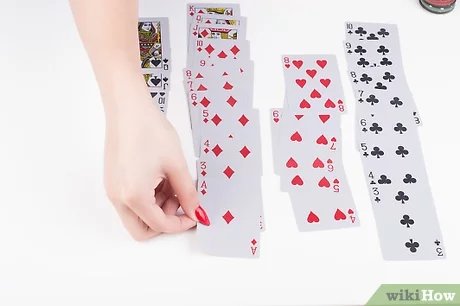
To play sevens card game, you start by dealing all cards. Players then lay down cards in sequence, beginning with any seven. Then build ascending and descending suits from the sevens. The first player to discard all their cards wins.
Ever wondered how to play sevens card game? It’s a classic, family-friendly activity that’s easy to pick up but offers plenty of engaging fun. The game requires a standard deck of cards and a bit of strategy.
This game is all about building sequences. You will have to quickly assess your hand and plan your moves. The aim is simple to be the first one to get rid of all your cards.

How Do You Play Sevens Card Game?
Alright, let’s get down to brass tacks and figure out how to play the super fun card game called Sevens! It’s not as tricky as it might sound, and once you get the hang of it, you’ll be wanting to play all the time. Sevens is a shedding-type card game, meaning you’re trying to get rid of all your cards before anyone else. It’s a perfect game for families, friends, or anyone looking for a little card-playing fun. Think of it like a race to see who can make the most card combinations and drop them onto the playing area first! We’ll explore everything you need to know, from the basic rules to a few little tricks that can help you win. So, grab a deck of cards, and let’s dive in!
The Basics of Sevens
Before we start playing, let’s understand the core idea. In Sevens, your goal is to be the first player to get rid of all your cards. You do this by playing cards in sequence, building outwards from the sevens of each suit. Remember, there are four suits: hearts, diamonds, clubs, and spades. Each suit has a seven and these are the start of each line.
The Setup
First things first, you need a standard deck of 52 playing cards. You will also need at least two players to play, but up to six can enjoy the fun. Here’s how to prepare:
- Shuffle the Deck: Give those cards a good shuffle to mix them all up randomly.
- Deal the Cards: Deal all the cards out to all of the players. It doesn’t matter if some players have one card more than the others. Deal them face down to every players. Players pick up and look at the cards.
- The Play Area: Designate a spot in the center where you’ll be building the suit sequences. This is where all the cards will be placed to make runs.
Gameplay: How to Play
Now, for the fun part – playing the game! Here’s a step-by-step guide to understanding how a round works:
Starting the Game
The player who has the 7 of hearts starts the round. They place this card face-up in the middle of the play area. We start building suit runs from the seven of each suit. If no one has the 7 of hearts, then the players should see who holds a seven in any suit. The player who has any 7 should start the game by placing that seven of the suit first. The play moves in a clockwise direction.
Taking Turns
Each player takes a turn, in a clockwise fashion around the table. On your turn, you have options. You can do only one thing per turn, and that is to play a card or pass the turn. The player must play a card if they can, and if they can’t they have to pass. Let’s take a look at the rules regarding placing a card.
Playing a Card
You can play a card if it meets one of these conditions:
- It’s a seven: If no seven of that suit has been played, you can play it to start that suit’s line.
- It’s next in sequence: You can play a card that is one higher or one lower than a card already on the table, but only of the same suit. For instance, if the 8 of hearts is on the table you could play the 9 of hearts or the 7 of hearts.
Once you place a card, it’s your next neighbor’s turn. All the cards on the play area have to be face up so that all the players can see them. Remember if you have a valid card to play, you must place that card.
Passing
If you can’t play a card, then you must pass your turn. You would say “pass”. Then, the turn goes to the player to your left. You skip your turn if you don’t have a valid card to play. You can pass more than once during a round.
Building the Sequences
The goal is to build sequences of each suit, moving away from the seven. For example, with hearts you will have a sequence like this: 7, 8, 9, 10, Jack, Queen, King, Ace on one side and 7, 6, 5, 4, 3, 2, Ace on the other. All suits are built on each side of the seven. In other words, once a seven is played for a suit, play builds up from that seven towards the King and down to the Ace in each direction.
Here’s how the building of cards work in practice:
- If the 7 of diamonds is on the playing area, a player could play the 8 of diamonds or 6 of diamonds to continue the line of diamonds.
- If a 6 of Clubs is in place, a player could play the 5 of clubs, provided the 7 is already on the play area.
- The ace can be played on either end of the suit, so once a “2” or a “king” is played. you are allowed to add an ace to the end.
Winning the Round
The first player to get rid of all their cards wins the round! The game usually continues for several rounds with the winner of each round being the first one to have gotten rid of all the cards.
Strategic Play Tips
While Sevens is straightforward, there are a few strategic tips that can improve your game.
Blocking
Sometimes, it can be advantageous to hold onto a card to block another player. For example, if you see the 6 and 8 of clubs are played and if you have the seven of clubs, it might be better to hold on to that card. By holding the 7 of clubs you can make sure the next player in line is unable to add any cards to the play area, they must pass and this give you more options to play. Also, observe what cards other players are holding, if you know someone does not have certain cards, you can deduce which card is needed to continue a run on the play area and this knowledge can guide you to the best choice. Don’t always rush to play a card right away, sometimes observing and thinking of the outcomes is a smart choice.
Remembering Cards
Keep track of the cards that have already been played. If you know the 5 of hearts has already been played, and you see a player is holding on to the 6 of hearts, they will likely be able to place it soon. This gives you a little insight into what cards other players have, so you can plan your turns accordingly.
Holding Back
If you have multiple cards that could be played, think about the impact of each. Sometimes, it’s wiser to hold onto a card and play a different one that helps open up more opportunities on your next turn. For example, if you hold the 6 of diamonds, 8 of diamonds and 10 of diamonds, it may be more strategic to hold on to the 8 of diamonds, so that you can play it in future. By holding on to it, you will have the 7 of diamonds on the play area, 9 of diamonds and 10 of diamonds, if you had played the 8 of diamonds instead, it may not be strategic, so think before playing the cards.
Variations of Sevens
Like any good card game, there are a few fun variations you might come across.
Passing on Different Rules
Some versions of Sevens allow passing before the first seven is played. Players must pass if they don’t hold the first seven. Other variations might require the player that has to start with a seven, play a maximum amount of sevens if they have multiples in their hand. Usually the main variation is regarding the rules of passing.
Different Scoring
Some players prefer to keep score, especially if you’re playing multiple rounds. One common method is to assign points based on the cards left in each player’s hand at the end of a round. For example, cards 2 through 9 could be one point each, face cards (Jack, Queen, King) could be worth ten points, and Aces could be worth 11 points. The player with the lowest score at the end of a set number of rounds wins.
Partnerships
If you have a bigger group you can even play sevens in partnership. Divide the players into two groups. Then the game proceeds as normal, except the aim is to be the first team to get rid of all their cards.
Why Sevens is Great
Sevens is popular because it’s easy to learn but still offers opportunities for strategic thinking. It is a great game for:
- Family Fun: It’s a game that kids and adults can enjoy together, making it a fantastic option for family game nights.
- Quick Games: It’s a relatively quick game, which means you can play several rounds in a short time.
- Social Gatherings: Sevens is great for playing at parties or casual get-togethers because it’s easy to pick up and participate.
- Improving skills: It also helps in improve memory by remembering what card has been placed in the play area, and deduction skills by observing how other players are acting in the game.
Tips for Beginners
New to Sevens? Here are a few tips to help you get started:
- Don’t rush: Take your time during your turn. Observe the playing area and assess your cards before making any decision.
- Practice: Play a few rounds to get a better feel for the game. The more you play, the better you’ll become.
- Ask questions: If you don’t understand something, don’t be shy to ask questions. It’s always better to be clear about the rules.
- Have fun: Remember that the main goal is to enjoy yourself! Don’t get too hung up on winning, just enjoy the experience.
So, there you have it—a comprehensive guide to playing Sevens! It’s a game that’s easy to learn but has some strategic depth. It’s a great way to spend time with friends and family. Now that you know the rules, go ahead, grab a deck of cards and have a great time playing sevens!
How to Play Sevens (Card Game)
Final Thoughts
The game starts with the lowest card, the seven of diamonds. Players must play cards sequentially upwards or downwards in suit. For example, after the seven of diamonds, a player can place the six or eight of diamonds.
If a player cannot play, they must pass their turn. The objective is to be the first player to get rid of all your cards. How do you play sevens card game? It requires strategic card management and careful observation of opponents’ actions to make effective plays.

