
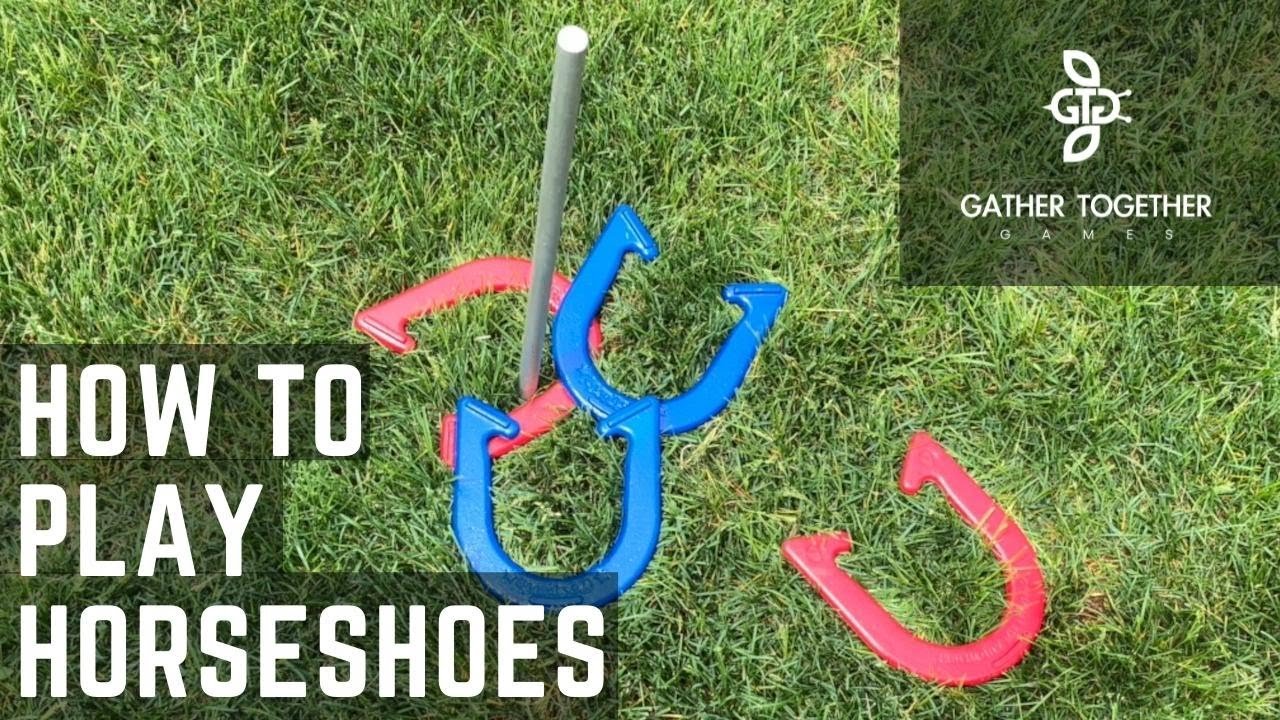
To play horseshoes, you toss the horseshoes towards metal stakes, aiming to have them encircle the stake (a ringer) or land closest to it.
Ever wondered how do you play the game of horseshoes? It’s a classic outdoor activity that’s easier to get into than you might think. The game requires just a few simple pieces of equipment.
You’ll need horseshoes and stakes, typically set a certain distance apart. Players take turns throwing the horseshoes, hoping to get them closest to, or ringing, the stake. Scoring is based on the landing positions of the horseshoes.

How Do You Play the Game of Horseshoes?
Horseshoes, a classic backyard game, is easy to learn but can be tricky to really get good at. It’s a game that friends and family can play together, no matter their age. The main idea is simple: throw horseshoes at a stake and try to get them as close as possible, or even better, get a ringer! Let’s get into the details and you’ll be playing like a pro in no time.
Understanding the Court and Equipment
Before you start tossing horseshoes, you need a proper setup. This includes the court and the equipment. Let’s break it down:
The Court
A horseshoe court is basically two stakes placed a certain distance apart. Here’s what you should know about setting up your court:
- Distance: The standard distance between the two stakes is 40 feet for adults. For younger players, you can shorten this distance to make it easier. There isn’t one ‘official’ kids distance, but you could try 20 to 30 feet.
- Stakes: The stakes should be metal and stand about 14-15 inches above the ground. They should lean slightly towards each other (about 3 inches). This helps the horseshoes stay on the stake and not just slide off.
- Pitching Boxes: There are usually boxes (or areas) on either side of each stake that are about six feet wide and about three feet deep. These are the spots where players throw from.
- Surface: The playing surface is generally dirt or sand because it’s safer and softer if a horseshoe falls on it, and it will help the shoe stick if it lands near the stake. Grass is harder to use because it is less forgiving for landing shoes.
The Horseshoes
Horseshoes themselves come in different weights and sizes. Here’s what to look for:
- Material: Most horseshoes are made of steel, but there are also rubber and plastic options available, especially for beginners and children. Steel is preferred for official tournaments and more serious players.
- Weight: Official horseshoes for men weigh about 2.5 pounds. Women and children typically use lighter shoes that are easier to handle. You can find some as light as 1.5 pounds.
- Shape: All horseshoes have a rounded shape with an open end. This open end lets the horseshoe fit around the stake.
Having the right setup is a key part to having a safe and enjoyable game. Now, let’s learn how to throw those shoes!
The Basic Throwing Techniques
There are several ways to throw a horseshoe, and finding the one that works best for you is part of the fun. Here are some of the most common styles:
The Flip Throw
This is often a good starting throw for beginners. Here’s how to do it:
- Grip: Hold the horseshoe by the top, so it is in a “U” shape with the open end pointing away from you.
- Stance: Stand with your feet shoulder-width apart, facing the stake. Place one foot slightly in front of the other (the opposite foot to your throwing hand).
- Swing: Swing your arm back and then forward, releasing the horseshoe with an upward flip motion, like you’re tossing a frisbee. The horseshoe will rotate in the air.
- Release: Release the horseshoe at about the chest or waist level, aiming for the stake.
This is a common way to start, and many players stick to this one because it’s reliable.
The Turn Throw
This is a more advanced throw that gives you more control and accuracy. Here’s how to do a turn throw:
- Grip: Hold the horseshoe by the sides, gripping it with your fingers on the outside edge and thumb on the inside edge.
- Stance: Stand as you would for the flip throw, with your feet shoulder width apart and one foot slightly forward.
- Swing: Bring your arm back while keeping the horseshoe flat, and then swing your arm forward in a smooth, circular motion. As you swing, make a motion with your wrist so that the horseshoe rotates.
- Release: Release the horseshoe at about the waist level, aiming for the stake. The horseshoe will rotate in the air and land on the stake or nearby.
Practice is key to getting this one down, but you can score a lot once you do.
The Flat Throw
The flat throw is yet another way that you can throw horseshoes. Here is how you can try this method:
- Grip: Hold the horseshoe by the sides, gripping it with your fingers on the outside edge and thumb on the inside edge.
- Stance: Stand as you would for the flip throw, with your feet shoulder width apart and one foot slightly forward.
- Swing: Bring your arm back, keeping the horseshoe flat, and then swing your arm forward in a pendulum motion. Don’t flip your wrist.
- Release: Release the horseshoe with an underhand motion, letting it go at about your knee level. The horseshoe will land with a flat surface on the ground.
This method relies more on aim and less on the spinning motion of the horseshoe.
No matter the technique, the most important things are to be consistent with your technique, keep practicing, and remember to keep your eyes on the stake when you throw. Finding the correct grip and motion that works for you will help with throwing accuracy. Experiment with different throws and see what feels most natural and accurate for you.
Scoring the Game of Horseshoes
Now that you know how to throw, it’s time to learn how to score. It’s pretty simple:
Basic Scoring
- Ringer: A ringer is when the horseshoe encircles the stake, and the inside edges of the horseshoe do not touch the stake. If you get a ringer, you get 3 points.
- Leaner: A leaner is a horseshoe that is touching the stake, but it’s not a ringer. This scores as 1 point.
- Closest Shoe: If no ringers or leaners are thrown, the horseshoe that is closest to the stake gets 1 point. Only one player can score points in each round.
Let’s imagine a couple of scenarios:
Scenario 1:
- Player 1 throws one ringer and one shoe outside.
- Player 2 throws two shoes outside the stake.
- Player 1 scores 3 points in this round.
Scenario 2:
- Player 1 throws both shoes outside.
- Player 2 throws one shoe as a leaner and one outside.
- Player 2 scores 1 point in this round.
Scenario 3:
- Player 1 throws two shoes, neither are touching or a ringer, but one is closer than any of player 2’s.
- Player 2 throws two shoes, both outside the stake.
- Player 1 scores 1 point in this round.
Remember that only one player scores in each round. If you have multiple players, you play until one player reaches the game winning total, usually 21. If teams are playing, then you play until one team wins by reaching 21.
Variations in Scoring
Sometimes people like to play using different scoring variations. Here are a couple of examples:
- Cancellation Scoring: This variation is very common and is used in official tournaments. In this variation, only the net points are counted, which means that the points of each team or player cancel out one another. For example:
- Player 1 throws one ringer and one shoe outside. (3 points)
- Player 2 throws one leaner and one shoe outside. (1 point)
- Player 1 would score 2 points in this round.
- No-Ringer Scoring: This is when you don’t count a horseshoe as a point if it has touched the stake. Only shoes that are closer count.
Always agree on the scoring method before you start the game.
Strategies and Tips for Improvement
Once you have the basics down, there are some strategies and tips you can use to improve your game:
Consistency
- Find Your Stance: Find the stance that feels natural and that you can replicate every time.
- Repeat Your Swing: Keep your throwing motion as consistent as possible. A consistent swing will result in more accurate throws.
Accuracy
- Focus: Keep your eyes on the stake before you throw and as you’re throwing.
- Practice: The more you practice, the more accurate you will become. You can practice by yourself or with friends.
- Aim Small: Don’t just try to hit the general area of the stake, aim to get a ringer.
Spin Control
- Practice Different Spins: If using a flip throw, experiment with the amount of spin you put on the shoe.
- Control the Shoe: If you are using a turn throw, make sure to rotate the horseshoe properly and make it a fluid motion.
Mental Game
- Stay Relaxed: Don’t get too tense or nervous. Relax and enjoy the game.
- Learn from Each Throw: If a throw is inaccurate, figure out what you did wrong so you can adjust your next one.
Adjust to Conditions
- Wind: If it’s windy outside, adjust your throw accordingly. If you are throwing into the wind, you might want to throw a little lower to avoid it being carried away.
- Surface: The ground can sometimes be a little uneven, so be sure to adjust for this.
Remember that practice and patience are your best friends when learning to play horseshoes. Don’t get discouraged if you don’t get ringers at first, the most important thing is to have fun!
Safety Considerations
Safety is important when playing any game, especially horseshoes. Here are some key safety considerations to keep in mind:
- Clear the Area: Make sure no one is close to the playing area when you are throwing.
- Proper Shoes: Wear closed-toe shoes that protect your feet. Avoid sandals or flip-flops because they can slip.
- Lift Carefully: When picking up horseshoes, lift them properly to avoid back injuries.
- Supervision: Adults should supervise children when playing horseshoes. Children should use lighter shoes.
- Hydrate: If you’re playing on a hot day, make sure you have plenty of water and are staying hydrated.
By following these tips, you can have a safe and fun time playing horseshoes with your friends and family. With the right preparation and practice, you’ll be throwing ringers in no time. Enjoy the game!
Horseshoes is a game that is not just about throwing the shoes; it’s about spending time with family and friends. It’s a game that can be enjoyed by everyone of all ages. Once you get the basics down, practice regularly, and you will be on your way to being a champion of horseshoes! Remember to be safe, have fun, and enjoy the game!
How To Play Horseshoes
Final Thoughts
To play horseshoes, a player stands at a designated pit and throws the horseshoe aiming to encircle a stake. A ringer, where the shoe encircles the stake, earns more points. Players alternate throws.
The goal is to get the highest score after a set number of rounds. Knowing how do you play the game of horseshoes involves understanding these basic throwing techniques and scoring rules, making it a fun, accessible outdoor activity. A good throw is key.

