
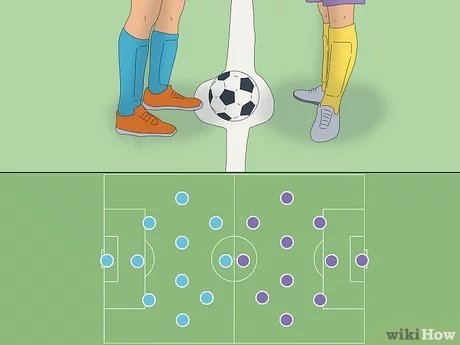
The game begins with a coin toss to decide which team kicks off and which side of the field they start on; then, the referee blows the whistle to signal the start of play when the ball is kicked forward.
Have you ever wondered how do you start a soccer game? It’s actually quite straightforward. First, the referee will gather both teams to the center circle. A coin toss determines which team gets the initial possession.
The selected team then places the ball in the center circle. Finally, the referee signals the beginning of the match, and the game kicks off with a forward pass.

How Do You Start a Soccer Game?
Okay, you’re ready to play some soccer! But before you can kick that ball around, there are some important steps to take. Starting a soccer game isn’t just about showing up with a ball; it’s about making sure everyone plays fair and has fun. Think of it like building a LEGO castle – you need to lay the foundation correctly for everything else to work. Let’s dive into how to start a soccer game the right way!
The Field: Your Soccer Stage
First things first, you need a place to play. This is called the soccer field, and it’s like the stage for your soccer game. Imagine a giant rectangle of grass! The size of the field can change depending on how old the players are. For very young kids, the field might be smaller, but for older kids and adults, it’s much bigger. A standard adult soccer field is about 100 to 110 yards long and 65 to 75 yards wide. It has lines marked on it that have names and special purposes:
Important Field Markings
- Touchlines: These are the long lines on the sides of the field. When the ball goes over these, it’s a throw-in.
- Goal Lines: These are the short lines at the ends of the field, where the goals are. When the ball goes over these, it could be a goal, a goal kick, or a corner kick.
- Center Circle: This is a circle in the middle of the field. The game starts from the center circle.
- Penalty Area: This is a big rectangle in front of each goal, and this is where certain fouls can give the other team a penalty kick.
- Goal Area: Inside the penalty area, there’s an even smaller rectangle called the goal area, it has another name, “six-yard box”.
The field is not just a random patch of grass, it’s carefully designed to keep the game organized and fair. These markings help the players, referees, and even the fans, understand the game better. The goals themselves are at the middle of the goal lines, they’re essentially a net, and that’s where you score!
The Teams: Let’s Get Organized
Now that we have a field, we need teams! A typical soccer team has 11 players on the field at a time. These players have different jobs. There are:
- Goalkeeper: The player who protects the goal.
- Defenders: They try to stop the other team from scoring.
- Midfielders: They play in the middle and help both the defenders and attackers.
- Forwards (or Strikers): These players try to score goals for their team.
Before the game starts, teams choose which side of the field they will play on. They usually do this by flipping a coin, and the winner gets to choose. Teams also need matching uniforms with different colors than the other team. This makes it easy to see who’s on which team during the game. Uniforms include shirts, shorts, and socks. Additionally, players wear shin guards to protect their legs.
The Referees: The Game’s Rules
Every soccer game needs a referee or a group of referees. The referee’s job is to make sure everyone follows the rules. They are like the police officer on the field. They have a whistle that they use to stop the game when a rule is broken, or to start the game, start halves and restart play. The referee has the final say on the field, and players need to respect their calls and decisions. The ref is important, because in a soccer game, there are many rules and the referee ensures that the game is fun and fair.
The Gear: What You Need to Play
Soccer is a simple sport when it comes to equipment, but there are some essentials for playing safely:
- Soccer Ball: The most obvious, the ball is typically made of leather or synthetic material and is round. The size of the ball depends on the player’s age group.
- Soccer Cleats: Special shoes with studs on the bottom that give players better grip on the grass.
- Shin Guards: These go inside the socks and protect your shins from kicks and collisions.
- Socks: Long socks that go over your shin guards.
- Goalie Gloves: Goalkeepers often wear special gloves to help them catch the ball.
- Uniform: A matching shirt, shorts and socks for each team.
Having the right gear isn’t just for looking like a pro, it’s really important for safety and can make the game easier and more fun.
The Coin Toss: Deciding Who Kicks Off
Before the game starts, a referee will perform a coin toss. One captain from each team will gather with the referee for the toss. This is a simple way to fairly decide some things. One captain will pick either heads or tails. The referee flips the coin and the captain whose pick matches the coin gets to choose. The winning team gets to choose which goal they would like to attack for the first half, or to start the game by kicking off from the center of the field. If they choose to start the game, the other team will then choose which goal they want to attack. The team that does not start the game with a kick-off, will start the second half with the kick-off. This simple process is very important and a standard part of all soccer games.
The Kick-Off: Let the Game Begin
Once the coin toss is complete, and the teams have chosen the goal they want to attack or to kick off, the game is ready to begin. The kick off always happens from the center of the field at the center circle. Before a kick-off the players from the team kicking off are placed at their side of the field, and the players from the other team must stay outside the center circle, and are not allowed to enter the circle until the ball has been kicked. The player who is about to kick-off, places the ball in the center spot. Once the referee whistles to start the game, this player kicks the ball, and the game begins! The kickoff is the start of the action, and both teams are eager to start playing.
The Playing Time: Halves and More
A soccer game is divided into two halves. The length of each half depends on the age group playing. For example, young kids might play two 20-minute halves, while adults play two 45-minute halves. There is also a short break in between these two halves, called half time. This is when players rest, rehydrate and their coaches can give them team talks. After half time, the teams switch the sides they’re playing on, and the game begins again. So, when you hear people talking about the first half or second half, this is what they mean.
Basic Rules: Playing Fair
Even though soccer is easy to learn, there are many rules that are important for every game. Here are some of the most important rules to know about:
- Using Your Hands: Players cannot use their hands to move the ball, with one exception – the goalkeeper, who can use their hands inside the penalty area.
- Fouls: Players are not allowed to push, kick, trip, or tackle in a dangerous way. If a foul happens, the other team gets a free kick.
- Offsides: This is a more complicated rule, but it basically means that players cannot be closer to the opponent’s goal than the second-to-last defender when a teammate passes them the ball. If a player is in an offside position, the other team gets a free kick.
- Throw-Ins: If the ball goes out of bounds on the touchline, the other team gets to throw the ball back in. Players must throw with both hands while facing the field and keeping both feet on the ground.
- Corner Kicks: If the ball goes out of bounds over the goal line, and was last touched by the defending team, the other team gets a corner kick. The ball is placed in the corner of the field, and a player kicks the ball back into the field of play.
- Goal Kicks: If the ball goes out of bounds over the goal line, and was last touched by the attacking team, the defending team gets a goal kick. The ball is placed inside the goal area, and a player from the defending team kicks the ball back into play.
These are some basic rules, and it takes practice and playing to learn them all. But with every game you play, you’ll get better at understanding and following the rules.
Why Is It Important to Follow the Correct Procedures?
Starting a soccer game correctly and following the rules is super important. When everyone knows and follows the same procedures, the game becomes fun and fair for all players. When everyone knows what to expect, they can all focus on playing their best. It keeps the game organized and makes sure that no team gets an unfair advantage. When a team doesn’t follow the rules, the referee has to make decisions to ensure that game is fair and safe for everyone involved. It also helps create a fun and competitive environment, in which players can develop their skills and work as a team.
Starting a soccer game may seem like a lot, but each step is simple and easy to understand. From the layout of the field to the referee who is in charge of the game. Remember the importance of the coin toss, the equipment, and understanding the basic rules. Once you know all these things, you are ready to get on the field and start the game. Soccer is a great sport, so enjoy every moment!
Rules Of Soccer : How to play Soccer : Soccer Rules for Beginners
Final Thoughts
A coin toss determines which team kicks off, marking the start of play. Players must position themselves within their own half. The ball goes forward into the opponent’s half for the game to officially begin.
A referee signals the kickoff; every player must be on their own side of the field. Therefore, how do you start a soccer game? A central kick at the mid-point is the key. This action begins the match, propelling the ball into motion.

