
Winning a soccer game requires scoring more goals than the opposing team by strategically attacking and defending.
Ever wondered how do you win a soccer game? It’s not just about luck, there are specific approaches that increase your chances of success. Teams need a well-structured strategy and skilled players working together.
Scoring goals is vital, of course, but equally important is preventing the other team from doing the same. Defense, midfield control and attacking prowess are all linked to a successful team’s ability. Ultimately, victory comes from a combination of tactical smarts, hard work and a little bit of magic.

How Do You Win a Soccer Game?
Winning a soccer game isn’t just about luck; it’s about putting together a whole bunch of things that work well together. It’s like making a really good sandwich – you need all the right ingredients in the right amounts. Let’s break down what it takes to be successful on the soccer field.
The Core Skills: Building a Foundation
Before we talk about strategy, let’s talk about the basic skills you need. Think of these as the ABCs of soccer. You can’t expect to win if you don’t have these down.
Passing: Sharing is Caring
Passing is how you move the ball around the field and it’s super important. A good pass can help your team get closer to scoring, and keeping possession helps your team control the flow of the game. Here are a few passing tips:
- Use the inside of your foot: This gives you the most control. Practice aiming for your teammate’s feet.
- Short, quick passes: These help move the ball upfield safely and keep the ball moving smoothly.
- Look up before you pass: Make sure you know where your teammates are! A blind pass can easily go to the other team.
Dribbling: Keeping the Ball Close
Dribbling means moving with the ball while keeping it close to your feet. Here’s what you need to know:
- Use small touches: Don’t kick the ball too far ahead of you. Keep it close, like it’s glued to your feet.
- Keep your head up: You want to see what’s going on around you, not just at your feet.
- Use both feet: This way you can change direction quickly and keep defenders guessing.
Shooting: Scoring Goals
Shooting is how you score, and obviously very important. It’s not just about kicking the ball really hard, it’s about being accurate:
- Plant your non-kicking foot: This is how you get power and accuracy in your shots.
- Aim for a corner of the net: It’s harder for the goalie to reach, so you have a better chance to score.
- Practice, practice, practice: The more you shoot, the better your shots get.
First Touch: Controlling the Ball
First touch is about how you receive the ball. A good first touch allows you to set up a pass, dribble, or shot, very important skill that many novice player struggle with. Here’s how to improve your first touch:
- Relax your foot: If you are tense, the ball will bounce off. The player needs to receive it with a light touch.
- Aim to touch with the inside of your foot: The inside of the foot gives more control.
- Practice receiving the ball at different speeds and angles: It is good to practice receiving a ball passed from different angles.
Tackling: Winning the Ball Back
Tackling is how you win the ball back from the other team. A good tackle is fair and doesn’t cause a foul. Here’s how to tackle better:
- Stay low: Bend your knees and stay low to the ground.
- Aim for the ball: Don’t aim for the opponent’s leg; aim for the ball.
- Time it right: Be patient and wait for the right moment to make the tackle.
Teamwork Makes the Dream Work: Soccer Strategy
Now that we’ve covered individual skills, let’s move to how all those skills work together as a team. Soccer is very much a team sport and it is very important to understand this. It is not just about individual brilliance.
Formations: Setting Up Your Team
Formations are ways to set up your team on the field. Think of it like a chess board – each player has a role. Here are a few common formations:
4-4-2: The Classic Formation
This formation uses four defenders, four midfielders, and two forwards. It’s a balanced formation and great for both attacking and defending. It is very common and widely used.
- Four Defenders: Their job is to stop the other team from scoring.
- Four Midfielders: They move the ball from defense to offense and win the ball back.
- Two Forwards: Their job is to score goals.
4-3-3: An Attacking Formation
This uses four defenders, three midfielders, and three forwards. It’s a more attacking formation, with more players dedicated to scoring.
- Four Defenders: The same as in 4-4-2
- Three Midfielders: They control the midfield.
- Three Forwards: Always looking to score goals.
3-5-2: Another attacking formation
This formation uses 3 defenders, 5 midfielders and 2 forwards. This formation is good for controlling the middle of the field and can be useful for teams who want to maintain possession and have many chances to score.
- Three Defenders: The job is still to stop the other team from scoring but here there are only three, hence the defenders need to be more disciplined.
- Five Midfielders: They control the middle of the park and can both attack and defend.
- Two Forwards: Focus on scoring goals.
These are not the only formations, and coaches can switch formations based on the opposition. A coach has to use the right formation at the right time.
Passing Patterns: Moving as a Team
Just passing the ball is not enough, passing patterns are important and here are a few that teams use to make their game better:
Short, Quick Passes (Tiki-Taka)
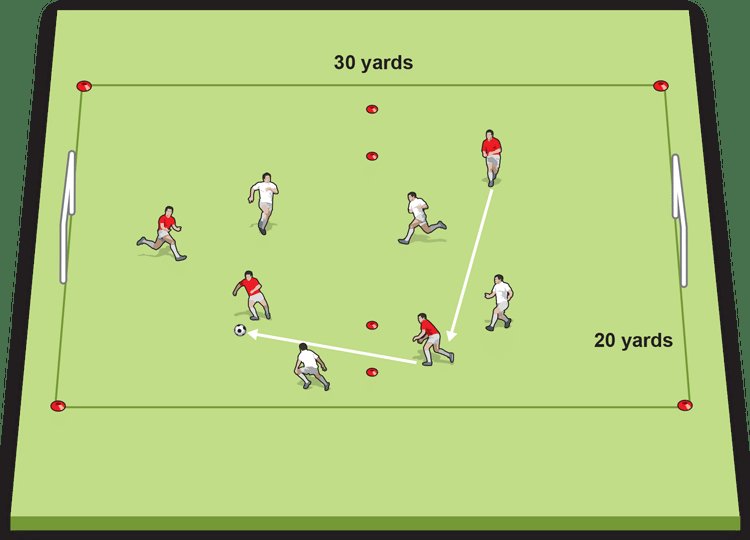
Short, quick passes, also called “tiki-taka,” help you keep control of the ball. It is like a fast and smooth way to move the ball. Here’s why it works:
- Keeps possession: The other team can’t win the ball if you have it.
- Moves opponents around: Players have to run more to get the ball and get tired.
- Creates openings: As opponents get drawn out, it creates space to attack.
Long, Diagonal Passes
These passes travel across the field diagonally. They can surprise the defense and create quick attacks. Here’s why to use them:
- Switches play: Changes the direction of the attack quickly.
- Catches the defense off guard: The other team is less likely to be ready for long passes.
- Creates one-on-one situations: A long pass can set up a player against one defender, which is easier to score from.
Combining both types of passes
A team must have a balance of both passing types, short and long. They should mix up their game and not be easily predictable. If the team does not mix up their passing game, it can become very easy to defend them.
Attacking Strategy : Scoring More Goals
The main aim in soccer is to score goals so let’s talk more about how to do it effectively.
Playing with width:
This means using the full width of the field when attacking. Here’s why it’s important:
- Stretches the defense: Makes the defense run around and create gaps.
- More space for teammates: As opponents spread out, it opens the game up for the midfielders and forwards.
- More angles to attack: Having wingers or wide players creates different options to score.
Creating Overloads
An overload is when you have more players in one area than the other team. Here’s how it helps:
- More passing options: If you have more players than opponents, the player with the ball has more passing options
- Easier to get around defenders: More people to pass to will always help you overcome any challenge.
- More scoring opportunities: More players around the box means a better chance to score.
Finishing: Being Accurate in the Box
All the passing and moving around will come to nothing if you don’t know how to score. Here are some ways to improve your finishing in the box:
- Composure: You need to stay calm when you are near the goal. Being calm is more effective than panicking.
- Practice with both feet: Being able to finish with both feet is a great asset.
- Aim for the corners: As we saw earlier, the corners are difficult for goal keepers.
Defensive Strategy: Preventing Goals
Scoring is important, but defending is equally as important. If your team defends better, you don’t need to score as many goals. It is very important to defend well.
Staying Organized:
A disorganized team is easy to score against. The defense needs to be organized. Here’s why:
- Harder to break through: It’s difficult to score against an organized defense.
- Makes it easier to win the ball back: When all players understand their positions and roles, it helps in winning the ball back.
- Makes it easier to cover each other: Players can help each other out if something goes wrong.
Pressing High
This means trying to win the ball back in the opponent’s half. It’s a risky strategy, but here’s how it works:
- Forces mistakes: When teams are under pressure, they make more mistakes.
- Quick counter-attacks: If you win the ball high up, you are closer to the goal.
- Can put pressure on the defense: If the opponents are forced to defend more often, it might tire them out.
Tracking back:
A player should always track back and help the defense when the opponent has the ball. Here’s how it helps:
- Harder for opponents to score: If all players track back and defend it is harder to score against you.
- Helps defense have numbers: Numbers in defense means more players to deal with opponents
- Shows that everyone is part of the team: This means there is good team spirit, when all players work for each other
Mental Toughness: Winning the Mental Game
Winning a soccer game isn’t just about physical skills. It’s also about having a strong mind.
Staying Positive: Keeping Your Chin Up
It’s easy to get down when things go wrong. But staying positive is very important.
- Don’t dwell on mistakes: Everyone makes mistakes. Learn from them, and move on.
- Encourage your teammates: Lift each other up when things get tough.
- Keep believing in yourself and your team: Never give up. You need to think that you can do it.
Communication: Talking it Out
Talking to your teammates during a game is vital and here’s how it helps:
- Helps you know where your teammates are: Call out their names so that they know where you are.
- Helps with coordination: Passing and moving needs coordination.
- Helps in defense: Helps in defense to tell your teammates which opponent you are marking.
Focus: Staying on Task
It’s very easy to get distracted during a game. But having focus can help you win. Here’s why:
- Helps you concentrate on the game: Helps you focus on the ball and what’s happening on the field.
- Reduces mistakes: You are less likely to make mistakes when you focus.
- Allows you to play your best: With focus, you can perform to the best of your ability.
Winning a soccer game takes a lot of practice, good teamwork, smart strategy, and a strong mind. If you can improve in all of these areas, you’ll be well on your way to victory. Remember, every practice and every game is a chance to get better and enjoy the process! And you can win, if you can put everything together.
7 Ways to Score MORE GOALS in SOCCER/FOOTBALL
Final Thoughts
To win, teams must score more goals than their opponent. Solid defense prevents goals against your side. Effective passing and precise shooting are key.
Teamwork is also important. Players must work together both in attack and defense. Good strategies combined with individual skill improves chances to succeed.
Ultimately, how do you win a soccer game? You must outscore the other team. A well-rounded approach, combining all these elements, is a must.

