
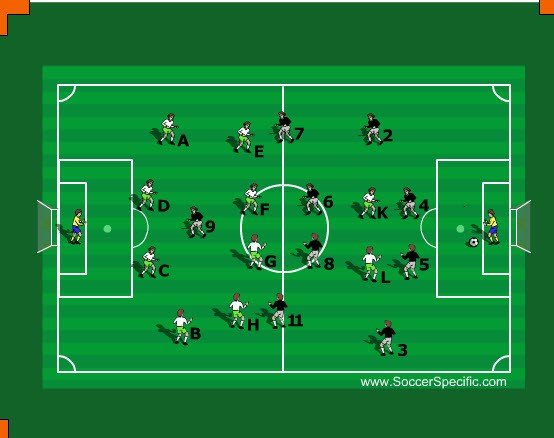
The game of soccer begins with a coin toss to decide which team kicks off and which side of the field each team will occupy.
Have you ever wondered, “how does a soccer game begin?” It’s not just a matter of the players running onto the field, there is a bit more to it before the beautiful game gets underway.
First, there’s a formal coin toss. This determines which team will start the match with the ball and which team defends each goal for the first half. It all sets the stage for the competition ahead.

How Does a Soccer Game Begin?
Have you ever watched a soccer game and wondered, “How did all of this get started?” It might look like chaos at times with everyone running around, but there’s actually a very specific set of steps that happen before the first kick! Let’s dive into the details of how a soccer game begins, from the very first moments to that exciting whistle.
The Pre-Game Preparation: Setting the Stage
Before the players even step onto the field, a lot of things need to happen. It’s like setting the table for a big dinner – everything needs to be in its place!
The Playing Field
The soccer field, or pitch, is carefully marked with white lines. These lines are super important because they define the playing area. You’ll see:
- The sidelines (the long sides)
- The goal lines (the short sides, where the goals are)
- The center circle (in the middle of the field)
- The penalty boxes (the rectangular areas in front of each goal)
- The goal area or six-yard box (smaller rectangle inside the penalty box)
These lines aren’t just random; they each have a specific purpose in the game and affect what the players can do. The field size can also vary depending on the age and level of play.
The Goals
Of course, no soccer game is complete without goals! They are placed in the center of each goal line and have a net to catch the ball. Goals are crucial for scoring, which is the main objective of a soccer game.
The Equipment
Every player needs specific equipment to play safely and effectively. This includes:
- Jerseys: Each team wears different colors so they can easily tell each other apart.
- Shorts: Comfortable shorts to allow free movement.
- Socks: Usually long socks that go up to the knees, often covering shin guards.
- Shin Guards: These are crucial for safety and protect the shins from kicks.
- Cleats (Soccer shoes): These shoes have special studs on the bottom to give players good grip on the grass.
- Goalkeeper Gloves: The goalie wears special gloves to help catch the ball.
- The Soccer Ball: The star of the show! It’s usually made of leather or synthetic material.
All of this gear is very important for both performance and safety during the match.
The Referees
Just like in a classroom, soccer games need someone to keep everything fair. That’s the referee! Referees are in charge of enforcing the rules of the game and making sure everyone plays fairly. There can also be assistant referees who help with this job. They wear special uniforms so everyone knows who they are.
The Coin Toss: Deciding First Kick
Before the game officially begins, there is a tradition called the coin toss. This is done to determine which team gets to do two important things:
- Choose which half of the field they will defend in the first half
- Take the first kickoff
The referee will flip a coin, and the captain of each team will call heads or tails. The team that wins the coin toss gets to make those decisions. Often, the team that wins the toss will choose to have the ball to start the match.
The Lineup: Players Take Their Positions
After the coin toss, each team arranges its players on the field. Each position has different roles and responsibilities. You’ll see players lined up in different spots, ready to start the game. Common positions include:
- Goalkeeper: The last line of defense, they protect the goal.
- Defenders: These players try to stop the other team from scoring.
- Midfielders: They play in the middle of the field, helping both defense and offense.
- Forwards (or Strikers): These are the players who are trying to score goals.
The specific formation, or the arrangement of players, can vary a lot from team to team based on their strategy. Coaches spend a lot of time deciding the best way to line up.
The Kickoff: The Game Begins!
Finally, the moment we’ve all been waiting for! The kickoff starts the game. Here’s what happens:
The Center Circle
The soccer ball is placed right in the center of the center circle. The players of the team taking the kickoff must be in their own half of the field. All players from the other team must stay outside of the circle when the kickoff takes place. It’s a very important starting point.
The Kickoff Procedure
The kickoff is done in a very specific way:
- One player from the team that’s starting the game will kick the ball forward into the opponent’s half.
- The ball must move forward to start the game. It can’t go sideways or backwards.
- The player taking the kick cannot touch the ball again until another player has touched it.
- All players must be in their own half of the field until the ball has been kicked.
Once the ball is kicked and moves forward, the game is officially underway!
The First Few Minutes
After the initial kickoff, both teams usually try to gain control of the ball. They will be trying to pass, dribble, and move the ball into the opponent’s half of the field to create a scoring opportunity. The early minutes of the match can be really exciting, as each team tries to establish dominance. The team that wins the coin toss gets possession at the kickoff. The opponent team does not have possession of the ball until someone in the team takes the ball.
Referee’s Whistle and Game Clock
The referee uses a whistle to signal important parts of the game. The referee will blow their whistle to signal the start of the match, the half time, the full time, fouls, and when a goal has been scored. When the referee blows their whistle for the start of the match, the game clock starts ticking down to zero. The first half is played and then the players have a short break. The game clock stops at the half time whistle and the two teams have break for a certain amount of time. After the break, the second half starts with the kickoff with another team. The game clock starts ticking again until the full time.
Fair Play and Sportsmanship
The start of the match sets the tone for how the entire match will be played. Players should always play with fair play and demonstrate good sportsmanship. This means respect for the referee, opponent team, teammates, and rules of the game. It is vital for players to play fair. Without fair play, a soccer game cannot be enjoyed and can be really unfair for the other team. Playing fair means each team can enjoy the game and have a better experience.
So, that’s how a soccer game begins! From field setup and the coin toss to the exciting kickoff, every step is important. Now, when you watch a soccer game, you’ll know exactly what went into getting the match started. Soccer is more than just running around; it’s about strategy, teamwork, and following rules, all of which begin the moment the referee signals the start of the game.
The process of starting a soccer match is an important one. It has evolved over the years to ensure a smooth and fair game. It starts with setting up the field and the necessary equipment to ensure the safety and enjoyment of everyone. The game starts with the coin toss where the two team captains call for the heads or tails. This determines the kickoff taker and the side they will be playing on. The players are arranged on the field based on positions set up by coaches. Then comes the kickoff with a player from one of the teams kicking the ball into the opponent’s half. The referee starts the game clock with the blow of the whistle.
Understanding the start of a soccer match gives you a deeper appreciation of the game as a whole. It brings you closer to the experience and allows you to better enjoy watching and playing the sport.
Rules Of Soccer : How to play Soccer : Soccer Rules for Beginners
Final Thoughts
The game begins with a coin toss. The winning team chooses which goal to attack initially. The other team starts play by kicking off from the center circle.
After the kickoff, every player may move. The ball is now in play, and the actual match begins. Knowing how does a soccer game begin is essential for understanding its flow.

