
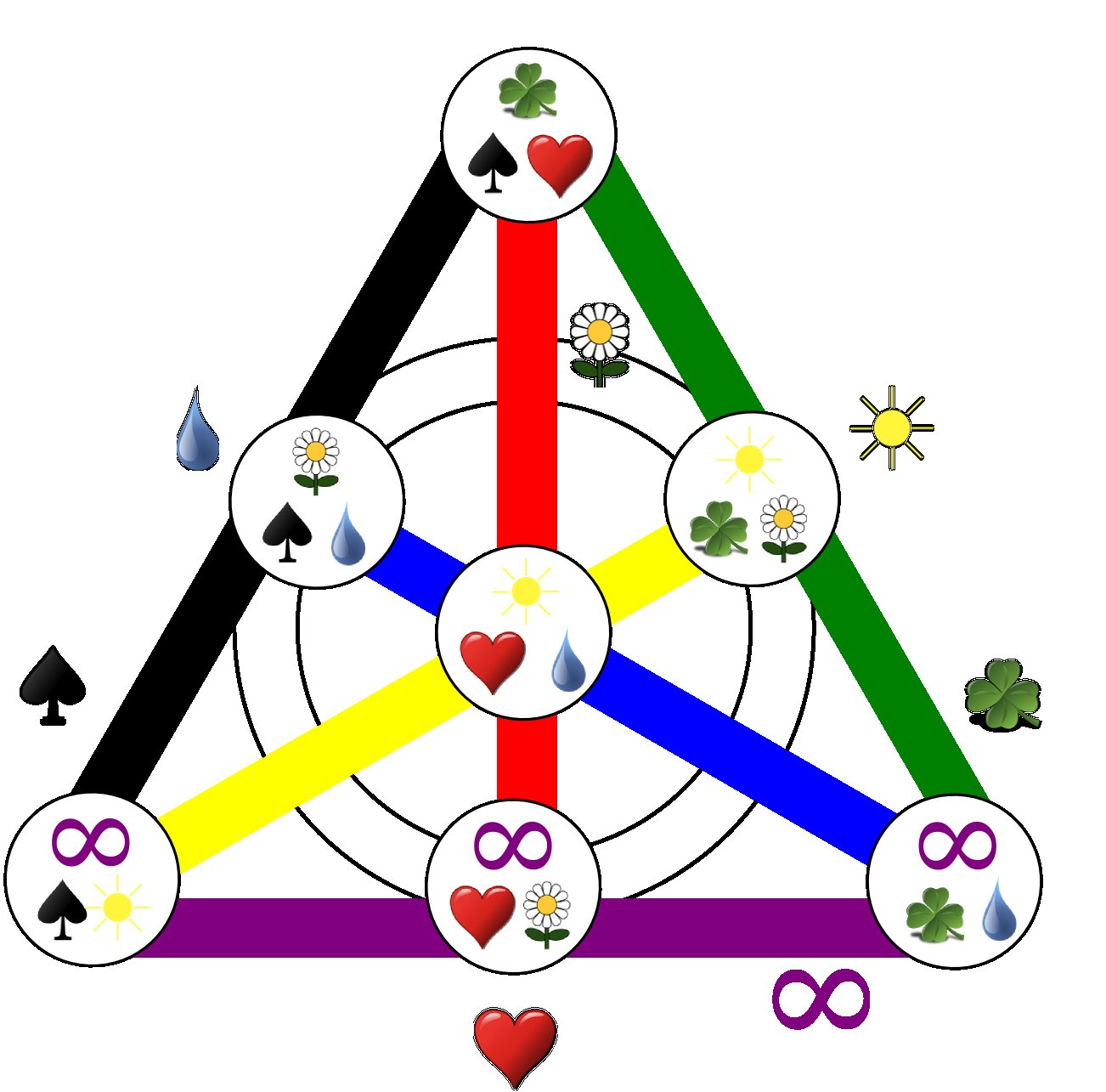
The game Spot It works by using a deck of cards where each card shares one, and only one, matching symbol with every other card in the deck. Players race to find these matching symbols.
Ever picked up a game that seems incredibly simple yet surprisingly addictive? That’s Spot It! The game captivates with its colorful illustrations and fast-paced gameplay. But have you ever wondered how does the game spot it work? It’s more than just random pictures.
The core mechanism relies on a clever mathematical principle that ensures a single matching symbol always exists between any two cards. It provides a unique visual challenge that engages players of all ages and keeps everyone coming back for more.

How Does the Game Spot It Work?
Ever played a game that seems incredibly simple but gets your brain buzzing? That’s Spot It!, also known as Dobble in some places. It’s a fast-paced, family-friendly card game that relies on a clever bit of math and visual perception. Let’s dive in and see exactly how this seemingly magical game works!
The Core Concept: Matching Symbols
At its heart, Spot It! is all about matching. Each card in the deck has a set of different symbols on it, like a star, a cat, a tree, or a smiley face. The secret? Any two cards will always have exactly one symbol in common. That’s right, just one! Your job is to be the first to spot that matching symbol and call it out. This concept is the driving force behind the entire game.
The Magic of the Math Behind the Game
The way Spot It! is designed isn’t random; there’s some cool math involved! The game is based on the idea of “finite projective planes,” which is a bit complicated for most of us. The important takeaway is that this mathematical structure guarantees that each card shares only one symbol with every other card in the deck. This is how the game maintains the balance and fun factor. The brilliant mathematicians behind Spot It! figured out how to translate these abstract mathematical principles into a simple and engaging game. They created a visual puzzle where we can all participate. It wasn’t an accident or something random.
Think of it like this: The creators didn’t just throw random pictures on cards. They used a special formula which is the “projective plane geometry” method, which ensures only 1 common image on any two cards. You might see the concept also in other contexts like, error correcting codes.
Card Design: A Closer Look
Spot It! cards are usually circular and feature eight different symbols. Each symbol is a different size and orientation on each card, making it more challenging to spot the matching one quickly. This variation is designed to keep your brain engaged and prevents the pattern from becoming too easy to memorize. If all the symbols were the same size and in the same place on every card, the game would be much less exciting! The designers of Spot It! have incorporated many different sizes of images, along with variation in terms of orientation, like flipping, making it tough for your eyes to simply memorize the patterns.
Number of Symbols and Cards
While the standard version uses eight symbols per card, other versions might have a different number. However, the basic principle of one and only one matching symbol remains. The number of cards in a deck varies depending on the specific version of Spot It! you’re playing. There’s a correlation between the number of symbols on each card and the total number of cards in a deck. This isn’t random, but because of the mathematics that creates the entire deck. For instance, the most common set of Spot It! has 55 cards.
How to Play Spot It! – Basic Gameplay
The basic gameplay of Spot It! is incredibly easy to understand, making it accessible for players of all ages. There are a few different ways to play, but the core concept of matching remains the same.
The Most Common Method
Here’s a typical way to play:
- The entire deck of cards is distributed evenly to all players, placing each player’s stack of cards face down. One card is placed face-up in the center of the table, forming the central pile.
- Players take their top card and simultaneously compare it with the central card and try to find a matching symbol.
- Once you see the match, call out its name and place the card from your hand on top of the central card pile. Now the newly placed card becomes the new reference.
- The first person to get rid of all their cards is the winner.
Variations on Gameplay
Spot It! includes other game variations. Some of the popular ones are:
- The Tower: One player gets the entire deck face down, with one card revealed to start. Players claim the central pile and add it to their stack, making the game competitive.
- The Well: All the cards are dealt to players and one card is revealed. Players have to place the match from their hand on the middle pile. This is a quicker game than tower.
- Hot Potato: A single card is passed around the table. When a matching symbol is found, players give the card to the next player, in a race to offload their hand and win the round.
Why Spot It! Is So Engaging?
Spot It! is more than just a simple matching game; there are several reasons why it’s such a hit for kids, adults, and families alike.
Fast-Paced Fun
The fast pace and quick thinking nature of the game make it very stimulating and keeps everyone involved. This high energy aspect of the game creates excitement and laughter. It’s definitely a game that can be enjoyed in small bursts or for extended play.
Visual Perception Workout
Spot It! is fantastic for developing visual perception and processing skills. Players need to quickly scan cards and identify the matching symbol, which requires a focus on detail. This skill is important not just for the game, but also in everyday life.
Suitable for All Ages
The rules are simple enough for young children, while the challenging nature of the game appeals to adults. It’s a game that families can enjoy together, making it a favorite choice for game nights. Because of the relatively easy-to-understand concept, Spot It! can quickly become a game everyone wants to play. It’s a great way for people of all generations to connect.
Portable and Travel-Friendly
The small and compact design of Spot It! makes it ideal for traveling, camping, or playing on the go. The cards easily fit into a small bag or pocket. This portability ensures that the fun can be taken anywhere, making it a great game for all kinds of trips.
Promotes Quick Thinking
Spot It! is not only about matching, but also about speed. You need to quickly recognize matching symbols, which requires quick thinking and improves your response time. The game creates a perfect setting to encourage players to think quickly and effectively. The game pushes our brain to process information faster.
Variety of Themes and Editions
Spot It! comes in many different themes, such as animals, sports, and cartoons, as well as licensed versions with characters from popular movies and TV shows. This variety makes the game enjoyable for everyone. It ensures that different versions can cater to different interests and preferences. The wide variety also gives a new twist to the classic game.
The Impact of Symbol Placement
As mentioned earlier, the size, orientation, and position of the symbols on each card are all varied. This variation is the result of the underlying mathematical rules that ensure there is exactly one matching symbol on any pair of cards. Changing the placement and size of symbols in the Spot It! makes the game more challenging and prevents your brain from learning the patterns. This attention to detail plays a very important role in making it fun and engaging.
No Set Location or Pattern
The matching symbol could be in any location on the card. It might be in a corner, the middle, or the edge. There are no predictable patterns, and this variation is done on purpose to make you keep searching. This randomness and the lack of set locations help keep the game exciting even after multiple plays. The unpredictability also prevents us from just memorizing positions rather than recognizing matching symbols.
Size Differences
Sometimes, the matching symbol might appear larger on one card than the other. The use of different sizes adds to the challenge of the game. This adds to the level of difficulty, making the game less about easy recognition, but about attentive observation.
Orientation Differences
Symbols can be flipped, rotated, or oriented differently on different cards. This difference in orientation can sometimes make it challenging to spot the matching symbol. It encourages players to pay close attention to the detail and look at the symbols closely from all angles.
Spot It! and Educational Benefits
Beyond the simple fun, Spot It! has hidden educational benefits. Here are some of them:
Enhanced Visual Skills
The game challenges visual processing and perception skills, which are critical for reading, writing, and many other tasks. By playing Spot It!, children (and adults) can improve their ability to quickly spot and analyze visual information. This ability can be beneficial in many real-life situations. For example, you need good visual processing skills to navigate traffic signals, read complex text or identify changes in environment.
Improved Concentration
Spot It! requires focus, and with repeated playing, this helps to improve concentration. The quick pace of the game also requires you to focus on the details. This skill is extremely important for academic settings, and other aspects of life too. The focused concentration helps you develop attention span, and this is a useful skill to learn.
Problem-Solving Skills
Although the rules of the game are simple, Spot It! helps improve critical thinking and problem-solving. It involves quickly processing visual information and thinking to determine the correct match. These skills are useful in daily life, be it school, work or other things we come across.
Cognitive Development
Spot It! stimulates cognitive functions. The act of quickly identifying matches involves critical thinking and fast processing of visual information. This can contribute to overall cognitive development. Especially in children, it can help develop their brains. This mental stimulation keeps the brain active.
Social Skills
When played in groups, Spot It! encourages communication, sportsmanship, and social interaction. It is a game where everyone can participate. The interaction in a team or family setting fosters essential social skills like following rules, turn taking and communicating within a group. This fun and engaging group play can create positive interactions.
A Timeless Game
Spot It! is a game that combines simple rules, fast-paced action, and the challenge of visual perception into a package suitable for people of all ages. It is a great example of how math concepts can create an exciting and fun experience. Whether you are playing with friends, family, or just want to challenge your own brain power, this game offers both entertainment and some great mental exercise. Spot It! has truly earned its spot as a classic.
How to Play ALL 5 Spot It Games!!
Final Thoughts
Spot it works by presenting players with a set of cards, each having different symbols. A specific symbol always appears on any two cards. The game challenges players to quickly find and call out the matching symbol.
This simple mechanic, based on visual perception, is how the game spot it work. The speed and mental focus provide an engaging and surprisingly addictive experience.

