
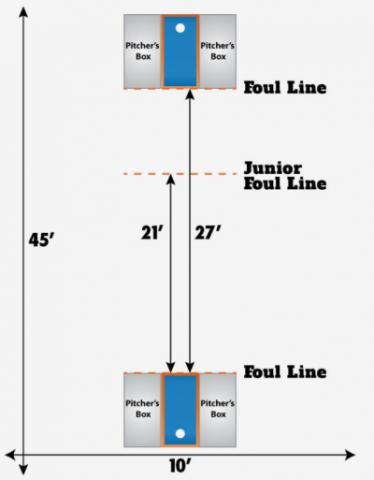
The regulation distance between the front edges of cornhole boards is 27 feet.
Planning a fun cornhole tournament but unsure about the layout? You are not alone! Many people wonder about the specific distance required to have an official match. Knowing how far apart are cornhole games is essential for fair play and enjoyment.
It’s simple really, if you want to follow official regulations. Setting up the boards correctly makes the game more engaging for everyone involved. This ensures consistency for both novice and experienced players.

How Far Apart Are Cornhole Games? The Complete Guide
Ever wondered about the magic behind the perfect cornhole toss? It’s not just about the throw; it’s also about the setup. The distance between the boards is crucial for a fair and fun game. Get ready to learn everything about standard cornhole board spacing and why it matters!
The Official Cornhole Distance: 27 Feet
The official distance between the front edges of two cornhole boards is 27 feet. This standard distance is what you’ll see in professional tournaments, and it’s the standard most people use for casual play. This specific distance has been carefully chosen to create a challenging yet enjoyable experience for players of all skill levels.
Why 27 Feet?
You might be asking, “Why not 25 feet, or 30 feet?” Well, the 27-foot distance is not arbitrary. It’s the result of a lot of testing and tweaking. It hits a sweet spot that allows most players, young or old, to have a decent chance at getting the bean bags on the board. It’s far enough to require some aiming skill, but not so far that it makes the game frustrating. If it was too short, it would be too easy, and if too long it would be too hard. This distance balances skill and accessibility, making it perfect for both competitive matches and family backyard fun.
Measuring the Distance Correctly
Getting the measurement right is key for a good game of cornhole. You don’t want to be playing with the boards too close or too far apart. If the distance is off, it will not feel right, and it will change the feel of the game. Here’s how to make sure you’re measuring like a pro:
- Start at the Front: You always want to measure from the front edge of one board to the front edge of the other. Not the back, not the side, just the very front.
- Use a Measuring Tape: A long measuring tape is your best friend here. It’s accurate and easy to use. You don’t want to guess or use a shorter tape and move it multiple times. This increases the chances of inaccurate measurements.
- Straight Line: Make sure your tape measure runs in a straight line directly between the two boards. Don’t let it bend or curve; you want a true measurement.
- Double-Check: Once you have your measurement, double-check it. Sometimes a quick second look can catch a mistake.
Cornhole Court Layout
Beyond just the 27-foot board distance, there are a few other things to keep in mind when setting up a proper cornhole court. While these rules are more critical for tournament play, they can help improve your backyard games too.
The Playing Area
The space behind the boards matters as well. There should be a few feet of space behind each board so players can throw comfortably. Also, there should be plenty of space to each side of the boards. It’s important to have enough space around the court for safety, and also to accommodate players walking around during the game.
Pitcher’s Boxes
The pitcher’s box is the rectangular area next to each board that players stand in while throwing. Each box is 4 feet long and 3 feet wide. When throwing, players must not step outside this area, and also can’t step over the front line of the boards. In games with more strict rules, stepping over the front line can result in a penalty.
Foul Lines
The front edge of each board forms the foul line. Players must stay behind the foul line when making their throws. This is very important in official games. In casual play, if you step over the line, it does not matter too much. But when trying to replicate a competitive environment, this matters greatly.
Adjusting the Distance for Different Players
While the standard 27 feet works for most adults, it may not be ideal for everyone. For younger children or those with mobility issues, reducing the distance can make the game much more accessible and enjoyable.
Shorter Distances for Kids
For kids, consider reducing the distance between boards. A good rule of thumb is to scale the distance to their height. You can try 15-20 feet for younger children, and adjust accordingly to find the sweet spot. This will help them participate more easily and build confidence in their throws. You could have fun setting up a cornhole game where the distance is shorter for certain players, and longer for others, so that players of all ages can still play at the same time, with a similar level of difficulty.
Making it Accessible
For people using wheelchairs or with other physical limitations, the distance may also need to be adjusted. There is not a specific rule here; it comes down to each individual. Always prioritize the comfort and safety of all players. You could even allow players to throw from a seated position even if not in a wheelchair, to better facilitate accessibility. Always be flexible with accessibility, this will help more people be able to enjoy playing.
What if You Don’t Have Enough Space?
Sometimes, space can be limited. You might want to play indoors or in a small backyard. It’s okay to adjust the distance a bit if you must. However, just know that changing the distance will change the dynamic of the game. It’s always fun to play, but the game may feel less like the standard game. Here are some ideas:
- Indoor Cornhole: When playing inside, you may need to shorten the distance. A good compromise could be around 20 feet, or even 15 feet if you are in a very small space.
- Smaller Backyards: If your backyard is on the smaller side, try moving the boards closer to each other. Again, this will make the game easier, but may be the only option.
- Consider a Smaller Board: If you don’t have enough space, consider a mini-cornhole setup. These boards are smaller and thus do not need as much distance.
The Impact of Distance on Gameplay
The 27-foot distance is more than just a number; it directly affects how the game is played. By understanding the dynamics, players can adjust their technique and strategy for improved success.
Skill Development
The official 27-foot distance really allows players to develop their skills. The consistent distance gives the chance for players to master techniques, as well as practice and hone in their accuracy. Players learn to control their throw, find the proper arc, and develop a good throwing rhythm.
Strategic Play
The distance affects how you approach a game strategically. For instance, you need to factor in wind, and also trajectory when throwing across 27 feet. Shorter distances might make aggressive shots a better choice, but the longer distance of the standard game makes it better to think more about aiming. Also, in the standard 27-foot distance, a block (a bean bag directly in front of the hole) can be more difficult to clear compared to a shorter distance. Thus players need to account for this strategic possibility.
Physical Challenge
Even though it’s not physically demanding, throwing a bean bag across 27 feet still provides a bit of exercise and physical activity. This can be a great game for both younger and older players, who can both receive a small workout while having fun. The moderate distance makes it accessible, yet still engaging physically.
Variations on Cornhole Distances
While 27 feet is the standard for most games, there are some non-standard distance variations that are interesting to think about.
Blindfolded Cornhole
This variation changes things up quite a bit. In blindfolded cornhole, players take turns throwing beanbags while blindfolded, at the standard 27-foot distance. This makes the game way more difficult. This is a fun way to change the game up with a new challenge.
Ladder Cornhole
Ladder cornhole is another different variation, where the game is set up with multiple distances. The different distances are connected to different point values. This makes for a highly strategic and challenging variation.
Mini-Cornhole
Mini cornhole uses smaller boards and less distance. This makes it great for indoor play. While the distance is not standard, mini cornhole is a fun variation of the game.
Creating a DIY Cornhole Court
You don’t need fancy equipment to get started with cornhole. If you have some simple tools, you can easily create a simple cornhole game.
- Choose a Flat Surface: Pick a flat area for your boards. The area should be free from large rocks and other objects that could obstruct the game.
- Measure and Mark: Use a measuring tape to mark the positions for the boards, 27 feet apart.
- Simple Boards: You can easily make a simple cornhole board from wood and other common household materials, or purchase a set of premade boards.
Common Mistakes to Avoid
Setting up a cornhole game is straightforward, but it’s easy to make some common mistakes. Here’s what to avoid:
- Inaccurate Measurement: Not measuring correctly is the most common mistake. Make sure you’re measuring from the front edge of each board using a measuring tape, and that you are measuring on a straight line between the two boards.
- Uneven Ground: Playing on uneven ground can make it hard to throw. Try to pick an area that is flat and level.
- Obstacles: Make sure there are no trees, bushes, or other things that could be in the way. Obstacles can be annoying, as they prevent accurate and fair gameplay.
So, there you have it. The 27-foot distance is a key part of the game of cornhole. It ensures that everyone has a fair chance while also keeping things challenging. Whether you are setting up a serious competition, or just a fun game in the backyard, knowing the correct distance will lead to a better cornhole experience for all players. Remember to measure carefully, adjust when needed, and always have fun!
How to Play Cornhole | Official Cornhole Rules | American Cornhole Association
Final Thoughts
Cornhole games typically have boards set 27 feet apart, measured from the front edge of one board to the front edge of the other. This distance is standard for official play and provides the right challenge for most players. Shorter distances are often used for casual play or for children.
Therefore, knowing exactly how far apart are cornhole games is crucial for setting up a proper match. Getting the spacing right makes the game fair and enjoyable for everyone. It ensures proper gameplay.

