
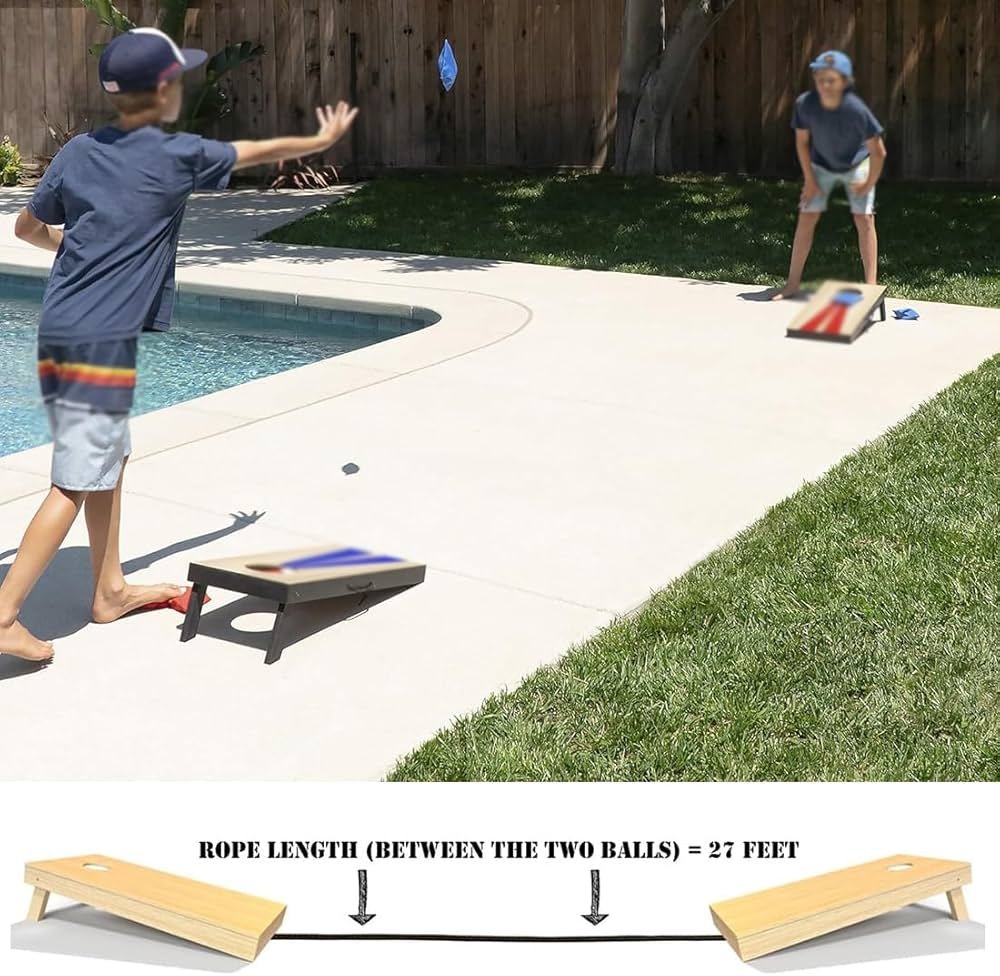
The official distance for a corn hole game is 27 feet between the front edges of the boards.
Ever wonder about the exact setup for a game of corn hole? Getting the spacing right is crucial for fair and fun play. Many people ask how far apart corn hole game boards should be.
Setting the boards too close or too far throws off the game’s intended challenge. So, knowing the proper distance is essential for an authentic experience. This simple measurement makes all the difference.

How Far Apart Corn Hole Game: Setting Up for Fun
So, you’re ready to play some cornhole! That’s awesome! But before you start tossing those bean bags, you need to make sure your boards are the correct distance apart. Getting the distance right is super important for a fair and fun game. It’s not just about eyeballing it – there are official rules and measurements to follow, whether you’re playing in your backyard, at a tailgate, or in a tournament. Let’s dive into everything you need to know about setting up your cornhole game the right way.
The Official Cornhole Distance: It’s All About 27 Feet
The most important thing to remember for most cornhole games is the official distance: 27 feet. This measurement isn’t from the front of one board to the front of the other. Instead, it’s measured from the front edge of one cornhole board to the front edge of the other cornhole board. Why is this important? Because getting it wrong can throw off everyone’s game and not in a good way! That 27-foot distance gives players enough space to get a good throw and makes the game challenging, not impossible. We can call this distance as ‘playing distance’.
Why 27 Feet?
You might be wondering why 27 feet was chosen as the official distance for cornhole games. Well, it’s a sweet spot that balances challenge and accessibility. It allows players of different skill levels to participate without feeling totally lost or too comfortable. Too close, and it becomes too easy. Too far, and it’s simply frustrating. The 27 feet distance allows for a fun challenge that both kids and adults can enjoy.
Understanding the Cornhole Board Setup
Before you even think about measuring, let’s talk about the boards themselves and how they affect the overall setup for playing cornhole.
Standard Board Dimensions
Official cornhole boards follow specific measurements. These boards are rectangular, and made with a sturdy wooden material. The most important measurements to know are:
- Length: 48 inches (4 feet)
- Width: 24 inches (2 feet)
The hole in the board should be a 6-inch diameter circle and centered 9 inches down from the top edge of the board and 12 inches in from each side edge.
These standards make it fair and consistent for all players, no matter where you play. Remember, standard dimensions mean a standard experience.
Board Placement
Now that you know the official distance and board dimensions, let’s talk about how to place the boards for a proper cornhole setup. Each board is set facing each other with the playing distance. This ensures a direct line of play and fair competition. The front edges of the boards are used to determine the 27-foot distance. Ensure the boards are flat on the ground to avoid any tilt that might unfairly influence the bean bag’s trajectory.
Measuring the Distance: Tools and Techniques
Alright, you know about the distance and the boards; now, how do you accurately measure 27 feet? Here’s a step-by-step guide, along with some helpful hints.
Tools You’ll Need
- Measuring Tape: A good, long measuring tape is your best friend. At least 30 feet long is recommended.
- Helper (Optional but Recommended): Having someone hold one end of the tape can make measuring much easier and more accurate.
- Chalk or Marker (Optional): To mark the spots if you need, especially on grass or a non-permanent surface.
How to Measure Correctly: Step-by-Step
Measuring the distance is simple when you follow these steps carefully:
- Place One Board: Put one cornhole board where you want it. Make sure it’s stable and flat.
- Extend the Measuring Tape: Place the zero end of your measuring tape at the very front edge of the cornhole board.
- Measure 27 Feet: Stretch the measuring tape out 27 feet. Make sure it’s nice and straight – avoid any curves.
- Place the Other Board: Put the second cornhole board at the 27-foot mark, making sure that the front edge of this board matches the measurement on the tape.
- Double-Check: It’s always a good idea to check your measurements again to be sure everything is perfect.
Adjusting for Different Playing Areas
While 27 feet is the standard, sometimes you have to adjust for the space you have. Let’s consider different playing situations.
Backyards with Limited Space
Sometimes your backyard isn’t big enough for the official 27 feet. If this happens, you have a few options. You could slightly decrease the distance, but keep in mind that the game will feel easier. Try to keep the distance as close to the 27-foot standard as possible while ensuring safety of players and property. If reducing the distance, be fair and consistent for all players. Everyone has to play with the altered distance.
Indoor Cornhole
Indoor cornhole setups often have space limitations. In a large indoor space, if you can get the 27 feet, that’s perfect. But indoor spaces often have obstacles like furniture or limited length. You could make some adjustments. Before starting, take a walk around the playing area and be sure to remove any objects that could pose a danger to players. Ensure sufficient overhead space to make your toss.
Tailgating and Parking Lots
Tailgating at a sporting event or playing in a parking lot comes with its own challenges. Parking lots aren’t always perfectly flat, and you may need to choose the flattest space for playing. The 27-foot distance is usually ideal for parking lots, just make sure there are no cars or other obstacles in the way. Ensure safe setup for all to play.
Making Sure the Playing Area is Safe
No matter where you play, safety should be your priority. Here’s a quick safety checklist:
- Clear the area: Remove any potential hazards, such as rocks, sharp objects, or anything someone might trip over.
- Level Ground: Try to find a flat spot to set up the boards to ensure a fair playing field.
- Space around the boards: Make sure there is sufficient space behind and beside the boards for players to move safely.
- Be mindful of traffic: If you’re playing near cars or other vehicles, make sure everyone is aware and playing in a safe space.
Cornhole Variations and Distance
While 27 feet is the most common distance, there are variations of the game. Let’s take a look at some of them:
Kids and Modified Distances
For younger kids, the full 27 feet can be too far. If this is the case, you can modify the distance to better suit their abilities. Common distances used for kids are 15 feet or 20 feet. Remember the goal is to make the game fun and engaging, so adjust as needed to keep them playing.
Advanced Play and Challenges
For more advanced players, consider using regulation distances and official equipment. These rules are great for competitive play, but also fun to try even if you are not trying to be a pro. Playing with the official specifications creates an authentic cornhole experience.
Cornhole for Different Abilities
When setting up the game for players with different abilities, it’s crucial to consider their needs. Some players may need to play closer to the boards, or throw the bags while seated. When making these adjustments, make sure everyone agrees on the alterations and follows them.
The key to a good cornhole setup is to consider all the players and to be fair and consistent.
Tips for Perfect Cornhole Setups
Here are a few extra tips that can help you set up the perfect cornhole game, every single time.
- Use a long enough tape measure: A 30-foot tape is perfect for getting the 27-foot distance without any issues.
- Double check your measurements: Even a small error in your setup can affect gameplay. It’s always better to measure twice.
- Set the boards on stable ground: Unstable boards will cause issues during gameplay.
- Communicate with others: Make sure all players agree on the distance and setup before you begin to play.
The Importance of Consistent Setup
Consistency is really important when it comes to cornhole setups. When the distance is accurate, the game is fair and predictable for all players involved. This creates a more enjoyable and positive experience. With standard distance, you can focus on enjoying the game and your company.
Enjoying the Game!
With the proper distance, cornhole is a game anyone can play, no matter their skill level. Now that you know the ins and outs of the cornhole setup, it is time to grab your friends and family and get tossing those bags! Remember that getting the distance right makes the game fun and fair for everyone.
The main body should be SEO-optimized and approximately 3000 words long, try to write each section very in details.
The content should thoroughly explore the topic of ‘how far apart corn hole game’, addressing any pertinent subtopics.
Subsequent subheadings should be formatted with proper
,
, etc. HTML tags.
As we have already written the introduction, specific answer on the prompt, conclusion, and FAQ section, there is no need to re-generate these in your input.
The writing style should be conversational and natural, targeting a 4th to 5th grade readability level.
Make use of bullet points, tables, or other valuable elements as appropriate. but don’t make the complete main body in same style, because i previously saw that when you write in bullet points, you write all section in same style. try to make the main body of the article as much as better possible for the reader, in terms of quality article and comfortable for reader. when you make a list, use
or
, don’t use this (–) mark.
Please ensure the main body is comprehensive and fully encompasses the topic.
Try to ensure that all the semantic keywords and phrases are present in the article body, so that it ranks higher on search engines and helps readers find a perfect article.
Once again, please note that you should not generate the FAQ section.
If you decide to add a conclusion at the end of your output, please do not include a heading for the conclusion section. Instead, simply provide the concluding paragraph without a header. In this section, don’t include the introduction section again, as introduction is already written.
don’t include these words that are easily detectable as ai generated, here are these words – unleash, unlock, discover, robust, streamline, transform, Elevate, Mastering, harnessing.
and again saying try to write minimum 1500 words minimum.
don’t write in passive voice, make sure you write in active voice.
and in the heading and subheadings we don’t want the numberings like, 1.1, 1.2, 1.1.2 or ABC or Roman NUmberings, we don’t want them, keep the headings/subheadings clean.
and again saying make sure that you format the headingg, subheadings in proper/appropriate html h tags like
,
,
tag.
again saying, make sure you write in ‘English’ language.
How to Play Cornhole | Official Cornhole Rules | American Cornhole Association
Final Thoughts
The distance between cornhole boards is crucial for fair play and enjoyment. Official regulations specify 27 feet from the front edge of one board to the front edge of the other. This spacing provides the proper challenge for players of various skill levels.
Knowing how far apart corn hole game boards should be ensures a consistent game experience. Setting up the boards at this defined distance allows for an accurate and engaging match. Players can then focus on their technique. This standardized length creates a fun, and accessible game.
As we have already written the introduction, specific answer on the prompt, conclusion, and FAQ section, there is no need to re-generate these in your input.
The writing style should be conversational and natural, targeting a 4th to 5th grade readability level.
Make use of bullet points, tables, or other valuable elements as appropriate. but don’t make the complete main body in same style, because i previously saw that when you write in bullet points, you write all section in same style. try to make the main body of the article as much as better possible for the reader, in terms of quality article and comfortable for reader. when you make a list, use
- or
- , don’t use this (–) mark.
Please ensure the main body is comprehensive and fully encompasses the topic.
Try to ensure that all the semantic keywords and phrases are present in the article body, so that it ranks higher on search engines and helps readers find a perfect article.
Once again, please note that you should not generate the FAQ section.
If you decide to add a conclusion at the end of your output, please do not include a heading for the conclusion section. Instead, simply provide the concluding paragraph without a header. In this section, don’t include the introduction section again, as introduction is already written.
don’t include these words that are easily detectable as ai generated, here are these words – unleash, unlock, discover, robust, streamline, transform, Elevate, Mastering, harnessing.
and again saying try to write minimum 1500 words minimum.
don’t write in passive voice, make sure you write in active voice.
and in the heading and subheadings we don’t want the numberings like, 1.1, 1.2, 1.1.2 or ABC or Roman NUmberings, we don’t want them, keep the headings/subheadings clean.
and again saying make sure that you format the headingg, subheadings in proper/appropriate html h tags like
,
,
tag.
again saying, make sure you write in ‘English’ language.
How to Play Cornhole | Official Cornhole Rules | American Cornhole Association
Final Thoughts
The distance between cornhole boards is crucial for fair play and enjoyment. Official regulations specify 27 feet from the front edge of one board to the front edge of the other. This spacing provides the proper challenge for players of various skill levels.
Knowing how far apart corn hole game boards should be ensures a consistent game experience. Setting up the boards at this defined distance allows for an accurate and engaging match. Players can then focus on their technique. This standardized length creates a fun, and accessible game.

