
The typical distance for playing how far apart washers game is 20 feet between the two boxes.
Ever wondered how far apart to place those boxes when setting up for a friendly game of washers? It’s a common question, isn’t it? Many backyard enthusiasts, new to the game, struggle with the ideal spacing.
Getting the distance right is key to ensuring a fair and enjoyable competition for everyone involved. The standard rulebook provides a simple answer. It guides the distance that will allow for the correct challenge and good fun!

How Far Apart Should the Washers Game Boards Be?
Alright, let’s talk about the nitty-gritty of setting up a washers game! You’ve got your boards, you’ve got your washers, and you’re ready to go. But wait! How far apart should those boards actually be? It’s not just about guessing; there are some standard distances to make sure your game is fair and fun. We’re going to walk through all the details, so you can be a washers-playing pro in no time.
The Official Distance: 20 Feet
The most common and, you could say, the “official” distance for a washers game is 20 feet. This measurement is from the front edge of one board to the front edge of the other. It’s the distance you’ll find in most organized tournaments and friendly backyard games. This standard distance helps balance the challenge of aiming and throwing, making it enjoyable for a range of players.
Why 20 Feet?
The 20-foot distance was likely chosen for a few reasons. It’s far enough to create a bit of a challenge but not so far that it’s impossible for most people to throw accurately. It also works well in most backyards and common areas without requiring a huge amount of space. Think of it like the distance in baseball between home plate and the pitcher’s mound—it’s a tried and true distance that works well for the game.
Measuring Correctly
When you’re measuring the distance, use a measuring tape for accuracy. Start at the very front edge of the first washer board, and stretch the tape straight to the very front edge of the opposite board. Make sure the tape isn’t sagging or going up an incline because that could lead to an inaccurate measurement and might make the game harder or easier.
Variations in Distance
While 20 feet is the standard, there might be times you want to change things up. Maybe you have younger kids playing, or perhaps you just want to make the game more or less challenging. Let’s look at some variations.
Shorter Distances for Younger Players
If you have children playing, you might want to shorten the distance to make it more fun and engaging. Instead of 20 feet, you could try:
- 10 feet for very young children
- 15 feet for older children
Shorter distances help ensure they can still get the washers close to the target and have a great time. It keeps the game from being frustrating.
Longer Distances for a Challenge
For more experienced players looking for a bigger challenge, you can increase the distance. Here’s how you could adjust the distance to make the game harder:
- 25 feet for a moderate increase in difficulty
- 30 feet or more for advanced players
Increasing the distance will really test a player’s aiming and throwing strength. It can change up a standard game and make it more interesting.
Factors to Consider When Choosing a Distance
Deciding on the right distance isn’t just about the rules—it’s about making sure everyone has a good time. Here are a few things to keep in mind.
Player Skill Level
The skill level of the players is a crucial factor. Beginners and younger players will generally have more fun with shorter distances, while more experienced players will appreciate the challenge of a standard or longer distance. Think about who is playing before you set up your game.
Available Space
The size of your playing area also plays a role. If you’re in a small backyard or indoors, you may need to shorten the distance. Make sure you have enough space behind each board so that people can stand comfortably and throw. The main aim is to be safe and able to play the game.
Playing Surface
The playing surface can affect how the washers move. A smooth, level surface is ideal, but if you’re playing on grass, gravel, or uneven ground, the washers may bounce or roll differently. This may impact the overall throw distance.
The Type of Washers Used
The size, weight, and material of the washers can also affect how they travel. Heavier washers might be easier to throw more accurately over longer distances, while lighter washers may be better for shorter throws. Be aware of the washers you are using when deciding on the distance.
Setting Up Your Washers Game Area
Now, let’s talk about how to set up your washers game area so you’re ready to play. Proper setup goes beyond just measuring the distance and involves considering the placement of boards and player areas.
Positioning the Boards
Place the washer boards on a level surface. This helps ensure that your boards don’t rock or wobble when a washer lands on it. If the surface is uneven, you could use small pieces of wood or cardboard to level each corner of the boards.
Clearing the Area
Make sure there are no obstacles in the throwing path. This means clearing away rocks, sticks, toys, or anything else that may be in the way. It will prevent accidents or issues during the game. Also make sure the areas around the boards are clear of tripping hazards.
Creating Throwing Areas
It can be helpful to mark off the throwing area to avoid players getting too close to the boards. You can use chalk, tape, or even sticks to designate the areas where players should stand to throw.
Creating Spectator Zones
If you have people watching, ensure they are standing a safe distance from the game. Set aside a spot where they can watch comfortably without worrying about being hit by a washer. Safety first!
How Distance Affects Strategy
The distance between the boards isn’t just a physical aspect of the game; it can influence strategy, too. Let’s consider how the distance may change the way players approach each throw.
Shorter Distances and Accuracy
With shorter distances, accuracy becomes more critical. Players need to focus on their aim and make sure each throw is precise. It is easier to get a washer in the cup or on the board when the distance is reduced. This means that consistency might matter more than power.
Longer Distances and Power
At longer distances, power and trajectory become much more important. Players must throw with enough force to reach the board, and they have to also consider the arc of their throw. At these distances, a player that has great throw power will do better in the game.
Adjusting Your Throwing Technique
Adjusting your throwing technique is a big part of playing washers effectively. Shorter throws might require a gentle, wrist-focused motion, while longer throws might need a more powerful arm movement. Players have to adapt their throwing styles depending on the distance set for the boards.
Different Ways to Play
While the standard game involves throwing washers toward a single hole, there are variations that can add extra fun. These variations can also impact the importance of distance.
Single Hole vs Multiple Holes
Most washers games use a single hole or target area. Some variations involve boards with multiple holes or target zones, adding a new layer of challenge and strategy. The distances might change as the hole placements will require the player to aim at different spots.
Team Play
In team play, partners typically alternate throws. This adds a social dynamic to the game, but the distances still remain the same. It’s a great way to play the game as a group.
Point Systems
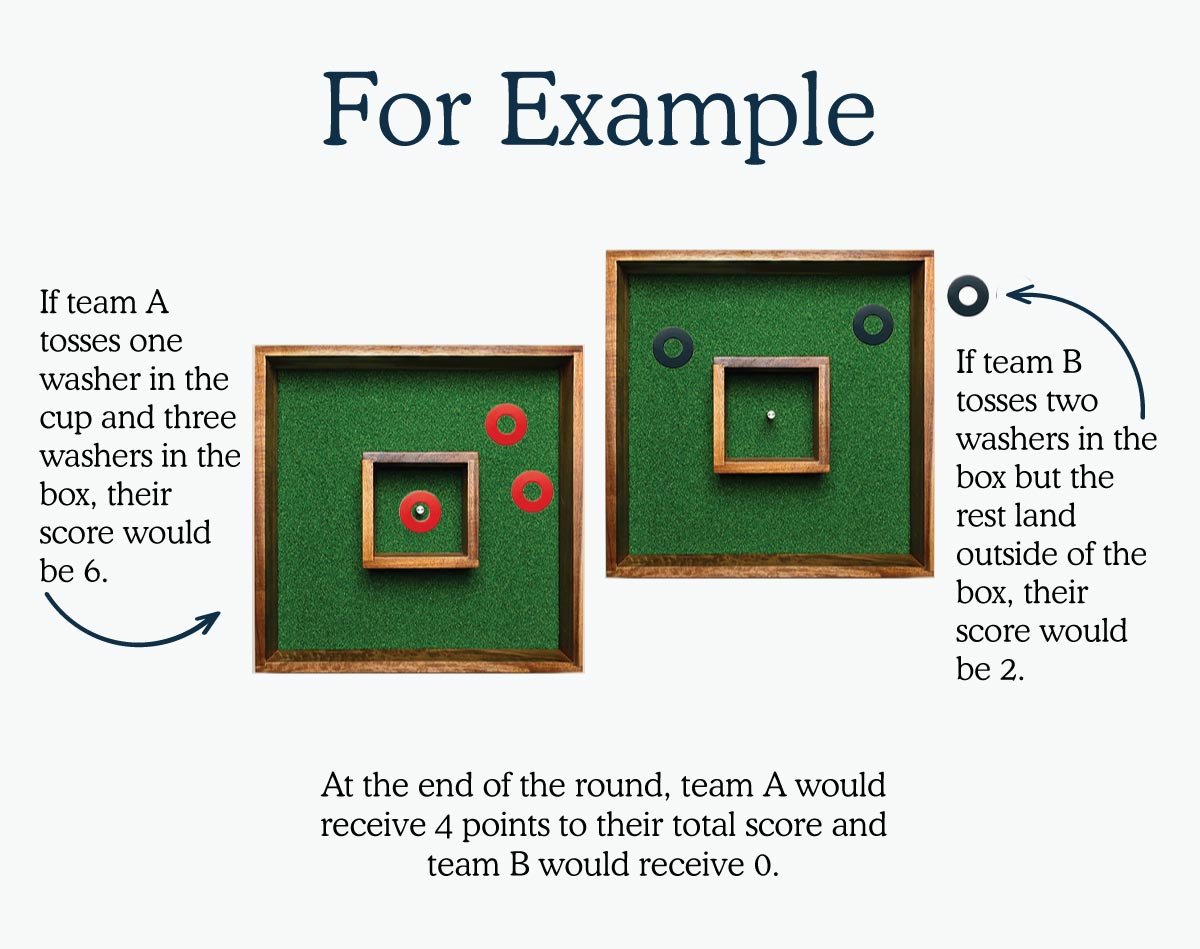
The way that you score points can also affect your strategy. Some versions of the game give more points for landing the washer in a hole than for landing it on the board. This will make it more important to make an accurate throw.
Troubleshooting Common Issues
Sometimes, despite our best efforts, things don’t always go smoothly. Here are some common problems you might run into when setting up and playing washers, and how to solve them.
Uneven Boards
If one of the boards is not level, it might cause the washers to roll off unexpectedly. Use cardboard or wood pieces to prop up the lower corners. Check that the board is stable and does not wobble before playing.
Washers Bouncing Out
If the washers are bouncing out of the target area frequently, it might be because the board surface is too hard. You can try putting a carpet or rubber mat underneath or on top of the board to soften the impact. This can help keep the washers on the board and help with scoring.
Difficulty Throwing Far Enough
If younger kids or those with less strength have difficulty throwing far enough, try shortening the distance. It will make it easier for everyone to participate and have a great time playing.
Maintaining Your Washers Game Equipment
Taking care of your washer boards and washers will help them last longer and keep the game enjoyable for years. Here are some tips on maintaining the game equipment.
Storing Boards Properly
Store the boards in a dry location, away from extreme temperatures and weather. This prevents the wood from warping, cracking, or getting damaged. A shed or garage is ideal, but you can store boards indoors, as well.
Cleaning Washers
Washers can get dirty over time. Clean them with soap and water to remove any dirt or grime. You want to keep them clean to prevent your throwing hands from getting dirty.
Checking for Damage
Before each game, quickly check the boards and washers for any damage. Replace broken or worn parts as needed to keep the game safe. This also helps ensure a fair and consistent playing experience.
Making Your Own Boards
Creating your own washers game boards can be a fun activity. Here are the main things to consider if you want to create a set of your own boards.
Materials Needed
- Plywood or other suitable wood for the board
- Hole saws or a jigsaw for cutting the target hole
- A drill for making holes for bolts, if needed
- Paint for protection
Steps
- Cut the wood to the desired size
- Cut the hole(s)
- Add legs to hold the board off the ground if you want.
- Paint the boards to make it more attractive
Personalizing Your Boards
Decorate them with paint, stencils, or designs. Making your own set is a great way to add your unique touch and make your set stand out from store bought ones.
Beyond the Backyard: Where Else You Can Play
The beauty of washers is that you can play almost anywhere. Here are a few ideas for where you can enjoy a game of washers:
Parks and Picnics
Parks are great for setting up a game of washers. They usually offer a large area and it is great for fun family outings.
Tailgates and Camping Trips
Washers is a perfect game to bring along for camping or tailgate events. It’s a fun, simple game that adds a social element to group activities.
Indoor Play
During cold weather, you can also play indoors in large, open spaces. A school gym or even a large family room can work for the game. Be sure to protect the floors and set the distance appropriately for indoors.
In conclusion, the proper distance for a washers game is essential for both fair play and maximum enjoyment. While 20 feet is the standard, feel free to modify the distance to suit the age and skill level of the players. Take the time to set up your area correctly and maintain your equipment, so that you and your friends can enjoy many great games of washers.
The Game of Washers
Final Thoughts
Therefore, the distance between washer boards greatly impacts the challenge and fun. You need to consider player skill levels when determining how far apart washers game boards should be. A greater distance provides more difficulty.
Finding the right spacing is key to enjoying this game. Experiment to find what distance best suits everyone. Consider that the best distance may vary.
Ultimately, properly setting up how far apart washers game targets will ensure that it will be fun for everyone involved. The correct distance makes the game fair and engaging.

