
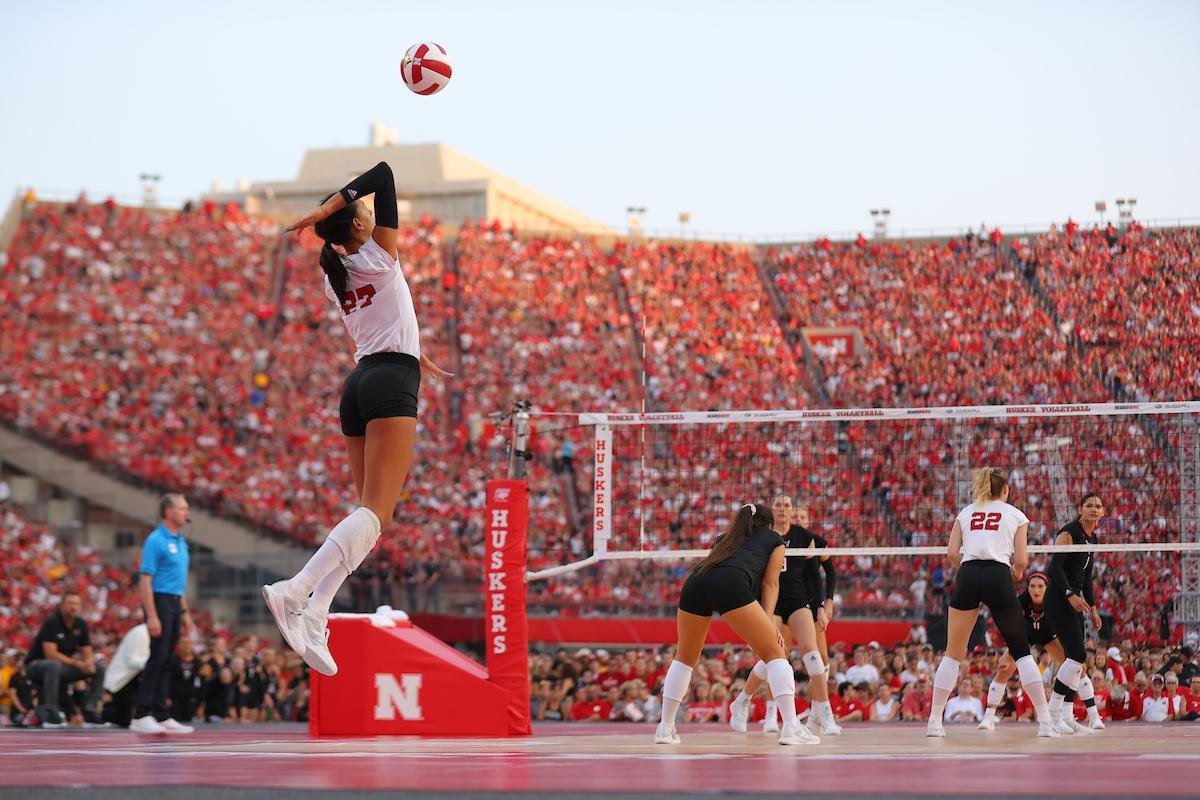
College volleyball games typically last around 2 to 2.5 hours, but they can be shorter or longer depending on the number of sets and the pace of play.
Ever wondered how long you’d be cheering from the stands? Knowing how long are college volleyball games is key if you’re planning to attend one. You might be planning your evening or have another engagement, so timing is definitely a thing to consider.
The game length isn’t always exact and can fluctuate a bit. A quick three-set match will wrap up faster compared to a full five-set battle. Knowing this helps you get a clearer picture of what to expect.

How Long Are College Volleyball Games?
Ever wondered how long you’d be cheering from the stands during a college volleyball game? It’s a question many fans have, whether you’re new to the sport or a seasoned spectator. Unlike some sports with set time limits, volleyball’s duration can be a bit more flexible. Let’s dig in and explore all the factors that influence how long a college volleyball match really takes.
Understanding Sets, Not Time
The first thing to understand is that volleyball games aren’t primarily measured by a clock. Instead, they’re structured around sets. A set is like a mini-game within the larger match. Most college volleyball matches are played in a best-of-five format. This means that the first team to win three sets wins the match. Here is a simple breakdown:
- Best-of-Five: A team needs to win 3 sets to win the match.
- Set Structure: Most sets go up to 25 points.
- Winning the Set: A team must win by at least two points. This means if the score reaches 24-24, they’d keep playing until a team has a two-point lead (like 26-24, 27-25, etc.).
This structure creates a variable game length. A match could be over in three quick sets, or it could go the full distance to five sets, causing a longer match. The two-point rule also adds to this variability. If you think about it, even a close set at the end can add time to the game. So, a score like 26-24 will add a little bit of game time, where as, if a team wins the set 25-15 it would shorten it.
The Typical Duration of a Match
So, how long does all this translate to in actual time? It’s hard to give an exact answer, but we can give you an idea. Most college volleyball matches range from about 1 hour and 30 minutes to 2 hours and 30 minutes. That’s a pretty good range. But remember, this is an average. Here’s what you should consider:
Factors Affecting Match Length
Several factors can make a volleyball game shorter or longer. Let’s look at some of the key ones:
Number of Sets Played
This one is obvious, but it’s super important! If a match is a sweep – meaning one team wins three sets in a row – the game will be shorter. This can be completed in 1 hour and 15 minutes depending on the set scores. A five-set match will always take the longest amount of time. It simply takes time to play more sets. Consider it as, each set takes a little time to complete and, more sets means more game time.
Intensity and Close Sets
When the teams are very evenly matched, you’re more likely to see more points scored and, hence, closer sets. When both teams are playing great, they win and loose points and these sets often go to the extended scoring. The extended scoring can drag on, each point is a fight and can take longer. Also, timeouts and small breaks during close sets can also add to match length.
Timeouts and Between-Set Breaks
Coaches can call timeouts during a set to strategize or when a team needs a quick break. These timeouts are short but, they add time to the overall match. There are also short breaks between each set. These breaks are to give the players a rest, and let the court reset with the next lineup. These time-outs and in-between sets breaks do add to the overall length of the match.
Referees and Challenges
Sometimes referees need time to review plays or make calls. Occasionally, teams have the opportunity to challenge referee calls, which adds some time if they use them. These video reviews are short, but they need to take time to look at the play so that the right calls are made. The process itself is not very lengthy, but the time adds up, especially if they are done multiple times during a match.
The Pace of Play
Some teams play at a faster pace, while others prefer a slower, more methodical game. A faster paced game does not mean a shorter game. However, in a faster paced match, the ball might not be in play for very long, making the time inbetween points move faster. All this to say, the playing style of the teams will also impact the length of a match.
Average Match Length Breakdown
While we can’t say for sure how long each match will last, we can give you some typical timelines you can expect:
- Three-Set Match: Usually the shortest type, generally taking around 1 hour and 30 minutes to 1 hour and 45 minutes.
- Four-Set Match: Expect these to last between 1 hour and 45 minutes and 2 hours and 15 minutes.
- Five-Set Match: These matches are the longest, often lasting from 2 hours to 2 hours and 30 minutes or even longer.
Visualizing the Time
Let’s consider a few real-world examples of typical college volleyball game scenarios.
- Quick Match: A team dominates all three sets, finishing each set with a large point difference. The match concludes in 1 hour and 20 minutes.
- Competitive Match: A few sets are very close, and the match is a back-and-forth battle that takes the game into 5 sets, with each set going to the wire, adding many more point to each set. This match may last for up to 2 hours and 30 minutes.
- Average Match: The first team takes 2 sets and second team takes 1 set, leading into a fourth set. The match finishes in 1 hour and 55 minutes.
Factors That Can Cause Longer Match Times
We’ve talked about what makes games shorter, but what about longer matches? Here are some additional situations that add to volleyball game length:
Extended Sets
Remember the rule that a team must win a set by two points? This is the biggest factor in making a volleyball set last longer. If a set score reaches 24-24, the set will go on until one team wins with a two point lead. This leads to back and forth and longer games. Sometimes these sets can last much longer than expected.
Injuries
Player injuries can pause the game and add time while medical professionals make assessments and treat the players. It’s important for the safety of the players, but it also affects the duration of the match. These delays are unpredictable but can happen at any time. Also, depending on how severe the injury is, it may take longer than expected.
Equipment Issues
Occasionally, there might be equipment problems, such as a net issue or a broken antenna. These types of problems require time to fix before play can resume. These issues are less common, but when they happen, they add to the overall game time. These problems need to get solved, so the game can be played safely and fairly.
Why It’s Good to Know
Knowing the general length of a college volleyball game can help you plan your day, arrange transportation, or schedule other activities. It’s always best to factor in a little extra time just in case of a longer match, because it can be difficult to know ahead of time how long a game might last.
- Plan your trip: When planning to attend the game, take this time into consideration.
- Schedule your activities: This way you know when the game might be done, so you can schedule events after it, without having to rush.
- Arrange transportation: It helps in arranging a ride to/from the event, as you can anticipate how long the game will be.
Is There a Time Limit Like Other Sports?
Unlike sports like basketball, football, or soccer, college volleyball does not have a set time limit. The game ends when a team wins the required number of sets. This makes the game’s duration a little bit more flexible and unpredictable. However, this adds to the excitement as every point matters, until a team wins three sets.
Factors That Generally Don’t Impact Game Length Significantly
While some factors significantly impact match duration, others have a minimal effect. These generally don’t cause huge changes in how long a game is:
Crowd Noise and Atmosphere
While crowd energy is fun and exciting, it doesn’t actually change the game length. The loud cheering adds to the enjoyment of the game, but does not increase the game time. So no matter how loud the crowd is, it will not add to the overall time.
Specific Player Substitutions
Coaches often change players during the game for different strategies. While these might be short pauses, they don’t tend to greatly alter the total game time. The substitutions are usually fairly quick and happen between points, not adding much to the overall match time.
Warm-Up Times
Teams always have warm-up sessions before the game, but these do not affect the length of the actual game itself. The warm-ups are done before the match starts, so they have no bearing on how long the actual game will be. These are needed for the players to warm up, and get ready for the game itself.
Staying in the Loop
If you are attending a match and need to be somewhere after, it is always a good idea to factor in more time, in case the match goes the distance. This way you do not have to leave early, or miss out on any of the match. Also, for those watching at home, you can always plan activities around the expected match length.
Understanding how long volleyball matches last helps you be a more informed and prepared fan. Remember, every match is unique and that is one thing that makes volleyball so much fun to watch! Now you have a better idea of how much time to dedicate to enjoying a college volleyball game.
Texas vs. Nebraska: 2023 NCAA volleyball championship | FULL REPLAY
Final Thoughts
College volleyball games typically last around two hours, but this can vary. Match length depends on the number of sets needed to determine the winner. A three-set sweep goes quicker than a five-set battle.
The total time also includes breaks between sets and timeouts called by coaches. So, consider both playing time and these interruptions when thinking about how long are college volleyball games. Plan accordingly for games, understanding that these factors can affect the duration.

