
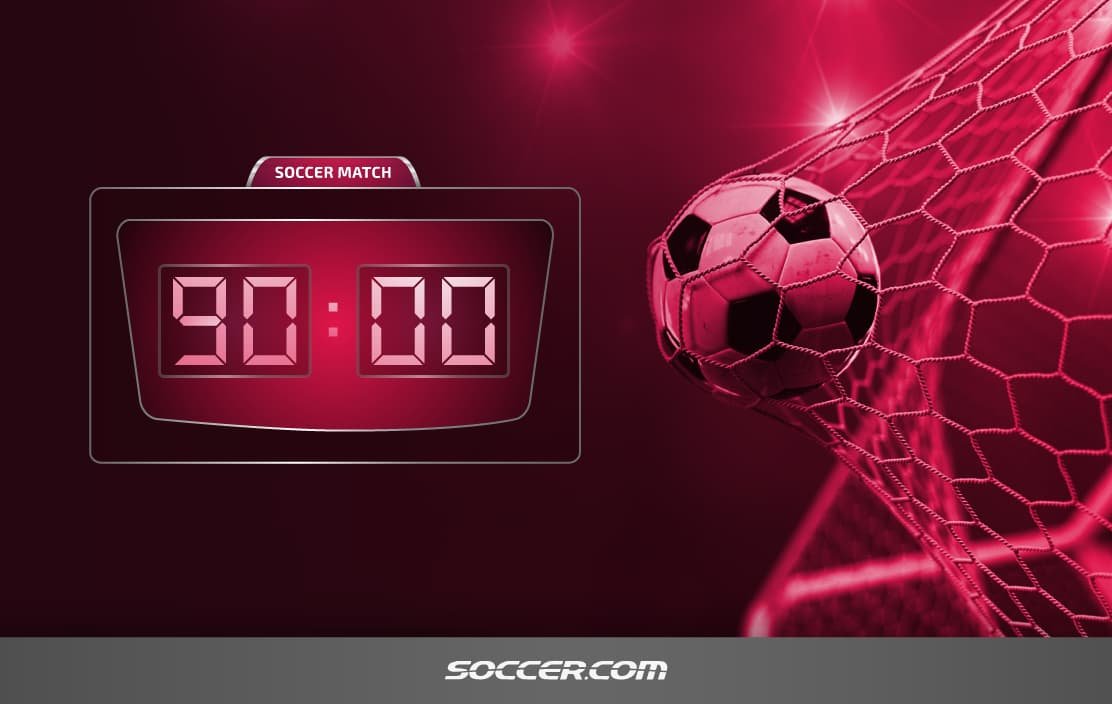
Professional soccer games typically last for 90 minutes, plus any added stoppage time at the end of each half.
Ever wondered about the time commitment involved in watching a professional soccer match? You’re not alone. Many fans often ask, how long are professional soccer games? This is a key piece of information when planning your viewing schedule.
It is important to know that while the core game time is standard, additional minutes are often added. These extra minutes compensate for stoppages during the match. Knowing this helps anticipate the actual time you will be watching.

How Long Are Professional Soccer Games?
Have you ever wondered how long those exciting soccer games you see on TV actually last? It’s not just a simple 90 minutes! There’s a lot more to it than that. Let’s dive into the details of what makes up the total time of a professional soccer match.
The Standard 90 Minutes: The Core of the Game
At its heart, a professional soccer game is 90 minutes long. This 90 minutes is broken into two equal halves of 45 minutes each. There is a break in the middle called halftime.
What Happens During Halftime?
Halftime is a period when players take a break. It’s usually about 15 minutes long. During this time, players can rest, coaches can talk to their teams, and strategies can be adjusted for the second half. Think of it like a quick pause to catch your breath and plan the next attack!
- Players rest and hydrate.
- Coaches discuss the first half and give new instructions.
- Teams might even make substitutions.
The Role of Added Time (Injury Time or Stoppage Time)
Now, here’s where things get a bit interesting. The 90 minutes is rarely the total time played. This is because of something called added time or stoppage time, sometimes also called injury time. It is the extra minutes that a referee adds at the end of each half. This additional time makes up for stoppages that happen during the match. These stoppages could be from player injuries, substitutions, time wasting, or even celebrations after a goal! The referee is the one who determines how much added time should be played.
Why is Added Time Necessary?
Without added time, the game clock would keep ticking even when the ball isn’t in play. Imagine a player gets hurt and needs treatment on the field. If there was no added time, that time would simply disappear from the game. Added time ensures that the full 90 minutes of actual playing time is closer to being achieved. It’s about making the game fair and accounting for those interruptions.
How is Added Time Calculated?
The referee keeps track of all the time lost during the game. There isn’t a specific formula, the referee uses their judgment and experience to estimate the amount of stoppage time needed. Some situations require more added time than others. For example, a game with many injuries and substitutions will probably have more added time than a game with few interruptions. The referee then announces the amount of added time before the end of each half, usually by holding up a board showing the number of minutes. It’s never an exact science, and sometimes people might disagree with the referee’s decision!
Extra Time and Penalty Shootouts: What if the Game is Tied?
Sometimes, a soccer game needs a winner. In certain competitions, such as tournaments or knockout stages, ties aren’t acceptable. When a game ends in a tie after 90 minutes plus added time, some matches might go to extra time.
What is Extra Time?
Extra time is an extension of the match that usually consists of two periods of 15 minutes each, with a brief break in between. So, it’s like adding another 30 minutes of play to the already completed 90 minutes. The purpose of extra time is to give teams another chance to score a winning goal. Like the regular game time, extra time also includes stoppage time for those normal match delays.
What Happens If the Game Is Still Tied After Extra Time?
If the game is still tied after extra time, the match then goes to a penalty shootout. In a penalty shootout, players from each team take turns shooting penalty kicks against the opposing goalkeeper. The team that scores the most penalty kicks wins the match. It’s a very dramatic way to end the game and can sometimes be a bit nerve-wracking for the fans and the players!
- Extra time is two 15-minute periods.
- Penalty shootouts decide the winner if extra time is not enough.
Variations in Game Length
While 90 minutes is the standard for professional soccer, there can be some variations depending on the level of play, or even if it is just for exhibition matches.
Youth Soccer Games
Soccer games for younger players are often shorter. For example, younger children may play games with 20 or 30 minute halves. This makes it easier for them to focus, learn, and enjoy the game. The exact length varies based on age group.
Here is a typical breakdown of youth soccer game lengths:
- Under 6: usually two 20-minute halves
- Under 8: usually two 25-minute halves
- Under 10: usually two 30-minute halves
- Under 12: usually two 35-minute halves
- Under 14 and above: often two 40 or 45-minute halves
Exhibition or Friendly Matches
Sometimes, professional teams play exhibition or friendly matches. These games might have different lengths or rules than a regular competitive match. For example, the teams might agree to play shorter halves or they might have unlimited substitutions, whereas competitive leagues have limits. These variations help the teams try out different strategies, prepare players, and even sometimes test out different rules.
Tournament Rules
Different soccer tournaments can have some slight changes in how they handle extra time or penalty shootouts. For example, some tournaments might use a “golden goal” rule in extra time, where the first team to score in extra time automatically wins. The format of a knockout stage match will always be different than regular season league play. It is always important to check a specific tournament’s rules if you are not familiar with them.
A Timeline of a Typical Professional Soccer Match
To put it all together, let’s look at a timeline of what you can expect in a standard professional match:
- First Half: 45 minutes.
- Halftime: 15 minutes.
- Second Half: 45 minutes.
- Added Time: Varies at the end of both halves, based on stoppages.
- Extra Time: Two 15-minute periods if needed.
- Penalty Shootout: if needed after extra time.
Why Understanding Game Length is Important
Knowing the usual length of a soccer game can be helpful for both players and fans. For players, it helps with conditioning and preparation. For fans, it helps with scheduling and planning to watch the game. Understanding how added time works also means you won’t get confused when the game goes longer than you expected.
For Players:
- It informs training and pacing strategies.
- It helps to develop endurance and mental strength for the full duration of the match
For Fans:
- It helps to plan the day or evening for the match
- It helps understand when the game will likely end, and when to expect extra time or a penalty shootout
So, next time you tune in to watch a soccer game, you’ll have a better understanding of what makes up that total time on the clock. It’s not just 90 minutes, it’s the 90 minutes plus the added time, extra time if required, and even potentially a penalty shootout. Each match can be slightly different and full of suspense and drama.
Watch out for headers 💀 #vr #soccer #cleansheetvr #goalkeeper
Final Thoughts
Professional soccer games typically last 90 minutes, split into two 45-minute halves. There is also a halftime break, usually around 15 minutes.
Added time, for stoppages like injuries, gets added at the end of each half. This can vary considerably depending on game events. How long are professional soccer games can change slightly due to this added time.
In summary, a standard match takes 90 minutes plus extra time for stoppages and the half-time break.

