
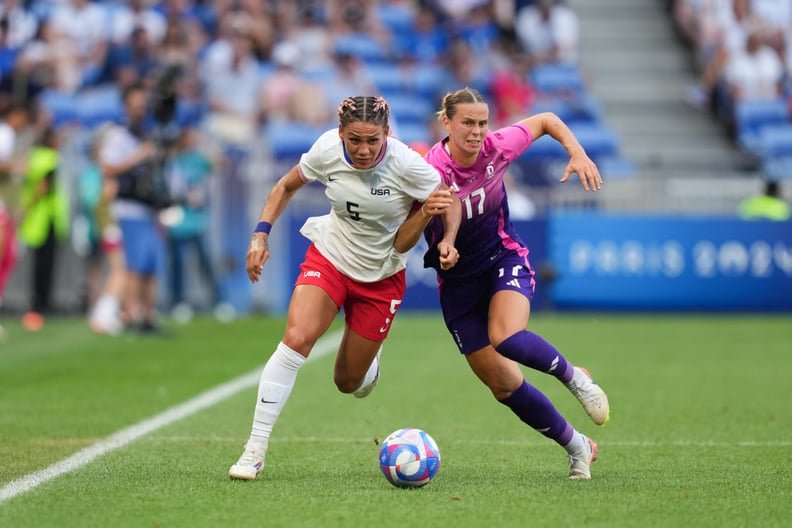
Standard soccer games last 90 minutes, split into two 45-minute halves, with a 15-minute halftime break.
Ever wondered about the duration of a soccer match? It’s a common question, especially for new fans. When we ask, how long are soccer games, the answer is usually straightforward. The game’s structure includes two distinct halves.
These halves are 45 minutes each. A brief 15-minute rest period happens between them. This simple structure dictates the basic timing of most standard soccer matches.

How Long Are Soccer Games?
Ever wondered exactly how long you’ll be cheering from the sidelines, or how much energy you’ll need to play a full soccer match? Well, you’ve come to the right place! Soccer games aren’t just one standard length. It changes depending on the age group, the level of play, and even sometimes the rules of a particular tournament. Let’s dive into all the details and get a clear picture of how much time you can expect to spend watching or playing the beautiful game.
The Basics: Standard Match Length
The most common length for a soccer match, the one you see professionals playing, is 90 minutes. But there’s more to it than just that! This 90 minutes is split into two halves of 45 minutes each. Think of it like two separate mini-games with a break in the middle.
Halftime Break
After the first 45 minutes, there’s a break called halftime. This break is usually about 15 minutes long. This gives players a chance to rest, rehydrate, and for coaches to give some important tips before the second half. For fans, it’s time for snacks and maybe a quick chat about the first half’s excitement. So, if you’re timing the game, remember to add that 15 minutes to the total time!
- First Half: 45 minutes
- Halftime: 15 minutes
- Second Half: 45 minutes
Game Time for Different Age Groups
While 90 minutes is standard for adult soccer, games get shorter for younger players. It’s important to adjust game length to match the physical capabilities of different age groups. Here’s a breakdown:
Youth Soccer (Under 6)
For the littlest players, under 6 years old, games are very short. Usually, matches are around 40 minutes, often split into four 10-minute quarters. This helps the young kids have enough energy for the whole game. There might be even shorter breaks, and it’s really all about fun and learning!
- Total Game Time: Usually 40 minutes
- Breaks: Often multiple short breaks between quarters
Youth Soccer (Under 8)
When kids reach the under-8 age group, match lengths increase a bit, averaging around 50 to 60 minutes. These games usually have two halves. This increase allows for slightly longer playing periods as the kids build stamina.
- Total Game Time: Usually 50-60 minutes
- Halftime: Usually a shorter break
Youth Soccer (Under 10-12)
Players in the under-10 to under-12 range see matches that are around 60 to 70 minutes. This is often two halves that are 30 to 35 minutes in length. They’re getting ready for longer games as their bodies become more capable of sustained physical activity.
- Total Game Time: Usually 60-70 minutes
- Halftime: Usually around 10 minutes
High School Soccer
At the high school level, soccer games generally run for 80 minutes. This usually means two 40-minute halves. High school players are close to the adult playing time, preparing them for potential college or professional play.
- Total Game Time: 80 minutes
- Halftime: 10-15 minutes
Extra Time: When the Clock Keeps Ticking
Sometimes, games don’t end when the clock hits the 90-minute mark. This happens when a game needs a clear winner, usually in knockout or playoff stages of a competition. This is when we move into extra time.
The Basics of Extra Time
Extra time is typically two 15-minute halves, making a total of 30 extra minutes, with a short break in between. The rule about the time is same as usual games, that when the ball goes out of play or for fouls, the time will stop. It’s a very intense period where players have to push through their fatigue and try to make that winning play.
- Extra Time Halves: 2 x 15 minutes
- Break between halves: Short (usually a couple of minutes)
Golden Goal (Sudden Death)
In some competitions, a “golden goal” rule may apply. This means that if a goal is scored during extra time, the game ends immediately, and the team that scored the goal wins! This makes extra time even more exciting and unpredictable, with a quick resolution to the tied score.
The “Golden Goal” is less common today but its history makes it a valuable thing to know when talking about extra time.
Added Time: The Unpredictable Element
You might notice that games rarely end exactly on the 45 or 90-minute mark. That’s because of “added time,” also called “stoppage time” or “injury time.”
What Causes Added Time?
The referee adds time at the end of each half to make up for delays that happened during the game. Things like injuries, substitutions, time-wasting, and any other interruptions all contribute to added time. It’s really up to the referee’s judgment. So, the game length can vary from match to match based on what happens during the play.
- Injuries: If a player gets injured and needs medical attention, the clock stops, and that time is added back.
- Substitutions: When a player is taken out and another goes in, some time is taken to complete the switch.
- Time-wasting: If players intentionally try to waste time, the referee may add on extra time.
Why Is Added Time Important?
Added time ensures the actual playing time is as close to the full 45 or 90 minutes as possible. It keeps the game fair and makes sure teams aren’t benefiting from time-wasting tactics. It also adds excitement because even after the clock shows the full time, goals can still be scored and the game’s destiny can change in those few minutes.
Variations in Game Length
While the above times are fairly standard, it’s worth remembering that not all soccer is played the same. Variations in time can occur in:
Friendly Matches
Friendly matches or exhibition games sometimes have shorter halves. The game time can be adjusted based on what the coaches or organizers want to achieve. They may not always stick to the standard 90 minutes and can be shorter or sometimes longer.
Indoor Soccer
Indoor soccer (also known as futsal) often has shorter game times compared to traditional outdoor soccer. The game is generally faster-paced, with smaller fields. Game time is usually between 40 to 60 minutes, split into two halves.
Tournaments
Different tournaments sometimes have their own unique rules on game length, especially at the youth level. Always check the specific rules of a tournament before assuming game time. Sometimes they’ll shorten the time to allow for more games within the day and make it fun for all.
Key Takeaways: How Long Are Soccer Games?
So, to answer the question, “How long are soccer games?” it’s not always a simple answer! Here’s a recap of key points:
- Professional soccer games are generally 90 minutes long, plus a 15-minute halftime break.
- Youth soccer game lengths vary greatly depending on age, with shorter playing times for younger kids.
- Extra time of 30 minutes (two 15-minute halves) is played if a game needs a clear winner.
- Added time is tacked on at the end of each half to make up for delays.
- Game length can differ for friendly matches, indoor soccer, and some tournaments.
Understanding these times helps fans plan their day at the stadium, and helps players know how to pace themselves. Whether you’re watching or playing, knowing how long the game is helps you get ready for all the action and excitement!
Now you’ve got a detailed view of how long soccer games are! Whether you are planning to go to the stadium, organizing a game, or just want to know the schedule, you now have a comprehensive explanation of soccer game length and how it varies.
Here's how stoppage time works at the end of soccer games
Final Thoughts
Soccer games usually last 90 minutes, divided into two 45-minute halves. There is also a halftime break, typically 15 minutes long. Injury time, added at the end of each half, can vary.
So, how long are soccer games? They are generally 90 minutes of playing time. Extra time might happen if the game is tied in some tournaments. The total time can therefore change slightly.

