
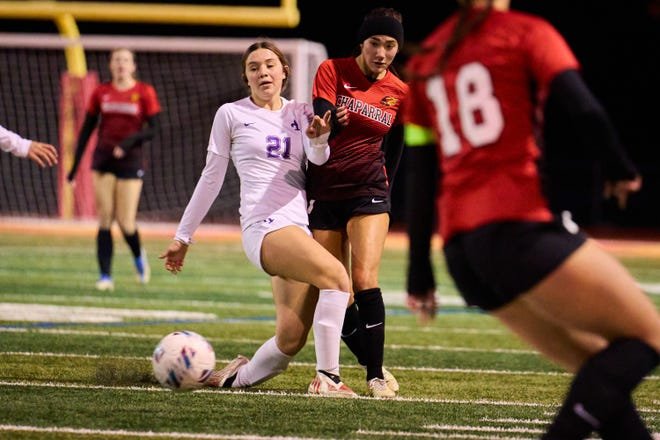
High school soccer games typically last for 80 minutes, divided into two 40-minute halves.
Ever wondered exactly how long do high school soccer games last? It’s a common question, especially for new fans or parents cheering from the sidelines. These matches usually follow a structured time format.
The game’s duration is fixed, providing a set window for all the action. This standard time allows for consistency across all games. Knowing this helps you plan your schedule around the games.

How Long Do High School Soccer Games Last?
Okay, so you’re curious about how long high school soccer games actually take? You’re not alone! It’s a pretty common question, especially if you’re a player, a parent, or just a fan new to the sport. Knowing the game’s duration helps plan your day or understand the commitment involved in playing. Unlike some sports with varying lengths, high school soccer follows a pretty standard time structure. Let’s dive in and get all the details!
The Standard Game Length: 80 Minutes
The most important thing to remember is that a typical high school soccer game lasts for 80 minutes of actual playing time. This is different from the total time you might spend at the field, which could be much longer when you include warm-ups, half-time, and any extra time needed to settle a tie. But the core of the game, the time the clock is ticking while players are running and kicking, is 80 minutes.
This 80-minute playing time is divided into two equal halves, just like many other sports. Each half is 40 minutes long. So it’s 40 minutes of soccer, then a break, then another 40 minutes of soccer. Think of it as two back-to-back episodes of your favorite TV show, but with a halftime show in between, and people are kicking a ball instead of watching a screen!
Understanding the Halftime Break
Between those two 40-minute halves is the halftime break. This is a chance for players to catch their breath, grab a drink of water, and listen to their coach. The halftime break gives them time to adjust strategy, or simply rest a bit before getting back on the field. The typical halftime break in high school soccer is 10 to 15 minutes. This isn’t always the same, depending on the league or the referee’s decision for the day. So, while the game’s active time is 80 minutes, you have to add about 10 to 15 minutes on top of that for halftime to get the real game time duration.
Game Clock and Time Stoppages
During the game, the clock keeps running, but sometimes it stops. This isn’t like basketball where the clock is stopped every time the ball goes out of bounds or there’s a foul. In soccer, the clock typically runs continuously. There is no clock stoppage for when the ball goes out of bounds or for most fouls. But there are a few instances where the game clock can stop and these are generally for injuries. If a player gets hurt, the referee will stop the clock so they can receive medical attention. The referee might also stop the clock for other special situations that they decide needs stopping. These stoppages do add extra time to the game’s total time duration.
Added Time (Injury Time)
At the end of each half, the referee might add extra time. This is usually called “added time” or sometimes “stoppage time”. This extra time is to make up for some of the time lost from stoppages. If there was a lot of time stopped for injuries or other reasons, the referee would add that time to the end of the half. If there was not much stoppage in play then the referee may add a very small time or no extra time. So, while the base time is 40 minutes per half, expect to play more than that, and that extra time is completely at the referees discretion. Added time varies depending on how many stoppages happened in that half, so it’s different game by game.
Overtime in High School Soccer
Now, what happens when a game is tied at the end of those 80 minutes, plus stoppage time? Well, that depends on the rules of the particular league or tournament. Usually, in regular-season high school games, if the score is still tied after regulation, the game ends as a tie. There’s no overtime or any additional extra time. However, in playoffs, championships, or certain tournaments, games cannot end in a tie, and so that means an overtime period is required.
Overtime Procedures
If overtime is needed, there are a few ways it could be handled. One common method is the implementation of sudden-death overtime. Sudden-death is where the game immediately ends the second that a goal is scored by either team, making it a high-pressure situation! In high school soccer, the overtime may involve a single period of overtime, or it may be in two overtime periods, if a sudden-death scenario is not permitted. Sometimes overtime periods are two equal halves of maybe 10 minutes each. However, these details are really specific to the rules of your league or particular match, so if the game goes to overtime always expect something unique!
Penalty Shootouts
When overtime is done and the score is still tied, most leagues will then resort to a penalty shootout. Penalty shootouts are a series of kicks where one player from each team takes a shot directly at the goal with only the goalkeeper to defend, and these are decided by the score of those penalties, and are not done until a team wins. Penalty shootouts can feel the most tense portion of the match, as the outcome of the game can be decided by the performance of one player, under high pressure to succeed! These are used as the last resort and can be exciting, intense, and nerve-racking all at the same time.
Variations in Game Length
While 80 minutes is standard for most high school soccer games, sometimes there can be exceptions. The game length can vary a little depending on the age group of the players, or a league might have a special rule in place for particular reasons. For instance, some younger age levels may play shorter games for player safety reasons. And while these variances are rare, they are important to consider, especially if you are new to the sport. It’s important to know your league’s specific rules, and if you are unsure, ask your coach or an official.
Age-Based Adjustments
When we talk about younger age groups, such as middle school or younger youth leagues, the game lengths are shorter. For example, a middle school game might be only 60 minutes long, divided into two 30-minute halves. This is to make sure that younger players do not get too exhausted, and for safety reasons, as young players may struggle with a full 80 minutes of constant activity. These changes are put in place to keep the playing conditions safe and healthy for all players.
Tournament and Special Games
Sometimes, special events like tournaments or showcases can have slightly different rules. The game may have a different style of overtime in a tournament game, or the time may be cut shorter if there are a series of games scheduled on the same day. It’s best to consult with the tournament organizers to understand all the game rules and expectations. These variations are usually announced before the event starts, so you will know beforehand.
How the Game Time Breaks Down
So, let’s recap. Here’s how a typical high school soccer game’s time breaks down:
- Two 40-minute halves (total of 80 minutes of playing time)
- 10-15 minute halftime break between the halves
- Added time at the end of each half for stoppages
- Overtime (if required for that particular game, typically for playoff games), usually a sudden death scenario or two overtime halves of equal lengths
- Penalty shootouts (if overtime ends in a tie)
Remember, the total time you’ll spend at the field for a game is more than the 80 minutes of actual play due to warm-ups, halftime, and the additional time.
Why Understanding Game Duration Matters
Knowing how long a game lasts isn’t just for the players. It’s important for everyone involved:
- Players can manage their energy and pace themselves during the game
- Coaches can plan their game strategies and make substitutions effectively
- Parents and spectators can plan their schedules and know how much time they need to set aside for a game
Having a clear idea of the time commitment makes it easier to enjoy the game! Everyone is on the same page when they understand how long a match will take, allowing them to relax and focus on the soccer.
Factors Affecting the Total Time
Even though the standard game time is 80 minutes plus a half-time, several factors can alter the total time you’ll spend watching the match. Here are a few things to keep in mind:
- Injuries: If there are lots of injuries in the match, this will increase stoppage time and potentially the length of the match.
- Substitutions: While substitutions are common, if there are a lot of substitutions this will increase the time that passes for a match.
- Referee’s Decisions: If the referee needs to talk with a coach or needs more time to decide a call, that will also increase the total time of a match.
- Added Time: If the referee adds a lot of stoppage time, expect an increase to the length of the match.
- Overtime: In games that go to overtime, the match will increase in time by the overtime period as well as any additional penalties.
It’s best to plan for a longer period than the 80-minute standard, to factor in all the potential stops along the way.
Tips for Time Management During a Game
Now that we’ve covered how long a high school soccer game lasts, let’s talk about making the most of your time, whether you’re on the field or in the stands:
- For Players: It’s important to stay hydrated and pace your energy throughout the game. Don’t sprint at full speed for the whole match!
- For Coaches: Plan your substitutions, and always adjust to the needs of the game.
- For Parents and Spectators: Be sure to arrive a bit before the start time, to catch the game’s warm-up or avoid missing the kick-off.
- General: If you are not sure about the time duration for a game, always check with a coach, official, or team representative!
By understanding the game’s time and structure, you can better enjoy every moment of a high school soccer game! This includes understanding each half, halftime, and the possibility of overtime periods, helping you enjoy every moment of a match! Understanding the timing is a key part to appreciating high school soccer.
So next time you’re watching a high school soccer match, you will know exactly how much time to set aside and you will know what to expect. You’ll know how long each half is, how long is the halftime, and you will even be prepared for the possibility of overtime and penalties. So, now go out there, and enjoy the beautiful game!
BIGGEST RE-MATCH IN HIGH SCHOOL SOCCER HISTORY!
Final Thoughts
High school soccer games typically last 80 minutes, divided into two 40-minute halves. There is a short halftime break in between. Some leagues might have slight variations.
The clock continues to run even if there are stoppages in play, except for injuries and official timeouts. Understanding “how long do high school soccer games last” helps players, fans, and coaches to plan effectively.

