
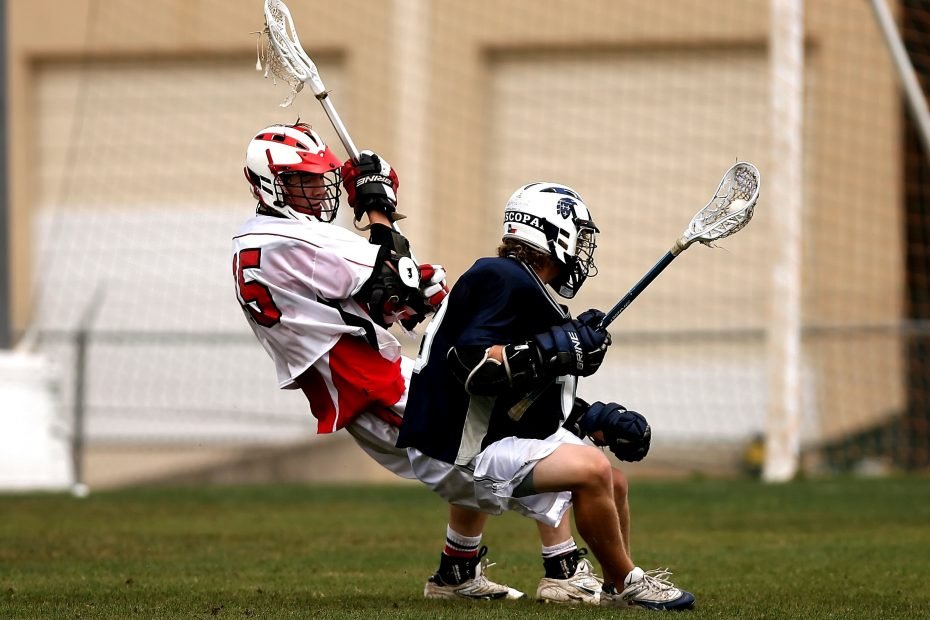
Lax games typically last for 60 minutes, divided into four 15-minute quarters.
Ever wondered about the time commitment involved in catching a lacrosse game? Many new fans often ask, “how long do lax games last?” It’s a fair question, given that the action-packed nature of the sport might make it seem like they go on forever.
The answer is actually quite straightforward. Most games follow a structured format, ensuring a predictable timeframe. This lets you plan your viewing experience, whether you are watching live or on tv.

How Long Do Lax Games Last?
Ever wondered how much time you’ll spend cheering on your favorite lacrosse team? It’s a great question! Lacrosse games, whether it’s a high-energy youth match or a nail-biting professional showdown, have a specific structure that dictates their length. The duration isn’t just a random number; it’s carefully regulated to ensure fair play and exciting action. Let’s dive into the specifics and find out everything you need to know about how long these games actually last.
Understanding the Different Levels of Play
The length of a lacrosse game depends a lot on the level of play. Think of it like comparing a little league baseball game to a Major League game – they’re both baseball, but they have different rules and, importantly, different lengths. Lacrosse is the same! From young kids just learning the game to the pros, the game duration is tailored to their skills and stamina. Here’s a quick rundown:
Youth Lacrosse (Ages 6-14)
When we talk about youth lacrosse, we’re often referring to a wide range of age groups. The younger the players, the shorter the game. This is for good reason! Younger kids have shorter attention spans and require time to learn the fundamentals of the game. We want them to have fun without feeling overwhelmed by a long game. Here’s what you’ll typically see:
- U8 (Under 8): Games are typically shorter, around 40-45 minutes total game time. They might be divided into shorter periods with running time.
- U10 (Under 10): Games will increase in length, often clocking in around 50-60 minutes total playing time, still often with running time.
- U12 (Under 12): Games usually last around 60 minutes total playing time and sometimes have stop-clock rules in the last two minutes of each half.
- U14 (Under 14): At this level, the games will look very close to high school play, generally around 60-70 minutes in total time, often with stop-clock rules at the end of each half.
Keep in mind that coaches often use playing time as an opportunity to get their players engaged. So even with shorter games, the energy and action are still there!
High School Lacrosse
Now we get into more standardized game lengths. In high school, lacrosse games have a more consistent structure. The games get longer because the players are more skilled and have more stamina. High school is where the real strategy and intensity start to shine. Here is the usual format:
- Standard Game Length: Most high school games have four quarters, each lasting 12 minutes for a total of 48 minutes of playing time.
- Stop-Clock Rules: Unlike the running time seen in many youth games, high school games use a “stop-clock”. This means the clock stops whenever the ball goes out of bounds, a foul is called, or a goal is scored. This makes the actual game time longer than just the 48 minutes because of all the breaks.
- Halftime: There is a halftime break, usually 10-15 minutes long, so the players can rest and coaches can make adjustments.
- Overtime: If the game is tied at the end of the fourth quarter, many leagues have an overtime period, usually a sudden-victory period where the first team to score wins.
So, when watching a high school game, expect that the total time you’ll be at the field can easily go past an hour, sometimes closer to an hour and a half, because of all the stop-clock action and potential overtime.
College Lacrosse
College lacrosse takes the game to the next level, with higher levels of athleticism and strategy. Games are not dramatically different from High School, but expect slightly longer games, and especially in the NCAA, more rigorous rules around officiating that can add to the length of the game.
- Standard Game Length: College lacrosse, whether it’s NCAA Division I, II, or III, also uses four quarters. However, the length of each quarter is typically 15 minutes, making the total play time 60 minutes.
- Stop-Clock Rules: College lacrosse also uses the stop-clock method, meaning that the game clock stops when the ball goes out of bounds, a foul occurs, or a goal is scored.
- Halftime: As with high school, a halftime break allows players and coaches time to regroup, usually lasting around 15 minutes.
- Overtime: Overtime rules in college are similar to high school, with a sudden-victory period being the norm.
Just as in high school, the stop-clock rules extend the total time to about 1 hour and 45 minutes, if not longer including the pre-game, halftime and post-game formalities. Because of the intensity of collegiate play, it is very common for many stoppages, especially in close games.
Professional Lacrosse (PLL and NLL)
Professional lacrosse offers two distinct styles of play: field lacrosse (played outdoors, and often referred to as “outdoor” lacrosse) and box lacrosse (played indoors, on a hockey rink-sized surface). The game lengths differ because of these differences in play.
Professional Field Lacrosse (PLL)
The Premier Lacrosse League (PLL) is a professional field lacrosse league, and their games are similar to college games in terms of layout, but can have slightly different rules and time guidelines.
- Standard Game Length: PLL games usually have four quarters, each lasting 15 minutes, totaling 60 minutes of playing time, but can vary slightly depending on the league rules.
- Stop-Clock Rules: Like high school and college, PLL games use stop-clock rules, which increase the overall game length. The clock stops at every stoppage, foul, and goal.
- Halftime: Halftime is longer for PLL games, often between 15 to 20 minutes, which allows for players to rest and for broadcasters to provide analysis.
- Overtime: Overtime in the PLL typically consists of sudden-victory periods.
Because the PLL games are so fast-paced and feature a high level of play, the stop-clock action and the high intensity, it is common for these games to take two hours, or more, when you include warm ups and intermissions.
Professional Box Lacrosse (NLL)
The National Lacrosse League (NLL) is a professional box lacrosse league. Box lacrosse is a faster-paced, more physical game played indoors, and is quite different from outdoor field lacrosse. Because of this, the clock and game play is a bit different.
- Standard Game Length: NLL games consist of three periods, each lasting 20 minutes, totaling 60 minutes of playing time.
- Running Clock: Box lacrosse games often have a running clock, except for the last two minutes of the game, where the clock stops for stoppages. This means the game is generally a faster pace.
- Intermissions: There are two intermissions between the periods, around 15-20 minutes each to let players recover, and prepare for the next period.
- Overtime: Overtime rules in the NLL typically have a sudden-victory period, like in field lacrosse.
While NLL games have 60 minutes of playing time like the PLL, because of the use of a running clock and shorter breaks, NLL games typically move faster and a total length can often be about 2 hours.
Factors That Affect Game Length
While the rules give us a base length for every game, several factors can make a game longer or shorter:
Stop-Clock Time
The stop-clock method itself is probably the biggest factor that affects game length. Every time the ball goes out of bounds, a foul is called, or a goal is scored, the clock stops. In a high school game, which may only have 48 minutes of actual play time, all those stoppages add up quickly. Think of a close game with lots of penalties and turnovers – you’ll be there for much longer than a game with few interruptions.
Overtime
Tied games are exciting! But they do add extra time to the total game duration. Overtime periods, especially sudden-victory periods, can take a few minutes or much longer, depending on when and how the winning goal is scored. You never know what will happen when the game goes to overtime.
Injuries
Unfortunately, injuries happen in sports. If a player is injured and needs medical attention, the game has to be paused, and play is stopped to allow them to be treated. Sometimes these breaks take just a few minutes, but other times can be quite long. It’s important to prioritize player safety, so these stoppages are necessary but add time to the total length of the game.
Timeouts
Coaches use timeouts to strategize with their players or to stop the momentum of the other team. Each timeout is for usually about a minute or two but add to the time, especially at the end of a close match.
Penalties
Penalties, while a necessary part of any sporting game, stop the clock. When a player is penalized, play is stopped, the penalty is assessed, and then play resumes. Some penalties can be lengthy and add to the total game length, especially if they are major penalties with time-outs.
Why are the Lengths Different?
You might wonder why a youth lacrosse game is so much shorter than a professional game. It all comes down to player development, experience and stamina:
- Player Development: Young players are still learning the basics of the game. Short game lengths help keep them engaged and prevent them from getting too tired. It also means more players are given a chance to play the sport.
- Experience: As players get older and more experienced, they have more energy and skill, and the games can get longer and more intense.
- Stamina: Professional athletes are in peak physical condition and can handle the rigors of longer games, with higher speed and more intensity.
- Fan Engagement: Professional lacrosse is played in front of larger audiences and is designed to be more of a spectator experience. That’s why there are longer half-times and more stoppages – it’s more of a show.
A Quick Summary: How Long Are Lacrosse Games?
To wrap it all up, here’s a simple table summarizing the typical game lengths:
| Level | Typical Game Length (Playing Time) | Total Game Length (Approximate) | Typical Clock |
|---|---|---|---|
| Youth (U8) | 40-45 minutes | About 1 hour | Running time |
| Youth (U10) | 50-60 minutes | About 1 hour and 15 minutes | Running time |
| Youth (U12-14) | 60-70 minutes | About 1 hour and 30 minutes | Stop-clock (last few minutes) |
| High School | 48 minutes (4 quarters, 12 mins each) | 1 hour 15 mins – 1 hour 30 mins | Stop-clock |
| College | 60 minutes (4 quarters, 15 mins each) | 1 hour 30 mins – 1 hour 45 mins | Stop-clock |
| PLL (Professional Field) | 60 minutes (4 quarters, 15 mins each) | 2 hours+ | Stop-clock |
| NLL (Professional Box) | 60 minutes (3 periods, 20 mins each) | 2 hours | Running time (except last 2 minutes) |
So, next time you head out to watch a lacrosse game, you’ll have a better idea of how long you will be at the field! Now you know the details behind the different time formats in various levels of lacrosse. This should help you to better plan your viewing times at the fields. Whether it is a short youth game or a high-intensity professional game, you know what to expect in terms of length. Get ready to enjoy the excitement of lacrosse.
Kat Senior year last lax games-2017
Final Thoughts
So, how long do lax games last? Typically, a lacrosse game runs for 60 minutes, divided into four 15-minute quarters. However, stoppages for penalties, timeouts, and the ball going out of bounds frequently extend the overall time.
Therefore, you should generally expect a lacrosse game to last a bit longer than the listed 60 minutes of playing time. The actual duration varies due to game flow.

