
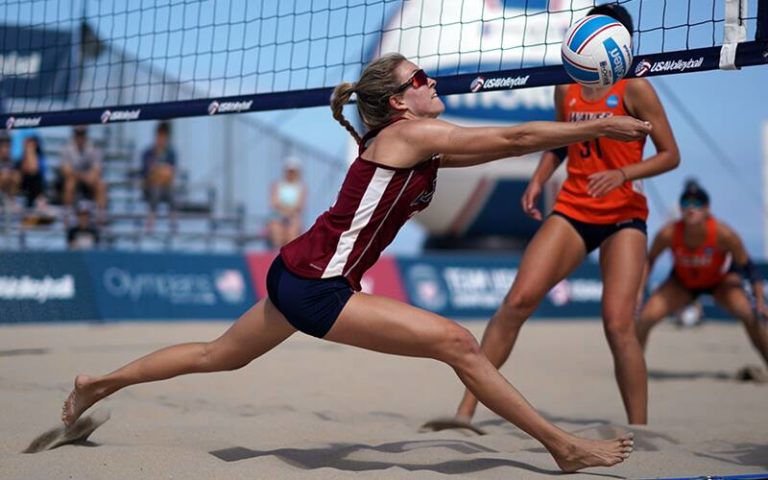
A volleyball game typically lasts between 60 and 90 minutes, though it can vary based on the number of sets played and any time-outs.
Ever wondered how long does a volleyball game last? It’s a question many new fans have when they first get into the sport. The timing can seem unpredictable because it depends on a few things.
Games aren’t based on a clock, they’re based on points and sets. Usually a match consists of best-of-five sets, or sometimes best-of-three.
So, while a quick match might be over in an hour, a particularly intense battle can push past the 90-minute mark. Time-outs and breaks also add to the total duration.

How Long Does a Volleyball Game Last?
So, you’re curious about how long a volleyball game takes? That’s a great question! Unlike some sports with set time limits, volleyball games can vary in length. It’s not like a basketball game with four quarters or a soccer match with two halves. Instead, volleyball uses a system of sets and points, which means the time it takes to play depends on how quickly those sets are won.
Understanding Sets and Points
The first thing to understand is that volleyball games are played in sets. Usually, a match is either best-of-three or best-of-five sets. What does that mean? Let’s break it down:
- Best-of-three: The first team to win two sets wins the match.
- Best-of-five: The first team to win three sets wins the match.
Now, how do you win a set? Well, teams score points, and the first team to reach 25 points (with a margin of at least two points) wins the set. For instance, a team wins 25-23 or 26-24. But if it’s 24-24? Then you keep playing until someone gets a two-point advantage. The final set, if needed (in a best-of-five match), is often played to only 15 points, still requiring a two-point advantage.
Typical Set Durations
A single volleyball set can take anywhere from about 20 to 35 minutes. This is an average. There are factors that can make a set go faster or take longer. Let’s look at some reasons why a set might take more or less time:
- Dominant Team: If one team is much better than the other, the set might end quickly with fewer rallies. A team that is consistently scoring points will lead to a faster set.
- Close Competition: If both teams are equally skilled, the set will likely have longer rallies and more back-and-forth scoring. This makes the set take more time.
- Time Outs and Substitutions: Coaches call time-outs to strategize, and teams substitute players which will stop play, adding a few more minutes to the clock.
So, as you can see, there is no exact time for each set, as it really depends on the game.
Match Length Variations
Now that you know how long a single set can take, let’s figure out how long an entire match will last. Since a match is made up of multiple sets, the total time can vary quite a bit!
Best-of-Three Match Length
In a best-of-three match, a match can finish in just two sets if one team wins the first two. Or, it can go to a third set if teams split wins. This leads to a total match time of around:
- Fast Match: Two sets, taking roughly 40 minutes to an hour (2 x 20-30 minutes per set).
- Longer Match: Three sets, taking about 60 to 105 minutes (3 x 20-35 minutes per set).
Best-of-Five Match Length
A best-of-five match will take longer because teams must win three sets to win the match. This is common in professional volleyball and higher levels of play. Here are the time ranges for a best-of-five match:
- Fast Match: Three sets, taking about 60 to 105 minutes (3 x 20-35 minutes per set). This is if one team wins all three sets.
- Moderate Match: Four sets, taking about 80 to 140 minutes (4 x 20-35 minutes per set).
- Long Match: Five sets, taking about 100 to 175 minutes or more (5 x 20-35 minutes per set, plus the final set to 15 which could add more time as it’s often very close).
Factors Affecting Match Duration
Several things can influence how long a volleyball match takes. Let’s look at these factors in more detail.
Skill Level
The skill level of the teams significantly affects the duration of a match. In a game between two skilled teams, there are usually longer rallies, more strategic play, and a greater need for point by point battles. This can prolong the sets and the overall match time. In contrast, a match with a big skill difference often finishes quickly because one team dominates. Less experienced teams might also make more errors, resulting in shorter rallies and a quicker match.
Time-Outs and Substitutions
Coaches use time-outs strategically to talk to their players, plan the next plays, or disrupt the flow of the opposing team. Each time-out pauses the game clock and gives the players a brief rest, adding time to the overall match duration. Substitutions also pause play. In volleyball, teams often substitute players to put certain players in a better position for the moment. All of these strategic breaks add minutes to the overall game time.
Rally Length
The length of rallies (the back-and-forth between teams hitting the ball) is another huge factor. When teams have long, intense rallies with multiple hits, it slows down the game. Games with quick points will go by much faster, but those games also will be less exciting and often one-sided. When teams are evenly matched, there are typically more intense rallies as each team fights for each point, thus increasing the overall length of the game.
Refereeing Decisions
Sometimes the referee has to make important decisions that can lead to stoppages. A referee may call a replay if they cannot definitively decide on a play, they may need to speak with the players and/or coaches about a rule, or they may even be required to give a player a penalty. These stoppages can all have an effect on the total game time.
Level of Play
The level of play also has an impact. High school and college matches often play with a best-of-three or best-of-five format, often with very similar time ranges. However, professional volleyball matches can sometimes take even longer. In tournaments where multiple games are played, the breaks between games can also impact how much time is spent at the venue. The time between matches are often shorter so that an entire tournament can be completed efficiently.
Volleyball Match Length by Level
The specific level of play can also influence the overall length of a volleyball game. Here is a general look at typical match durations at different levels of play.
Recreational Volleyball
Recreational games are often more relaxed, so the matches can be shorter. They often play best-of-three sets, and games are frequently shorter overall. It’s not uncommon to see recreational games finish within 45-75 minutes because teams may be less skilled and the games tend to have faster points. There may also be less strategic stoppages or time-outs.
High School Volleyball
High school matches often follow a best-of-three or best-of-five format. The matches usually last around 1 to 2 hours depending on how many sets are played and the intensity of the game. Because teams in high school typically have more strategies and the players are more skilled than recreational leagues, rallies might be longer than those at recreational level.
College Volleyball
College volleyball matches are usually a best-of-five format and tend to be more structured. A typical college volleyball game can last anywhere from 1.5 to 2.5 hours. College level games have much more strategy and often longer and more intense rallies, which contributes to the longer game time.
Professional Volleyball
Professional volleyball matches, such as those in international tournaments or leagues, are also best-of-five and are often highly competitive. These matches can vary significantly, but often last around 2 to 3 hours, sometimes even longer in closely contested matches. The skill of the players is extremely high and there are typically more stoppages to give the players needed rest.
Quick Tips to Manage Your Time
If you’re watching a volleyball game, knowing it could take a while is essential for planning your day. Here are some tips:
- Check the Format: Find out if it’s a best-of-three or best-of-five match. This gives you a general idea of the match time.
- Allow Buffer Time: Don’t assume a match will be short. Always give yourself extra time to account for long rallies or extra sets.
- Stay Hydrated and Fed: Plan for long matches by bringing water and maybe a snack, especially if you are playing in the match.
Understanding the variables will help you get a feel for how long a volleyball match might last. Enjoy the game!
This volleyball save was amazing! 😱🏐 #shorts
Final Thoughts
A typical volleyball match duration varies. It depends on the number of sets played. Generally, a match lasts from 60 to 90 minutes.
However, matches can go longer if they extend to five sets. Tournament play often leads to lengthier games. The intensity of the competition also affects the overall time.
So, to answer how long does a volleyball game last, a standard match is roughly one to one and a half hours. Always factor in potential extra time for those close, exciting games.

