
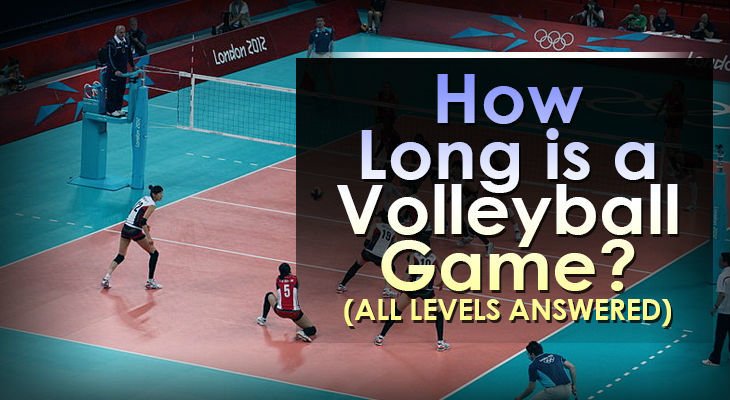
A volleyball game typically lasts between 60 and 90 minutes, although this can vary depending on the level of play and number of sets.
Ever wondered how long does a volleyball game take? It’s a common question for both new fans and players alike. The time spent on the court can shift quite a bit.
A casual match with friends will usually finish faster. Whereas, professional games with many sets will take up more time to complete. Understanding these time frames helps you plan your volleyball viewing and playing schedules.

How Long Does a Volleyball Game Take?
Volleyball is a super fun and exciting sport, whether you’re playing it or watching it. But, if you’re heading to a game or planning one yourself, you might wonder: how long will it actually take? It’s not as simple as saying “exactly one hour!” because several things can change how long a match lasts. Let’s dive into all the details and see what influences the time it takes to play a volleyball game.
Understanding the Basics of a Volleyball Match
First, let’s get to grips with what a volleyball game looks like. A typical match is usually played in sets, not halves or periods like some other sports. Most volleyball games use a best-of-three or best-of-five set format. This means a team needs to win either two sets (in a best-of-three) or three sets (in a best-of-five) to win the entire match. Thinking of this as “first to a certain amount of sets wins” is a helpful way to view the format. This is different from sports like basketball or football where the team with the highest score wins. In volleyball it is about winning the most sets.
The Set System
A set in volleyball is normally played to 25 points, but this isn’t a hard and fast rule. In most scenarios you have to win by a margin of two points, so a score of 25-24 would mean the set continues until someone wins with a two-point lead. There is usually a cap at a much higher score (often 30), where whoever is ahead at that point wins. If a match is at the deciding set (known as the fifth set in a best-of-five), it’s typically played to 15 points, again with the two point margin rule.
- Regular Sets: Usually played to 25 points, with a two-point win margin.
- Deciding Sets: Often played to 15 points, with a two-point win margin.
Factors That Influence Match Duration
Now that we know the setup, let’s look at what makes some matches shorter or longer than others. Several variables affect how quickly a match concludes.
Level of Play
The skill level of the players is a big influence on match length. You’ll see more back-and-forth, long rallies in more advanced or professional games, leading to a longer duration. In a recreational match, you might find more mistakes, which can sometimes make the game go a bit faster. But it’s also possible that recreational matches will have less controlled play which could prolong the set.
- Professional/High-Level Games: These games typically involve longer rallies, which add to the time. Players execute complex plays with less errors.
- Amateur/Recreational Games: These games might fluctuate more with mistakes, which can lead to quicker points, but it can also result in longer, less efficient play.
Number of Sets Played
Of course, the most straightforward factor is the number of sets played. A best-of-three match will always be shorter than a best-of-five game. If both teams are very even and each set is going to a high score and long rally, even a best-of-three game can extend a bit in length.
- Best-of-three matches: Typically faster, concluding after two or three sets.
- Best-of-five matches: Almost always longer, lasting at least three, and possibly up to five sets.
Timeouts and Intermissions
Teams are allowed to call timeouts in volleyball, which pauses the play. There is typically a technical timeout as well, when the score reaches a certain mark. These breaks in the action can stretch the overall time of the match. Also, there are short intermissions between sets, usually a minute or two, and these add to the total time. While these breaks are usually short they do add up over the course of a match.
- Timeouts: These provide a pause for coaches to strategize or players to rest.
- Intermissions: Short breaks between sets that can slightly increase the match duration.
Rally Length and Pace of Play
As mentioned previously, rally length is an important factor. Long, intense rallies will add time to a set, while short points due to easy errors will speed it up. The style of play for different teams can also change the pace of the game. Some teams might favor a fast-paced, offensive style, and others will opt for a more controlled, defensive style which can lead to longer rallies.
- Long rallies: When teams consistently dig and keep the ball in play, it naturally makes a set longer.
- Short rallies: Serve aces, hitting errors, or quick kills will make a set go quicker.
Competitive Intensity
The competitiveness of the match can also play a role in duration. A highly competitive match between two evenly matched teams might result in longer sets, while an unequal match may progress much quicker.
Average Time for Different Types of Volleyball Games
Now that we have looked at all of the factors influencing game time, let’s look at some typical estimates based on the type of volleyball.
Recreational Volleyball
Recreational volleyball games are less likely to adhere to strict times, but a single set may take around 20-30 minutes. Often a recreational match will go until a team reaches a set amount of points (maybe 50, or 100), or a specified time period has ended. In these types of games, time is not as strict and the focus is on having fun and getting some exercise.
High School/Junior Level Volleyball
In high school and junior level games, matches are often best-of-five sets. Due to the age and skill level of the players, a set can last anywhere from 20-35 minutes. A full high school game (best-of-five) usually falls between 1.5 to 2.5 hours.
- Best-of-three matches: 1 – 1.5 hours
- Best-of-five matches: 1.5 – 2.5 hours
College Volleyball
College volleyball games often include the best players in the sport and matches can be fiercely competitive. Often college games are best-of-five and you can expect to see the entire length of the match run longer. A single set can take from 25 to 40 minutes. So a full game can last between 2 and 3 hours, sometimes longer if it goes to a deciding set with a lot of long rallies.
- Best-of-five matches: 2 – 3+ hours
Professional Volleyball
Professional volleyball features the highest level of play and the matches can be quite long. A match is most likely best-of-five and can average 2.5 to 3.5 hours. The amount of rallies, the quality of play, and the importance of the match can all contribute to a longer game time. Games can even sometimes exceed the time given, going to close scorelines and longer rallies which can stretch the game.
- Best-of-five matches: 2.5 – 3.5+ hours
Quick Guide to Volleyball Game Length
It’s helpful to have a quick summary table showing typical lengths for different volleyball games:
| Level of Play | Match Format | Typical Match Duration |
|---|---|---|
| Recreational | Variable (time or points) | Variable, 30 minutes – 1+ hours |
| High School/Junior | Best-of-three | 1 – 1.5 hours |
| High School/Junior | Best-of-five | 1.5 – 2.5 hours |
| College | Best-of-five | 2 – 3+ hours |
| Professional | Best-of-five | 2.5 – 3.5+ hours |
Remember these are just general guidelines, and the actual game time will change based on the many factors listed above.
Tips for Planning Around Game Time
If you’re a player, coach, or spectator, it is important to be prepared for the time commitment that a volleyball match can require. Here are a few tips to keep in mind:
- Allow extra time: Always add a buffer to your estimate. This way you won’t run late if the game runs long. This is especially true for important matches that might go longer.
- Consider travel time: Factor in the time it takes to travel to and from the game venue.
- Check the schedule: Many leagues and tournaments post time estimates on their schedule, so that can be a good resource for planning your time.
- Be flexible: Remember that games are dynamic and can change length for many different reasons, so its helpful to be flexible and have a bit of extra time set aside.
Understanding how long a volleyball game takes helps everyone better plan their time and schedules, allowing everyone to enjoy the game.
So, while there isn’t a precise answer to the question “how long does a volleyball game take?”, knowing what impacts the length of a match can allow you to make more informed estimates. Enjoy the game!
How To Time A Volleyball
Final Thoughts
So, how long does a volleyball game take? Match duration varies, typically between 60 and 90 minutes. Factors like the number of sets needed to win and any timeouts extend this timeframe.
A quicker game happens if one team wins convincingly in three sets. The match extends for longer when teams require all five sets. Knowing these time estimates help you plan your schedule.

