
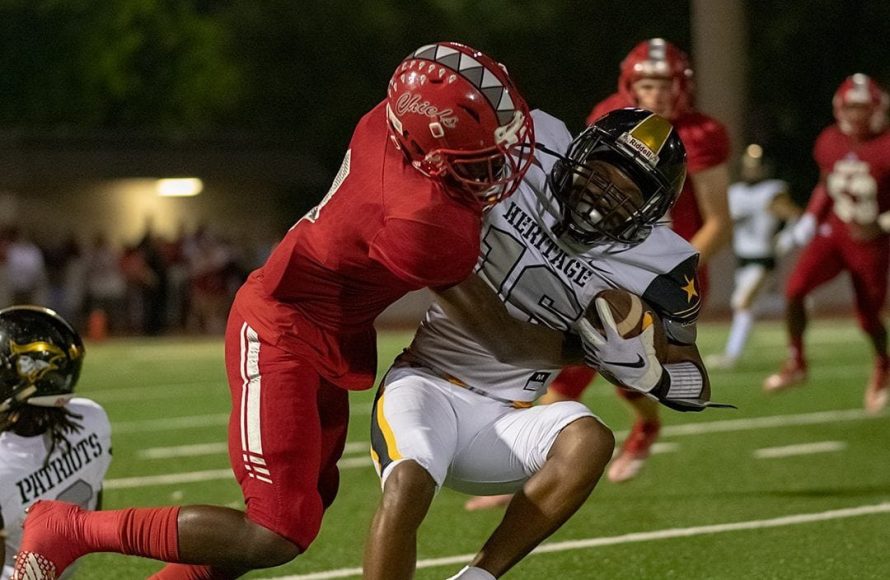
A typical high school football game lasts approximately 2 to 3 hours.
Ever found yourself wondering, how long does hs football game last? It’s a question many first-time spectators, and even seasoned fans, might ponder. The clock seems to tick differently when the action is happening on the field.
The game length is impacted by many factors, including play stoppages and timeouts. But on average, you can expect a commitment of a couple of hours to enjoy the full experience of high school football.

How Long Does an HS Football Game Last?
Alright, let’s dive into the exciting world of high school football! If you’ve ever wondered, “How long does a high school football game actually last?”, you’re not alone. It’s a common question, and the answer isn’t always as simple as a single number. While the rule book has a set amount of time, there are many factors that can affect the final game clock. Let’s explore all these exciting aspects!
The Standard Game Time: Four Quarters
At the core, a high school football game is divided into four quarters. Each of these quarters is designed to be 12 minutes long. This means that if the clock ran continuously without any stops, a game would last a total of 48 minutes. This is the amount of time the players are actively trying to score points! But, as you probably know, the clock doesn’t always run smoothly.
Understanding the Game Clock
The game clock in high school football is a little more complex than just running for 48 minutes. It stops for several reasons, making the total time of the game significantly longer. Here’s a look at some of the main reasons the clock stops:
- Incomplete Passes: When a pass is thrown and no one catches it, the clock stops.
- Out of Bounds: If a player runs out of the field of play, the clock stops.
- Penalties: When a foul happens, the clock stops while the referees figure out the penalty.
- Change of Possession: When the ball changes from one team to the other, the clock stops. This is when the ball changes team, often after a turnover.
- Timeouts: Each team has a limited number of timeouts, and when a team calls one, the clock stops.
- Injuries: If a player gets injured, the clock stops so they can get help.
- Scoring Plays: Anytime a touchdown or field goal is scored, the clock is paused briefly.
Because of these frequent stops, a high school football game rarely finishes in just 48 minutes of actual clock time.
Halftime Break
Just like in many other sports, there’s a break in the middle of a high school football game, called halftime. This is a longer pause, and it allows the players to rest, get advice from their coaches, and get ready for the rest of the game. Halftime in high school football is typically 15 minutes long. This allows both teams some time to regroup.
Typical Total Game Length: More Than Just the Clock
So, if the actual game time is 48 minutes, and halftime is 15 minutes, why do games feel so much longer? The answer is all the extra time that goes into stoppages and the breaks between quarters. Here is what a typical game schedule looks like:
- First Quarter: 12 minutes of game time (plus stoppages).
- Short Break: A very short break between the first and second quarters so teams can switch sides.
- Second Quarter: 12 minutes of game time (plus stoppages).
- Halftime: 15 minutes to rest and strategize.
- Third Quarter: 12 minutes of game time (plus stoppages).
- Short Break: A very short break between the third and fourth quarters.
- Fourth Quarter: 12 minutes of game time (plus stoppages).
Taking all the factors in consideration, the total time of a high school football game usually ranges from 2 to 3 hours. This might seem like a lot more than 48 minutes, but remember there are all those stops for incomplete passes, penalties, and other things. The actual length will depend on how many penalties and stops happen during the game. Some very fast games might end closer to 2 hours, while other games with lots of back and forth can easily run over 2 and half hours.
Factors That Can Extend Game Time
Here are a few more reasons why a game can sometimes run longer:
- Close Games: When the score is very close, the teams might be more careful, which can lead to more stops in the clock.
- Lots of Penalties: If both teams are making a lot of mistakes, these penalties will cause the clock to stop more often.
- Many Injuries: If more players get hurt, the clock will stop more often, and the game will take longer.
- Overtime: Sometimes, after the four quarters, the game is tied. If this happens, they play overtime periods until a winner is determined. This can add extra time to the game, extending its length, and the overtime rules for high school games can vary from state to state.
Other Elements That Affect Game Duration
Aside from the game clock itself, certain surrounding factors can also play a role in how long the total experience takes. These factors can make the entire event feel longer than just the game itself.
- Pre-Game Activities: Before the game even starts, there is often a pre-game show with players warming up, band performances, and announcements. These events can add to the overall time spent at the football field.
- Half-Time Show: Halftime isn’t just for players to rest; it’s also a time for marching band performances, cheerleading routines, and other entertainment. These performances add to the overall length of the event.
- Post-Game Celebrations: After the final whistle, there’s often a time for players to congratulate each other and, if they win, celebrate the victory. Fans might also stick around to cheer for the team. These celebrations will add extra time to your stay at the field.
When you consider these extra elements, you can see why being at a high school football game is often a longer experience than just the 48 minutes of game time.
The Role of the Referees
Referees are important people during a game. They are responsible for making sure the game is fair. They also help keep the game moving. If a referee sees a penalty, they will stop the clock. They must discuss the penalty with the coaches and figure out what should happen next. All of this time adds to the game duration. The referees are there to make sure that all players are playing fair and to the rules. Without them, the game would not be the same.
Variations in Game Length
While the rules for high school football are pretty consistent across the country, there can be some minor differences in game lengths and timekeeping. These might depend on the specific state or even the league or conference in which the high school teams participate. Some leagues may have different rules about game stoppages or overtime procedures. It’s always a good idea to check with your local athletic association or high school to find out if there are any unique rules that apply to a specific game that you are watching.
Impact of Level of Play
The level of competition can affect how long a high school football game takes. For example, a varsity game might have more stoppages due to penalties or player substitutions, potentially making the game longer. On the other hand, a lower level game, like a freshman or junior varsity game, might have fewer stops. These games may move a bit faster, and the clock might not stop as often, so they would typically be shorter.
What to Expect When Attending a Game
Now that you have a good idea of how long a high school football game lasts, let’s talk about what you should expect when attending one. First, always plan for more time than just the 48 minutes of actual play. If you’re going with younger kids, make sure they are prepared to sit through at least two or three hours, including all the breaks. You may even want to pack extra snacks and drinks for both of you! Also, consider the weather. Games can be hot during the early season and cold toward the end, so you will need to prepare. High school football games are often social events, and there will be lots of people to see! You should plan to arrive a bit early to secure a parking spot and find good seating.
How to Make the Most of Game Time
Even though the game can be long, there are ways to make it more fun. Get to know some of the players and families from your community. Take some time to appreciate the skills of the players, and enjoy the excitement. Football is a game that brings people together, and it can be a great way to be involved in your community. Don’t just watch the game, participate and cheer!
The Importance of the Time
In a high school football game, time is everything. Teams need to manage the clock strategically to make the most of their opportunities. Coaches teach players to understand the game clock and how to use it to their advantage. In late game scenarios, having the knowledge on how to run the clock, or even stop it is vital to success. In a close game, the last few minutes are particularly important, and they can sometimes last much longer than just 12 minutes as teams attempt a comeback.
Understanding the elements of game time can make watching and following a high school football game more interesting. It’s not just about the 48 minutes of play; it’s about the entire event. So, the next time you’re headed to a high school football game, remember to plan for a couple of hours of fun, cheering, and excitement, because these games are more than just what the clock says.
This is what High School Football is all about 💯 #shorts
Final Thoughts
A typical high school football game lasts around 2 to 3 hours. This duration includes four quarters, halftime, and timeouts. The clock management and game stoppages influence the overall time.
So, how long does hs football game last? The exact length may vary slightly. This variation is due to factors like penalties and play stoppages. Keep in mind that some games can run longer if there are many penalties and injuries.

