
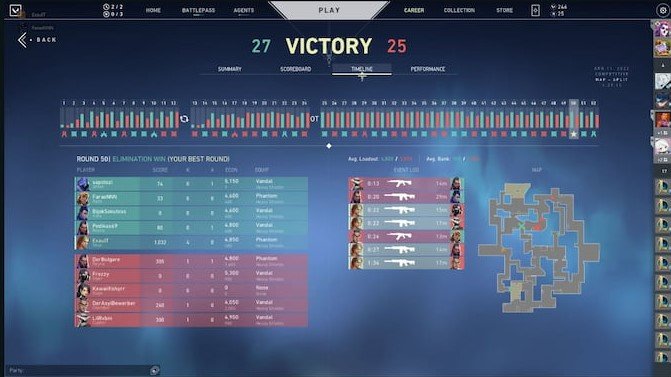
A standard Valorant game typically lasts between 30 to 40 minutes.
Jumping into a Valorant match? You might be wondering, how long does a Valorant game last? It’s a fair question, especially if you’re squeezing in a quick play session or planning your gaming schedule with friends.
The length can change based on how close the competition is. Sometimes games end faster, if one team dominates. Other times, you might be in a long intense battle. This depends on both the skills of players.

How Long Does a Valorant Game Last?
So, you’re jumping into Valorant, ready for some tactical shooting action? That’s great! But maybe you’re wondering, “How long is this going to take?”. It’s a good question! Knowing how much time you need to set aside for a match can help you plan your gaming sessions perfectly. Let’s break down the different game modes in Valorant and figure out how long you’ll be playing.
Understanding Valorant’s Game Modes and Their Durations
Valorant offers different ways to play, and each mode has a different typical length. Understanding these modes is the key to knowing how long a match will last. The primary mode is the standard Unrated or Competitive mode, which we will discuss in-depth below. We also have other modes like Spike Rush, Deathmatch, and Escalation.
The Core: Unrated and Competitive Modes
The most popular modes in Valorant are Unrated and Competitive. These are very similar, just that competitive mode ranks your skills. Both are played the same way. Here’s the deal:
- Rounds: A standard game is a best-of-25 rounds. That means the first team to win 13 rounds wins the match.
- Attack and Defense: Teams switch sides halfway through, so you will experience both attacking and defending roles.
- Economy: You earn credits each round based on your performance, and you use these credits to buy weapons and abilities, adding a strategic layer to the game.
So, how long does this take?
A full match can last anywhere from 30 to 50 minutes. However, you must keep in mind that not every match goes the distance. Sometimes, one team dominates, and it finishes faster. Here are a few examples:
- A very fast game: If one team wins 13 rounds and the opposing team wins very few, the game might only take around 25-30 minutes. This can happen if there’s a huge skill gap between the teams.
- An average game: A more common scenario, the game might last about 35-45 minutes, with some back-and-forth between the two teams, with a little bit of lead changing.
- A close game: A very closely contested game could go all the way to the 25th round and last around 45-55 minutes. This happens when both teams are equally skilled and strategic.
So when planning your gaming time, it is always best to allocate about an hour, just in case.
Here is a table summarizing the durations:
| Match Type | Average Duration |
|---|---|
| Quick Win (One Sided) | 25-30 minutes |
| Average Game | 35-45 minutes |
| Close Game | 45-55 minutes |
Spike Rush: Quick and Fun
Spike Rush is designed for those who are seeking a quicker game. It’s perfect when you don’t have a lot of time but still want some Valorant action.
- Faster Rounds: This mode is a condensed version of the standard game, where matches are first to 4 rounds win.
- Random Weapons: Each round starts with all players equipped with random weapons, making each round unique.
- Orbs: Special orbs appear on the map, giving players temporary buffs or abilities that affect the gameplay.
These shorter rounds mean the games don’t take too long. You can usually finish a Spike Rush match in about 8 to 15 minutes.
Deathmatch: A Free-For-All
Deathmatch is a chaotic mode that focuses on individual skill rather than teamwork. It’s all about racking up kills and getting better at shooting.
- Free-For-All: This means there are no teams and it is all about you and your kills!
- Respawn: Players respawn quickly after being eliminated, allowing continuous action.
- Score Limit: The first to reach 40 kills, or the player with the most kills after 10 minutes, wins.
Due to this setup, Deathmatch games typically last around 5 to 10 minutes. It’s a great way to warm up before a match or just improve your gun skills.
Escalation: A Growing Challenge
Escalation is a mode where each team progresses through weapons, from very strong to very weak, or abilities by killing enemies and upgrading to next levels. It’s a fast-paced mode that gets more challenging as you progress.
- Weapon Progression: Starting with more powerful weapons, teams advance to weaker ones as they get kills.
- Team Focused: This is still team based and the first to complete each level, moves to next level.
- Winning Condition: You win when the whole team completes all the level in progression.
An Escalation game can last from 7 to 10 minutes. This makes it another great option for those who want a quick match.
Factors That Affect Game Length
Several factors can influence how long a match in Valorant actually lasts. It’s good to be aware of these when estimating your gaming time.
Skill Levels of the Teams
The skills of both teams will greatly affect the game duration. A huge skill difference can result in one team dominating, leading to quicker matches, as one team racks up 13 rounds very quickly. In contrast, if the teams are closely matched, expect a longer and more intense experience with a great amount of back and forth between the teams.
Strategic Depth and Teamwork
Good team coordination and strategy can either speed up or slow down the game. When teams work well together, they can win rounds swiftly by quickly executing strategies. When teams use individual approaches, matches tend to stretch out longer.
Economic Control
The in-game economy of Valorant is where players buy weapons and abilities. How well each team manage their money also affects the pace. If one team gets a strong economy early on, they can gain a big advantage, which can lead to faster matches. However, if both teams are equally smart with their economy, there can be a tug of war, leading to a long match. It can go up and down.
Surrenders
If the team is struggling really badly, Valorant offers an option to surrender if every player on a team agrees. This can significantly shorten the game, allowing you to move on to the next one. Surrenders usually occur when one team is down many points with very little chances of comeback.
Tips for Managing Your Game Time
Knowing how long a Valorant match may take is helpful to your schedule, and there are few things you can do to keep track of time.
Plan Ahead
Before you start, figure out how much time you have to play. If you have less time, Spike Rush, Deathmatch, or Escalation are your best bets. If you have a good hour to spare, then a standard game is possible.
Use Timers
Keep a timer on your phone or watch to track how long you’ve been playing. This helps you avoid getting lost in the game and forgetting about other things.
Take Breaks
It’s really important to take breaks between matches. This helps you avoid burnout and play better. It gives you a chance to relax and recharge before the next game.
Use Valorant Client Timer
The Valorant client also keeps track of how much time you have spent in-game, so always keep an eye on that as well. This way you can track your in game hours.
Understanding how long a Valorant game lasts is a vital part of your game planning. Standard games can vary greatly based on player skills and strategy. But knowing how long different game modes typically take helps you get the most enjoyment out of your time. Whether you are having a quick match or an engaging longer battle, Valorant has game modes to fit all types of players and situations.
What’s New for Season 2025 // Dev Updates – VALORANT
Final Thoughts
A standard Valorant match usually lasts between 30 to 40 minutes. This duration depends on the number of rounds played and if any overtime is needed. Quicker games can finish in around 20 minutes, if one team dominates early on.
Competitive matches generally take more time compared to unrated. ‘How long does Valorant game last’ can also vary slightly due to timeouts and agent selection processes. Keep these factors in mind while planning your gameplay sessions.

