
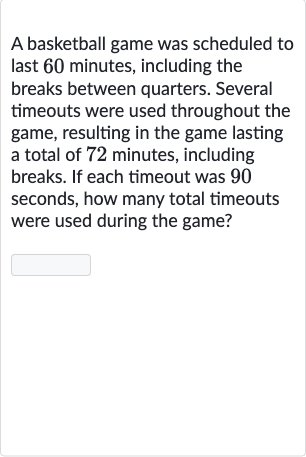
A standard professional basketball game, including breaks, typically lasts around two to two and a half hours.
Ever wondered how long is a basketball game including breaks? It’s a common question for new fans and even seasoned viewers planning their schedules. The game clock might seem short, but the total time is usually longer.
These breaks include halftime, timeouts, and short pauses between quarters. These pauses significantly increase the overall duration beyond the 48 minutes of playing time. So, expect a good chunk of time if you’re tuning in or heading to the arena.

How Long is a Basketball Game Including Breaks?
Ever wondered just how long you’ll be glued to the TV or sitting in the stands watching a basketball game? It’s a fair question! It’s not as simple as a set number of minutes because there are breaks, timeouts, and other things that can make a game longer. Let’s dive into the exciting details of how game time works and what makes up that total time you experience while watching your favorite teams. Get ready to learn everything about the clock, the quarters, and the pauses that make basketball so dynamic. We’ll explore all levels of the game – from the pros to the schoolyard – to give you a complete picture of game length.
Understanding the Basic Game Clock
Let’s begin with the actual playing time, the part when the ball is moving and the players are running up and down the court. In basketball, games are split into sections, not like football which is split into halves. Instead, basketball games are divided into quarters. The length of these quarters depends on the level of play. Understanding the timing within these quarters is the foundation for figuring out how long a basketball game really is. There is a lot more than just four quarters, there is a lot of breaks and stoppages.
The Length of Quarters by Level
Different leagues and levels of play have different quarter lengths. It’s not a ‘one size fits all’ kind of deal. Here’s a breakdown:
- NBA (National Basketball Association): The big leagues! In the NBA, each quarter is 12 minutes long. This means the total playing time for an NBA game is 48 minutes.
- WNBA (Women’s National Basketball Association): Similar to the NBA, the WNBA also uses 10-minute quarters, for a total of 40 minutes of playing time.
- NCAA (College Basketball): College basketball changes things up a bit with two 20-minute halves. This means college basketball games have 40 minutes of playing time.
- High School Basketball: High school games are usually played with 8-minute quarters, making the total playing time 32 minutes. This can vary by state so double check if you plan to watch a game!
- Youth Basketball: Depending on age, youth basketball quarters can be even shorter, sometimes as little as 6 or 7 minutes. This is all to help young players adjust to the sport.
So, as you can see, the playing time varies considerably depending on who is playing. But game time, that’s just the beginning of the story!
Breaks Between Quarters and Halftime
Okay, now we’ve got the actual play time down, but what about those pauses in the action? Those breaks, whether between quarters or at halftime, are vital to the flow of the game and the overall game time. The time adds up much more than you might think.
Short Breaks Between Quarters
After the first and third quarters, there’s usually a short break. This gives the players a brief rest, coaches time to discuss strategy, and the viewers a quick pause before the action starts again. These breaks are not very long, generally only a couple of minutes in most levels of basketball. They are there to keep the game moving, and keep everyone ready for the next period of play.
The Halftime Break
The halftime break comes between the second and third quarters and is longer than the other quarter breaks. This provides more time for players to rest and coaches to do any required adjustments. The halftime break varies based on the level of play:
- NBA: In the NBA, halftime is usually 15 minutes long. This can include entertainment, commercials, and allows time for players to recharge.
- WNBA: The WNBA also has a 15-minute halftime break.
- NCAA: In college, the halftime break is a bit shorter, typically around 15 minutes.
- High School & Youth: Halftime at these levels might be shorter, from 5-10 minutes, depending on local rules.
These breaks are important for the game, giving all a moment to take a breather before the next half of action.
Timeouts: When the Clock Stops
Timeouts are a critical part of basketball strategy, and they add to the overall time of a game. These aren’t scheduled breaks, but rather pauses that coaches use to regroup their teams, make a play or strategize, or to slow the momentum of the other team. Let’s see how many each team gets in various leagues.
Number of Timeouts Per Game
Each team gets a specific number of timeouts per game, and like the game length, the number varies based on the level of play.
- NBA: In the NBA, each team has 7 timeouts during the game. These timeouts are usually one minute, and are a mix of full timeouts and 20-second timeouts. If a game goes into overtime, each team is given 2 additional timeouts.
- WNBA: WNBA teams get 7 timeouts during a normal game. In overtime, they receive one extra timeout.
- NCAA: College teams typically get a total of 5 timeouts during the game with a variation in full and 30-second timeouts, usually 4 full and 1 30-second timeout.
- High School: High school teams usually receive 5 timeouts per game.
- Youth: The number of timeouts in youth games can vary greatly. Some leagues might allow fewer, others more. Coaches are often asked to use them sparingly to keep the game going.
How Timeouts Add to the Total Game Length
Each timeout can be anywhere from 30 seconds to a full minute long, but with a lot of the stoppage, each break can add another 2-3 minutes to the game clock. Over the course of a game, these add up! If both teams are using their timeouts, you could be adding a lot of time to the total game clock. While not a huge increase on the overall time, they certainly do contribute, especially in close contests.
Other Factors Affecting Game Length
Beyond the breaks and timeouts, there are other things that can make a basketball game longer. These occurrences are not always predictable, but they are certainly important factors in game length.
Fouls and Free Throws
When players are fouled, the clock usually stops. If the player is in the act of shooting, they are given free throws. The clock only restarts after the free throws are taken. Each foul and subsequent free throw process will add time to the game, and it does this in an unpredictable way. Depending on how close a game is, the end could be lengthened by the frequency of fouls.
Injuries
When there are injuries, the game will pause so that the injured player can receive medical help. How long the stoppage is depends on the injury’s seriousness. Sometimes it’s just a short pause, but other times it can take several minutes or even longer for the player to be seen, and the game to continue. Player safety is always first, and a stop for an injury is not something that can be overlooked.
Instant Replay
In professional and college games, referees often review plays using instant replay. If a referee has a difficult call to make, or to review if a player was out of bounds, they will review it on instant replay and this will stop the game clock. While necessary, these reviews can add a few more minutes to game time, even if the call is clear.
Overtime
If the score is tied at the end of regulation time, then the game will go into overtime. Overtime will add extra periods of play to the game. In the NBA, overtime periods are five minutes long, while in other leagues it may be shorter, it still adds more time to the game! The frequency of games going to overtime makes the total game length something that has more variance.
Typical Total Game Lengths
Now that we’ve covered all the elements that impact a game’s length, let’s look at some typical total game times to give you an idea of how much time you will be spending watching a live game on the television or in the stadium.
NBA Game Length
A typical NBA game, including the 48 minutes of play, halftime, and time for stoppages and timeouts, usually clocks in at around 2 hours and 15 minutes to 2 hours and 30 minutes. Close games, or games that go to overtime, can easily extend longer than that. Remember to plan for some extra time if you’re going to a game in person.
WNBA Game Length
WNBA games, with their shorter game time of 40 minutes, usually run for about 2 hours to 2 hours and 15 minutes, again including halftime, stoppages, and timeouts. Like the NBA, any overtimes will add extra time.
NCAA Game Length
College basketball games, with their two 20-minute halves, usually last around 2 hours, depending on timeouts and other stoppages. Because college timeouts can be shorter, it could be a slightly shorter game than the professional leagues, but it still can reach the 2-hour mark.
High School and Youth Game Length
High school basketball games, which have 8-minute quarters, typically last around 1 hour and 30 minutes to 1 hour and 45 minutes. Youth games, with their even shorter quarters, are often shorter. Remember, this is just an estimate, as the stoppages and timeouts can add to the total length.
In summary, while the actual playing time of a basketball game might be fixed, the total game length can change greatly. Factors like breaks, timeouts, fouls, injuries, reviews, and the possibility of overtime all play a big part. It’s important to know these factors so you can have a better understanding of how long you’ll be watching the action! So, next time you’re settling down to watch your favorite team play, you can anticipate that it’s more than just the playing time you need to account for.
Fight Breaks Out In 1V1 BASKETBALL GAME
Final Thoughts
So, how long is a basketball game including breaks? Typically, a standard basketball game lasts around two hours, factoring in timeouts, halftime, and quarter breaks. This can vary slightly based on game flow and number of stoppages.
However, the actual playing time is much shorter, typically 48 minutes in the NBA, and 40 minutes in many other leagues, broken into quarters. These breaks contribute significantly to the overall time spent at a game. So plan for roughly two hours to accommodate all of that.

