
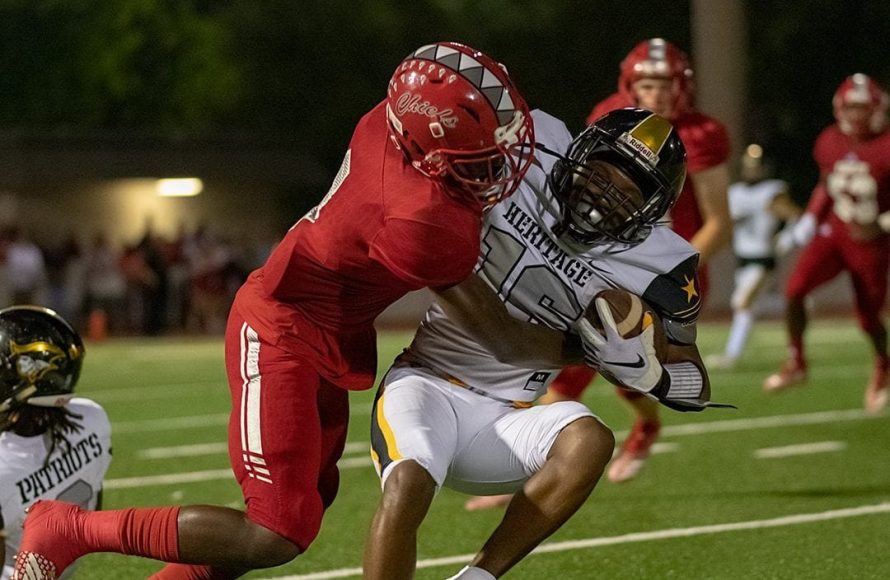
A high school football game typically lasts around 2 to 3 hours.
Ever wondered about Friday night lights and the duration of all the action? Many people ask, “how long is a high school football game?” It’s not quite as simple as a set 60 minutes like professional games. Several factors influence the total time.
Halftime breaks and the flow of the game affect the clock. Timeouts, injuries, and penalties all add time to the overall duration. So, while the actual game has four 12-minute quarters, plan for a longer evening.

How Long is a High School Football Game?
Okay, so you’re wondering exactly how much time you’ll be spending cheering (or maybe nervously watching) at a high school football game. It’s a fair question! It’s not as simple as just 60 minutes like in the old movies. A high school football game has its own unique rhythm and timing. Let’s break down all the parts so you know what to expect. It involves more than just the playing time on the field.
The Standard Game Structure
The first thing to understand is that a standard high school football game is divided into four quarters. Each of these quarters is typically 12 minutes long. So, if you just counted those up, you might think a game is 48 minutes. But there’s much more to the story. This 48 minutes is known as the “game clock” or “playing time”. It does not include all the breaks and stoppages that occur during a typical game. To help you understand everything, let’s go a bit deeper!
Clock Stoppages and Why They Happen
The game clock doesn’t run continuously. It stops for many reasons, and these pauses make the overall length of the game much longer than just 48 minutes. The clock stops for following reasons:
- When the ball goes out of bounds: If the football goes out of the marked boundary lines of the field, the clock stops until the next play begins.
- Incomplete passes: An incomplete forward pass (meaning it wasn’t caught) makes the clock stop. This helps keep the game fair, and it also prevents teams from just running out the clock easily.
- Penalties: When a penalty happens, like holding or offsides, the clock stops while officials sort things out.
- Change of possession: When one team takes over the ball from the other team, the clock stops so that the referee can place the ball on the line of scrimmage and make sure everything is ready for the other team.
- Time-outs: Each team has a limited number of time-outs they can use each half, and these time-outs stop the game clock too.
- Injuries: If a player gets injured on the field, the clock stops while the medical staff provides assistance.
These stoppages are crucial elements of the game. They allow for strategic planning, keep the game fair, and allow for necessary breaks when situations arise. Without these stops, the game would move a lot faster, and in most cases, that wouldn’t be good for the game.
Halftime
Another major contributor to the overall game time is halftime. Halftime provides players with a much-needed break to rest and strategize with their coaches. It also allows time for other activities such as pep band performances, cheerleading routines, and even school announcements. Halftime in high school football is typically around 15-20 minutes. But remember, it can sometimes run slightly longer depending on what else is planned during that time. The longer halftime usually happens when schools have special ceremonies or when a big event is scheduled at the game.
The Warm-up Period
Before the actual game begins, teams participate in a warm-up period to prepare their bodies for the physical activity. This part is extremely important to prevent injuries and get the players mentally ready for the game. The warm-up time is usually about 30 to 45 minutes. This isn’t part of the official game clock, but it’s an important part of the overall time investment when you head out to see a high school football game. For spectators, this can mean arriving early to see all the action, even before the official game starts.
How Long Does a Typical Game Last?
Okay, now let’s put all the pieces together. The playing time is 48 minutes. But with all the breaks, stoppages, and halftime, a typical high school football game generally lasts about 2 to 3 hours. It is important to note that there can be factors that sometimes make the game run shorter, or occasionally much longer than this typical range, like unexpected delays, injuries and penalties.
Factors That Affect Game Length
Several things can make a high school football game longer than expected. Here are some of the most common factors:
- Lots of penalties: If a game has many penalties, this can add significant time. Each penalty stops the clock while officials sort it out and assess the penalty.
- Numerous injuries: Unfortunately, injuries are part of the game. If there are many injuries or if a severe injury occurs, the game will take more time to get going again.
- A high-scoring game: When teams score often, that means a lot of change of possessions. Each change of possession stops the clock, which can add up throughout the game.
- Overtime: Although rare, overtime can occur if the teams are tied at the end of the fourth quarter. The overtime rules vary depending on the local high school league or the state association guidelines. This is where the game length is much longer, because overtime in high school football isn’t like professional football. Typically teams get a chance to score from the ten yard line until one team goes ahead by points and wins. This can take more than one turn for both teams, so adding more time.
- Television Broadcasts: If a game is being broadcasted on television, the game might be scheduled with extra time slots for commercials. That means more breaks, and more length in the game.
These factors are important to consider because they make it difficult to pinpoint the exact end time of a high school football game. You will likely need to plan on a window of time instead of a precise game length.
Different Levels and Variations
The times we’ve been discussing mainly apply to varsity high school games. However, there are other levels of football, and they might have different game lengths. Here are some examples:
Junior Varsity (JV) Games
Junior Varsity games are often played before varsity games. They usually have the same four-quarter structure. However, the quarters can be shorter, maybe 8 or 10 minutes each. This can make the overall game a bit shorter than a full varsity match. The time may also vary according to the league or state regulations for JV games. These games are where younger players get experience, so the focus might be less on strict timing and more on development and practice. Always check with the school or league for precise details.
Freshman Games
Games for freshman teams are similar to JV in that they might also have shorter quarters compared to varsity games. The idea is again to give younger players experience while keeping game times reasonable. The exact length of these games will also vary based on different state, city, or school rules. Generally, freshman level games have playing time of 10 minutes each quarter.
Variations in State Rules
The times mentioned for quarters and halftimes are the standards for most places. But always keep in mind that high school sports rules and timings are governed by state high school athletic associations. That means there might be a few differences from place to place. It’s always a good idea to check specific rules for the local area where the game is being held. Rules will be similar in most cases, but may vary slightly.
A Sample Timeline
Here’s a rough timeline to give you an idea of what to expect at a typical high school football game. This will be more of an estimated example:
- 30-45 Minutes Before Game: Teams warm up on the field.
- Game Start: The official game begins.
- First Quarter: 12 minutes of playing time.
- Short Break: A couple of minutes between the first and second quarter
- Second Quarter: 12 minutes of playing time
- Halftime: 15-20 minutes
- Third Quarter: 12 minutes of playing time
- Short Break: A couple of minutes between third and fourth quarter
- Fourth Quarter: 12 minutes of playing time.
- Post-Game: Teams and coaches often address players. This period is not a part of the game time.
Remember, the “actual” game time (48 minutes) is shorter than the entire experience because the clock stops often, and you need to account for breaks. So, it can be expected that this time-line may vary depending on various factors, but this will be a decent approximation in most cases.
Planning Your Visit
Since game length can vary, it’s best to be prepared for the possibility that you will be there for a longer game. Here are a few tips for planning your visit:
- Check the Start Time: Always double-check the game’s official start time. Sometimes, there might be adjustments or pre-game ceremonies.
- Arrive Early: Getting to the stadium early allows you to find parking and good seats. Plus, you get to see pregame warm-ups.
- Consider the Weather: Check the forecast before you go. This can help you choose the right clothes and gear for comfort during the game. It is helpful for long games in particular.
- Plan for Extra Time: As the game can run for 2 to 3 hours or even longer, account for this extra time. Plan so that you are not rushing to leave.
- Bring Snacks and Drinks: Stadium food can be expensive, so it’s often a great idea to bring your own snacks and water. Just check with the stadium to see if outside food and beverages are allowed.
Planning for a high school football game is very similar to preparing to go to any other sporting event. Arriving early, checking game times, and planning for extended times are all important to make the experience smoother. Knowing the estimated game length will ensure that you are ready to enjoy the game from start to finish without having any time constraints.
So, while the official playing time of a high school football game is 48 minutes, the actual time you’ll spend at the stadium is usually much longer, typically around 2 to 3 hours. Between warm-ups, quarter breaks, halftime, and the stoppages, you’ll want to settle in for a good stretch of time. It’s a great experience, and understanding the time commitment will help you make the most of the exciting event.
This is what High School Football is all about 💯 #shorts
Final Thoughts
A typical high school football game lasts around 48 minutes of playing time, divided into four 12-minute quarters. However, the total duration extends due to time-outs, breaks, and half-time.
The actual game day experience can range from two to three hours. This also includes pre-game and half-time activities. Therefore, the question “how long is a high school football game” doesn’t have a single answer.
The time it takes depends on various factors, including penalties and scoring. You should anticipate spending several hours at the stadium or viewing the game.

