
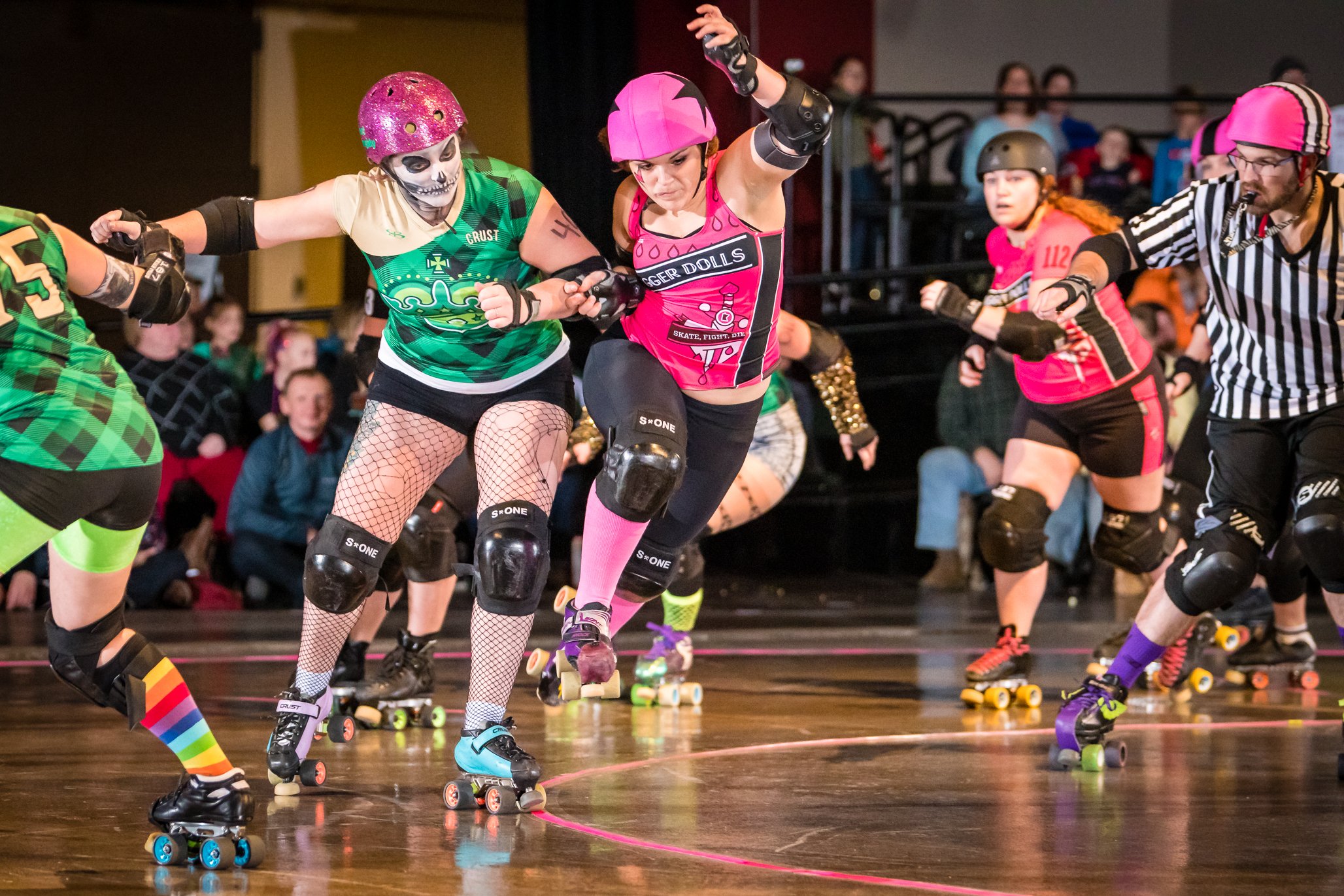
A standard roller derby game lasts for 60 minutes, divided into two 30-minute halves.
Ever wondered how long is a roller derby game? It’s a fast-paced, exciting sport, but the actual playtime might surprise you. The games aren’t marathons, thankfully, given the intensity and physicality involved.
Each match consists of two periods. These periods offer thrilling competition. With breaks and other stoppages, the total time you spend watching may be longer than the 60 minutes.

How Long is a Roller Derby Game?
So, you’re curious about how long a roller derby game lasts? That’s a great question! It’s not quite as simple as saying “it’s always exactly this amount of time.” There are some rules and structures that make up a roller derby game, which will determine the total game time. Let’s dive into the details so you can understand what to expect when you watch a game or, even better, decide to play!
The Basics of a Roller Derby Bout
First, let’s call a roller derby game what it really is: a bout! Think of it like a cool, action-packed sports match on wheels. A standard roller derby bout is divided into two halves. Each half has a set length of time. We’ll get into those specific times in a bit. But know that the game isn’t just a continuous race; it’s actually made up of smaller chunks of play called “jams.” Think of these jams like mini-rounds within the bigger game. They’re intense and full of strategy and hitting.
What are Jams?
A jam is when all the action happens on the track! Jams are short periods where the skaters, also known as the players, try to score points. Every jam can last for a maximum of two minutes. It doesn’t mean they always last that long, though. In fact, most jams end before the full two minutes have passed. A jam can end before two minutes if the lead jammer decides to call off the jam. Now, let’s talk about how points are scored during these intense two minute (or less) jams.
How Points Are Scored
The way to score points in roller derby is pretty unique. Each team has a player called a “jammer.” The jammer’s job is to skate around the track, passing the other team’s blockers. The jammer earns one point each time they pass an opposing team’s blocker. It’s like a fast-paced, strategic game of tag on roller skates! The jammer’s team works to help them score and, at the same time, tries to stop the other team’s jammer from scoring. So, you can see the importance of the jammer, and all the other players around the jammer, doing a great job.
Duration of a Roller Derby Half
Now that you have a basic understanding of jams, let’s talk about how they fit within a half. Each half in a roller derby bout is 30 minutes long. This means there are potentially 30 minutes of jam time per half. However, there are some caveats. There might be timeouts, penalties, and sometimes even stops in play, which also takes time off the clock. Therefore, even though it’s scheduled for 30 minutes of jam time, the entire 1st half is usually longer than 30 minutes.
Half Time
In between the two halves, there’s a halftime break, just like in other sports. This break is often about 15 minutes long. It’s a chance for the players to rest, rehydrate, and review strategies with their coaches. It also gives the audience a chance to stretch their legs or grab some refreshments. After that break, we’re back into the 2nd half!
Total Bout Time
So, if you put it all together, a typical roller derby bout consists of:
- A 30-minute first half
- A 15-minute halftime
- A 30-minute second half
That means a standard roller derby bout will typically last around 75 minutes when you include the halftime break. However, if you add in the time for any timeouts, penalties, or other pauses in play, the total time can easily go over an hour and 15 minutes. It’s not unusual for a bout to last one hour 30 minutes or even a little longer. Now, it is also important to understand the difference between total time and jam time.
Understanding Total Time vs Jam Time
A crucial point is that the 30 minute halves refers to the potential length of jam time. The overall time, as discussed above, will be more than 60 minutes, because of any pauses in play, timeouts and penalties. The clock that you see at the bout is a “game clock” that runs down. However, during the jam, there is also a “jam clock” that counts the maximum 2 minutes of jam time. Jams often end before the 2 minutes is up, usually when the jammer of a team has successfully called off the jam, so the actual jam time may vary. But it’s the potential jam time that’s used when we refer to the 30 minute halves.
Factors Affecting Bout Length
Several things can influence the actual length of a roller derby bout. Understanding these will help you better anticipate the flow of the game and the total time it will take. Here are some factors:
- Timeouts: Each team has a certain number of timeouts they can use. These pauses in the action can add extra minutes to the total time of the bout. Think of it like taking a break for a minute or so, to allow the players to catch their breaths or strategize.
- Penalties: When a player breaks the rules, they are sent to the penalty box. These penalties can cause short pauses in the action. Also, penalties can have an impact on the number of players in the game, which can change the whole direction of the bout.
- Injuries: Player safety is very important in roller derby. If a player gets hurt, the game might need to be paused to make sure they get the medical attention they need. This can add some unpredictable time to the bout, but it’s a crucial part of ensuring a safe game.
- Official Reviews: Sometimes the referees might need to review a play to make sure everything is done fairly. When these reviews happen, it can slow down the game, as it can take time to examine the play.
- Lead Jammer Status: The Lead Jammer status is another way that the length of a jam is affected. When a jammer gains “Lead Jammer Status” they have control over the jam. They can end the jam if they wish. Therefore, if you have a team that are constantly gaining Lead Jammer status, then the jams will be shorter, and therefore there will be more jams in the 30 minute half time, as the jams do not always last for two minutes.
Variations in Bout Length
While the standard structure is pretty common, there are some times when you might see slight changes. For instance, some leagues, especially junior leagues, may use shorter halves for their bouts to better suit the younger players. You might also see some very slight differences in bout length depending on the specific league and their chosen rules. But, you will see that these differences are usually only slight. Most roller derby games are very similar, whether they are amateur or professional, and use the same rules, and same timing.
Junior Roller Derby
In Junior Roller Derby, the bout structure might vary. Often junior bout times are less than a typical bout. Junior bout times might also depend on the skill of the players, and also age ranges of the players. Usually the players are of similar skill levels, but the age range of the players can change, depending on league guidelines. If it is a very young age range of players, then the bout may be only 40 minutes long including the halftime, so it can be less than a typical bout. It’s a great way for younger players to get involved in the sport, and also a great way for the audience to enjoy the game!
International Variations
While the basic rules of roller derby are generally the same, the length of games can vary slightly in international competition. Some international leagues and teams may have different regulations or adaptations. However, in all cases the timings are very similar, even if the exact rules are slightly different.
What This Means for Spectators
So, what does all this mean for you, the spectator? Well, when you go to watch a roller derby bout, plan for it to take at least 1 hour and 15 minutes to 1 hour and 30 minutes. Of course, it can sometimes be slightly shorter, or sometimes even slightly longer. But, you should plan for a full hour and 15 minutes when you book your ticket. If there is an injury, or lots of penalties, or some official reviews, then it can take much longer. Bring snacks and be ready to cheer! The game is action packed and moves fast, and is a great game to watch.
Why the Length Matters
The way roller derby games are timed is very important to make sure everything is safe, and fair. The two minute jams make sure the players are not skating for a long time at a high intensity. It also makes for a more exciting game for spectators. The short bursts of activity create a fast paced atmosphere that keeps everyone involved. The 30 minute halves give teams enough time to show what they can do. It allows them to show their strategy, and how their players can work together. The 15 minute half time gives the players a chance to recover, which is also good for their safety.
So, there you have it! Roller derby bouts, while having a standard length, are dynamic and can be affected by a few things. From the timed jams to the halftime break, every aspect is planned to give fans an exciting experience. Knowing what to expect can only help you to enjoy the sport even more. Now you are fully aware of how long a roller derby game is, you can plan your next visit accordingly!
The Rules of Roller Derby – EXPLAINED!
Final Thoughts
A typical roller derby game, or bout, lasts about an hour. This includes two 30-minute halves. Teams use jam times to accumulate points. These jams have their own time limit within the half.
Breaks between jams and halves also contribute to the total game time. So, how long is a roller derby game? It’s roughly 60 minutes of playtime, though the whole event might run longer. The exact schedule can vary slightly.

