
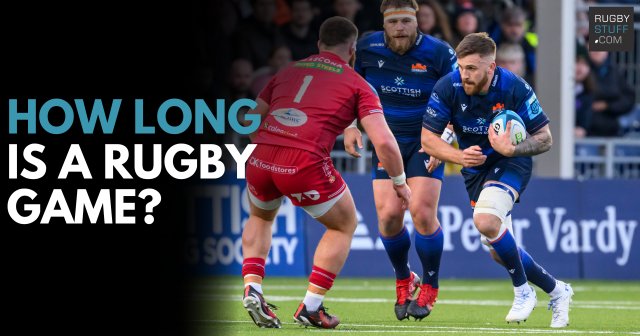
A standard rugby game lasts for 80 minutes, divided into two 40-minute halves, with a short break in between.
Ever wondered how long is a rugby game? It’s a common question for those new to the sport or even casual fans. This guide will briefly explain the duration, helping you understand the game’s structure.
You see, the time management is important. It impacts how players manage their energy levels and strategy during match. Each half has a set time period, influencing the flow and pace of the rugby match.

How Long is a Rugby Game?
So, you’re curious about how long a rugby game lasts? It’s a great question! Unlike some sports with set time limits, rugby can have a few different durations depending on the level of play and the specific rules of the competition. But don’t worry, we will get into all of that. Let’s break it down and take a good look at the typical length of a rugby match, plus a few things that can make a game longer or shorter.
The Standard Rugby Game Length
The most common length for a rugby union match, which is the kind of rugby you usually see at professional levels and international tournaments, is 80 minutes. This is divided into two halves of 40 minutes each. So, it’s 40 minutes of playing time, then a short break, and then another 40 minutes of playing time. But that’s not all. Let’s look at the details.
Halftime Break
After those first 40 minutes, there’s usually a halftime break. This is typically about 10 to 15 minutes. It gives players a chance to catch their breath, get some water, and listen to their coaches. It’s also when the crowd might grab some food or visit the restroom. This break is a crucial part of the rugby game experience, allowing everyone to regroup before the second half.
The Stopwatch: Playing Time Versus Real Time
Here’s a trick to remember: the clock in rugby only runs when the ball is actually in play. This is different from some sports where the clock keeps ticking even when the action stops. What does this mean? It means that if the ball goes out of bounds, or if a player is injured, or if the referee stops the game for any other reason, the game clock actually stops. This is called “stoppage time,” and it can make the actual time a match takes much longer than just 80 minutes on the clock.
Understanding Stoppage Time
Stoppage time is a very important part of rugby. Here are some common reasons why the referee might stop the clock:
- Injuries: If a player gets hurt, the referee will stop the game so the medical team can come onto the field to help.
- Scrums and Lineouts: These are set pieces that often take some time to prepare and execute. The clock stops during their set up.
- Penalties: If there’s a penalty, the referee will stop the clock to award the kick, etc.
- TMO Review: Sometimes the referee may need to check video replays via the Television Match Official (TMO). This process can add a few minutes to the total game length.
- Other Delays: If a player loses a boot or something else happens, the clock will be stopped to deal with the situation.
Because of all these stoppages, a rugby game can often take about 90 to 100 minutes or more from start to finish. It might feel like it goes on forever!.
Variations in Game Length
While 80 minutes is the standard, there are some cases where the game might be shorter, particularly in youth games, or different versions of rugby.
Youth Rugby
When kids play rugby, the games are often shorter. This is because younger players have less stamina. Here are a few typical game lengths:
- Under 8s: Might play games that are only 15 minutes each half.
- Under 10s: Could play 20 or 25 minute halves.
- Under 12s: might have games with 30 minute halves.
- Under 16s: usually plays 35 minute halves.
These variations help make sure kids can play safely and enjoy the sport without getting too tired.
Rugby Sevens
Rugby sevens is a fast and exciting version of rugby with only seven players per team, rather than the 15 in Rugby Union. A standard sevens game is much shorter, and this difference has created a completely different experience to a 15-a-side match. Here’s the breakdown:
- Regular Matches: 7 minutes each half with a short halftime break.
- Finals Matches: 10 minutes each half with the same short halftime.
The pace of sevens matches is extremely fast because it’s a very high intensity game, so it doesn’t need as much time.
Other Variations
There can be other variations in game length depending on the specific competition or tournament. Some charity games, or exhibition matches might have different lengths, but the 80 minute game is still the standard for most matches.
Factors That Can Influence Game Duration
A few other things can affect how long a rugby game lasts. Some of these are things that happen during the match that are out of a set rule of play, and other things are set out in the rules before the matches starts.
The Pace of the Game
The flow of play can make a big difference to how long the game feels. If there are a lot of stoppages, it will feel like a longer match. Some matches with a lot of penalties, injuries and set pieces can go on for a long time, even if it doesn’t reach that full 100 minutes of play. Some matches with very little downtime and quick restarts can feel like they are over very quickly.
Extra Time
In some competitions, if the score is tied at the end of regular time, they might play extra time. In these cases, this extra time will be split into two short periods, where a ‘golden point’ rule might apply, meaning that the first team to score will win the match.
Specific Tournament Rules
Different tournaments or leagues might have their own rules regarding game length, which can sometimes vary from the standard 80-minute game. Always check the rules of a specific competition if you are concerned.
A Quick Summary Table
Here’s a table to quickly show you the standard game lengths in rugby:
| Type of Rugby | Half Length | Halftime Break | Total Game Length | Typical Total Time (with stoppages) |
|---|---|---|---|---|
| Rugby Union (Standard) | 40 minutes | 10-15 minutes | 80 minutes | 90-100+ minutes |
| Rugby Sevens (Regular) | 7 minutes | Short | 14 minutes | 20-30 minutes |
| Rugby Sevens (Finals) | 10 minutes | Short | 20 minutes | 30-40 minutes |
| Youth Rugby (Varies) | 15-35 minutes | Short | 30-70 minutes | 40-80 minutes |
Why Does it Matter?
Knowing how long a rugby game lasts is important for a few reasons:
- Planning: It helps you plan when you are going to watch a match, either at the stadium or on television.
- Player Fitness: Coaches need to prepare players for the physical demands of the game, including how long they need to be able to compete for.
- Understanding the Sport: Knowing the length of a game helps you better understand the rules and tactics.
- Fan Experience: As a fan, knowing how long a game is helps you plan for drinks breaks, etc.
Staying Engaged During the Game
Rugby can be an intense and exciting game, and it can go on for a while, so how do you keep engaged during the match? Here are a few ideas:
- Learn the Rules: Even if you are a casual fan, understanding the basic rules can help you appreciate the strategies of the game.
- Follow the Ball: Rugby can be a complicated game to watch, but keep your eye on the ball. It’s the central point of the game.
- Notice the Set Pieces: Scrums and lineouts are not just stoppages, they can be interesting if you understand what each team is trying to do.
- Be Respectful: If you are at the stadium, be respectful to the other fans, officials, and players.
- Enjoy the Atmosphere: Rugby is about more than just the game itself; it is about the culture, the community and the shared experience.
So, the next time you settle in to watch a rugby game, you’ll know what to expect, and you can impress your friends with your newfound knowledge of the game’s duration. Enjoy the match!
How long is the rugby game? [ rugby rules ]
Final Thoughts
A standard rugby game lasts 80 minutes, divided into two 40-minute halves. There’s also a short halftime break of around 10-15 minutes. Time may be added at the referee’s discretion for injuries or other stoppages.
Understanding this structure is key. You should know how long is a rugby game to fully enjoy the contest. Remember, the clock stops during these pauses, not during play.

