
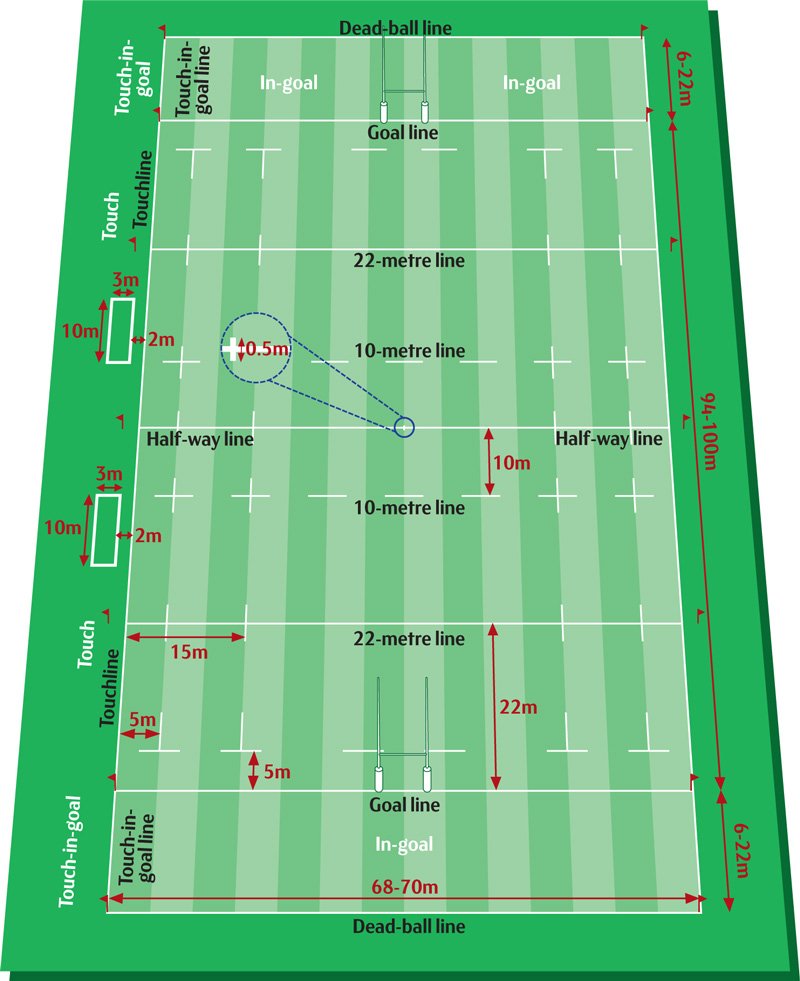
A typical rugby game lasts for 80 minutes, divided into two 40-minute halves, with a short halftime break in between.
Have you ever wondered how long is a typical rugby game? The clock doesn’t stop much, making it a full physical and mental test. It’s important to know the time involved before you get into it or even watch a match.
Rugby matches follow a standard timing system which is helpful for fans and players. We will explore the structure of time during the game so that you have a clear grasp on the game’s duration.

How Long Is a Typical Rugby Game?
Alright, let’s dive into the heart of the matter: how long does a rugby match actually last? It’s a question many new fans, and even some seasoned ones, find themselves pondering. Unlike some sports with set clock times, rugby has a few wrinkles that can affect the final whistle. So, grab your favorite team jersey and let’s explore the typical length of a rugby game.
The Core: 80 Minutes of Play
The foundation of a rugby match is the 80 minutes of playing time. This is divided into two halves of 40 minutes each. Think of it like two short movies with a break in the middle. This 80-minute structure is pretty standard across almost all levels of professional and international rugby, from the Rugby World Cup to your local league matches. These 80 minutes are not always a straight 80 minutes of continuous action, because there are other things that can add to the total time.
The Halftime Interval
Right in the middle of the 80 minutes comes halftime. This is not some short water break. Players need the time to discuss their strategies and catch their breath. The official break period in rugby is typically 10 minutes long, and usually, the referee will use this time to check the player’s gear or use this time for personal use. This allows the teams to regroup, make any tactical adjustments, and, of course, get a drink.
Timekeeping: The Referee’s Watch
In rugby, it’s the referee, not a clock on the wall, who is in charge of time. This means that the referee is the master of time, and it can be slightly different from regular sports time keeping. The official referee is responsible to keep the time, and this time is kept on their watch. Unlike sports like soccer where an assistant referee can help with time keeping, rugby keeps the duty with the main referee. This is because the timing is tied to more than just the clock, such as stoppages in play, and this will be explained in the next section.
Stoppages and Additional Time
This is where the game gets a bit more varied in duration. Rugby isn’t a sport where the clock stops every time the ball goes out of bounds. Instead, time only stops in specific situations. Let’s explore these situations:
- Injuries: If a player gets injured during the match, the referee will pause the clock to allow for treatment. This time can vary based on the severity of the injury.
- Scrums: When a scrum is awarded, the time may stop, if the scrum does not form quickly. But this is dependent on the referee.
- Lineouts: Like scrums, time may be stopped if the line out process is not smooth.
- Tries: When a try is scored, time is usually stopped.
- Conversions and Penalty Kicks: The time may stop, while the players are lining up for the kick, but this is dependent on the referee.
- Referee Intervention: Sometimes, the referee might stop the clock for things like checking the player’s gear, if there is a video review, or if there are any other issues that need attending to.
Because of these stoppages, it’s normal for a rugby match to last longer than the 80 minutes of play plus 10-minute halftime. You might see a game go for 90, or even 100 minutes, depending on the number of stoppages during a match.
Variations in Game Length
While the 80-minute standard is common, there are a few instances where game lengths can differ. These are not as common, but they do exist. Let’s have a look at those variations.
Youth Rugby
For younger players, the game length is often shorter to accommodate their physical abilities. You might see matches of 60 or 70 minutes for younger age groups, with shorter halves to provide the youth players enough time to enjoy the matches, and not burn out. These changes are to ensure that the youth players can enjoy the game, and develop their skills in the game.
Rugby Sevens
Rugby sevens is a quicker version of rugby, with only seven players on each side. A rugby sevens match is much shorter. A regular rugby sevens game is only 14 minutes in play, split into two 7-minute halves, with a 2-minute halftime. This fast-paced game is very different from the standard 15-a-side rugby game. In tournaments, these games can be very frequent, and having a short game helps with the process.
Extra Time in Knockout Matches
In knockout matches, like in the final of a tournament, if the score is tied after the regular 80 minutes, extra time is played. Usually, there are two halves of 10 minutes each, making for an extra 20 minutes of rugby. However, the extra time format may differ based on competition rules. In some competitions, sudden death may be implemented. So, in knock out competitions the game might go longer than a regular match. This extra time means that the match can go for a long time, and a match may last for around 100 minutes to 110 minutes, or even longer, before a victor is announced.
Factors That Affect Game Length
Multiple factors can influence the total length of a rugby match. Let’s examine these factors that can make the game shorter or longer.
Number of Injuries
If there are lots of injuries during a match, the game is going to go for a longer period of time. Injuries stop the time, and having a lot of injuries will mean that the referee has to stop the time frequently. The time taken to assist an injured player can vary depending on the nature of the injury. So if there are more serious injuries, the game may last for a longer time, because the referee has to attend to the player and his treatment.
Number of Set Pieces
Set pieces are the scrums and lineouts. If there are many scrums and lineouts during a match, then the game can last a longer time, because the referee may stop the clock while these set pieces are being set up. The referee will be more likely to stop the clock if the set pieces are taking longer than usual to set up.
Number of Tries
If there are many tries in a match, then the referee may stop the clock. The more tries that are scored, the longer the match will be, as these will be followed by conversions. Sometimes, conversions take longer than usual due to the conversion taker taking longer or due to issues with the process.
Discipline
If there are a lot of penalties, then it may lead to the match lasting longer. Penalties lead to set pieces and the time to set them up may add to the clock. If a team is very undisciplined, then the penalty count may increase and the game time will increase due to the penalties.
Video Reviews
The increase in video reviews, or TMO’s, has an effect on the time of a match. If there are more video reviews, then this will increase the time. As rugby is becoming more reliant on video reviews, we see an increasing trend of match times extending, and this will likely continue in the future.
Real-World Examples of Rugby Game Length
To give you a clearer idea, here are some typical scenarios:
- A standard international rugby match will usually finish around 90 to 100 minutes in duration, when the regular playing time, halftime and stoppages are taken into account.
- A match with fewer injuries, penalties and set pieces, might only go for 85 minutes in total.
- A match with lots of injuries or stoppages may easily go on for over 100 minutes.
- Rugby Sevens matches are very quick, with each match usually lasting for around 18 minutes when halftime and short injury stops are considered.
- A youth rugby match might have a total play time of 70 minutes, with a 5 minute halftime, for a total match time of 75 minutes.
Why This Matters to Fans
Knowing the approximate length of a rugby match is handy for planning. If you’re attending a game, it helps you decide how long you will be at the venue, when to arrive, and when to depart. And if you’re watching on TV, it’s useful for knowing how much time to set aside. It helps you with planning for match time, especially because the matches can last a longer time, if there are lots of stoppages. Also, you can plan what other things you want to do and the matches will not catch you out of time.
The Key Takeaways on Rugby Game Time
So, to sum up, here’s a quick rundown:
- A standard rugby match is 80 minutes of play time, divided into two 40-minute halves.
- There is a 10-minute halftime break between the halves.
- The referee is the official timekeeper for the match.
- Stoppages for injuries, set pieces and other reasons can extend the total time.
- Extra time can be added in knockout matches if the scores are tied.
- Youth rugby and rugby sevens have shorter matches.
Understanding that the total time of a rugby match is not set in stone adds to the excitement and unpredictability of the game. It’s a game where the clock is not the master, and the referee determines the end. So, the next time you tune into a match, you will have a better idea about how long it will last. And it also means that every match is a little different than the previous one.
How to Play Rugby
Final Thoughts
A standard rugby union match lasts for 80 minutes, divided into two 40-minute halves. There is a 10-15 minute interval between these halves. This timing does not include stoppages for injuries or other delays.
This total time is consistent across most professional levels. However, some variations may exist for junior or social matches. So, how long is a typical rugby game? It is generally 80 minutes of play, with breaks in between.

