
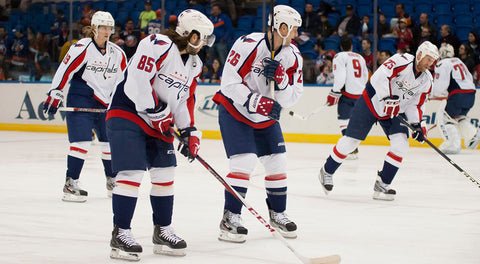
The duration of a youth hockey game typically ranges from 45 to 75 minutes, depending on the age division and league rules.
Ever wondered about the actual playing time of a youth hockey game? It’s a common question for parents, players, and new fans alike. Understanding the time commitment is crucial for scheduling and enjoying the sport. So let’s get into the details.
Factors like age groups and specific league rules significantly influence how long is a youth hockey game. Younger players might have shorter periods and less overall play time. However, older divisions often play longer games, with longer periods. These variations ensure a fair and suitable experience for every age level.

How Long Is a Youth Hockey Game?
Ever wondered how much time those young hockey players spend on the ice? Well, it’s not always the same. The length of a youth hockey game changes depending on a few key things, like the age group and the rules of the league. Let’s dive into the details and break it all down so you can understand what to expect whether you’re a player, a parent, or just curious about the game.
Understanding the Basics: Periods and Stop Time
The foundation of a hockey game’s length is built upon periods and something called “stop time.” Unlike some sports with a continuous clock, hockey uses stop time. This means the clock stops every time the play stops – when a penalty is called, the puck goes out of bounds, or a goal is scored. This can greatly extend the actual time it takes to play a game compared to the pure running time of the periods.
A typical hockey game is divided into three periods, similar to some other sports. But the length of these periods, combined with the stop time factor, is what creates the different game lengths we see in youth hockey.
Varying Period Lengths by Age Group
The biggest factor determining how long a youth hockey game will be is the age of the players. Younger players have shorter periods, making the game shorter overall. This makes sense because they are still developing their skills and stamina. As players get older and more experienced, period lengths get longer. This helps them improve their endurance and play at a higher level.
Mite/Mini-Mite (Typically Under 8 Years Old)
At the Mite or Mini-Mite level, the focus is on fun and skill development. Games are usually played on a smaller portion of the rink (cross-ice or half-ice), and the periods are shorter. Period lengths can vary, but you often see something like this:
- Period Length: 10-12 minutes of running time.
- Number of Periods: 3
- Total Game Time (approx.): 30-45 minutes, not including warm-up or breaks between periods.
- Stop time may or may not be used depending on the league. Some leagues use running time for Mite games to keep things moving smoothly.
- These games are designed to keep young players engaged and prevent fatigue.
Squirts (Typically 9-10 Years Old)
Squirts begin to play full-ice hockey, and this means a step up in period length.
- Period Length: 12 minutes, 15 minutes
- Number of Periods: 3
- Total Game Time (approx.): 45-60 minutes. This includes all stops in play, so the actual time from start to finish will be longer.
- Games at this level will now almost always use stop time.
- They are now playing on full ice and they are usually becoming more skilled and ready for a more structured game.
PeeWee (Typically 11-12 Years Old)
At the PeeWee level, the game starts to resemble the hockey that most people are familiar with.
- Period Length: 12-15 minutes
- Number of Periods: 3
- Total Game Time (approx.): 50-70 minutes. Once again, this is approximate, actual game time can be longer.
- These players have developed better skill, and are more capable of handling a longer game.
Bantam (Typically 13-14 Years Old)
Bantam players are well into the development of their hockey skills, so we see another increase in period length.
- Period Length: 15-17 minutes
- Number of Periods: 3
- Total Game Time (approx.): 60-80 minutes. This doesn’t include warm up, between period breaks etc.
- This level shows faster paced games with more skilled players.
Midget/High School (Typically 15-18 Years Old)
At the Midget or High School level, game lengths are approaching those of adult hockey leagues.
- Period Length: 15-20 minutes.
- Number of Periods: 3
- Total Game Time (approx.): 70-90 minutes. The length of the periods, and the amount of stoppages determine this time.
- This is the top level of youth hockey, where the game is the fastest, and most competitive.
The Impact of Stop Time
As mentioned earlier, stop time significantly affects the overall time of a hockey game. Consider this scenario: If a period is 15 minutes long and there is a goal, two penalties, and a couple of pucks that go out of bounds, the period could easily run for 20-25 minutes of actual clock time. Those added minutes multiplied by three periods really add to the amount of time you’ll be watching, playing, or coaching.
Here’s how the stop time principle works:
- The clock stops for any infraction (penalty, icing)
- The clock stops for a goal, after the celebration.
- The clock stops when the puck leaves the playing surface.
- The clock stops for any injury to a player, even a minor one.
- The clock stops after a time out.
- The clock stops during any penalty shot.
The cumulative effect of these stoppages is why a game might take much longer than just the sum of period running times.
Factors That Can Increase Game Length
Besides stop time, other situations can extend the game’s duration.
Overtime
If the game is tied at the end of regulation time, then there may be an overtime period. The format and length of overtime change by league and level of play. It can be a sudden-death period where the first team to score wins, or a full overtime period with a length that can vary between 3-5 minutes, sometimes longer. Overtime can make a close game exciting, but it will also add time to the total game length.
Penalties
Frequent penalties can increase game time. Each penalty adds a stoppage in play, and if the penalties lead to power plays, these plays are usually more technical and require more clock stoppage time.
Time-Outs
Each team has a time-out each game. A time-out can vary between 30 seconds and 60 seconds in length, and will add that time to the total game time. If both teams take time-outs, then this can have a bit of an impact on total game length.
Injuries
Any injury on the ice stops play, sometimes for quite a while. Serious injuries that require medical assistance may lead to longer delays in game play as first aid professionals provide medical assistance and make sure the player is safe. Sometimes, an injury can slow the game down, because the player has to be assisted off the ice, and the coach will also make adjustments.
Zamboni Breaks
Sometimes between periods, the ice needs to be cleaned and resurfaced using a Zamboni machine. Typically, this break is built in to the game time and the clock doesn’t run. This usually takes 10-15 minutes to complete.
Typical Game Schedule Breakdown
Let’s look at what a typical game schedule looks like:
- Pre-game warm-up: 5-10 minutes
- First Period: 12-20 minutes (varies by level)
- Intermission: 10-15 minutes
- Second Period: 12-20 minutes
- Intermission: 10-15 minutes
- Third Period: 12-20 minutes
- Post-game activities and handshakes: 5-10 minutes
When you combine all these factors, a youth hockey game can take between one and two hours to complete, sometimes longer, depending on the level of play and other circumstances.
League Rules and Variations
It’s worth noting that different leagues and associations might have slightly different rules about period lengths or how they handle stop time. For instance, some leagues might use shorter periods or fewer intermissions, while others might have stricter rules about the time between periods. Always check your specific league’s guidelines, which are usually available online or from the league administrators, to know what the game duration will be.
Why Shorter Games for Younger Players?
There are good reasons why younger players have shorter games.
- Attention Span: Young children don’t have long attention spans. Shorter games help them stay focused and engaged.
- Physical Development: Their bodies are still growing. Longer games could lead to fatigue or increase the risk of injury.
- Skill Development: Focus is on learning the basics, not playing long periods. Shorter games allows them to develop good habits.
- Fun and Enjoyment: Shorter games help them to have fun without getting exhausted.
What Should Players and Parents Expect?
When attending or planning for a youth hockey game, keep the following in mind:
- Be Prepared for Fluctuations: Game lengths can vary, so be prepared for some variation.
- Factor in Travel Time: Travel to and from the arena is part of the overall commitment.
- Pack Snacks and Drinks: Stay hydrated and energized.
- Enjoy the Game: Cheer on the young players and be supportive!
Youth hockey is a great way to get exercise, make friends, and learn skills for life. Understanding the game lengths and the factors that influence them helps everyone involved have a better time.
So next time you watch a youth hockey game, you’ll know that the length of time they spend on the ice is carefully planned and geared towards player development and enjoyment. It’s a journey, and every minute on the ice counts towards their growth, their passion for the game, and their memories! From the fast-paced action on the ice, to the supportive cheers from the sidelines, there is always an exciting experience to be had.
🏒 Rules Of Ice Hockey : How To PLAY Ice Hockey : Ice Hockey Rules For Beginners EXPLAINED
Final Thoughts
Youth hockey game length varies by age group. Younger players generally have shorter periods and games. Older divisions usually play longer, closer to professional times. So, how long is a youth hockey game? It depends primarily on the level and league rules.
Game duration also includes intermissions. These breaks allow players to rest and regroup. Referees have some influence on total time too, due to penalties and stoppages. Understanding these factors is key.

