
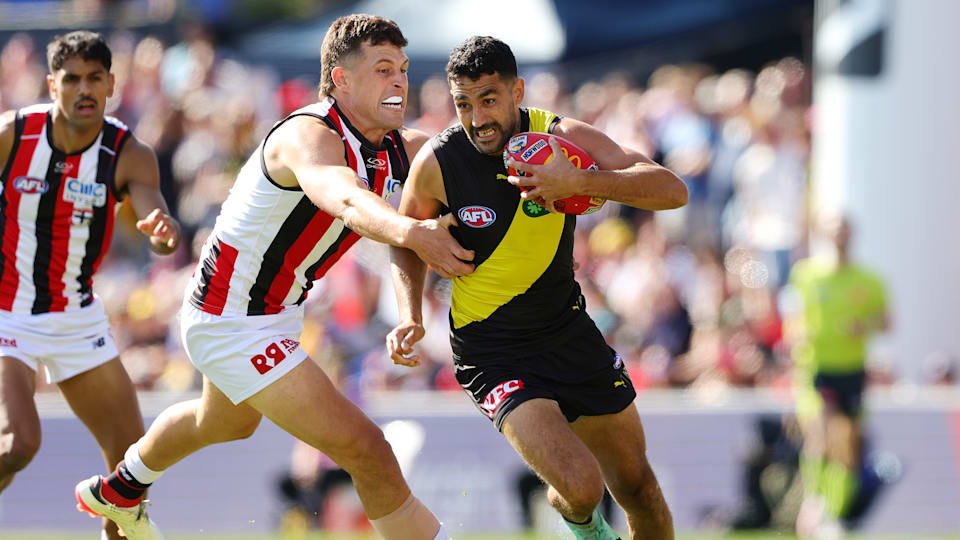
An Australian Football League (AFL) game lasts approximately two hours, including breaks.
Ever wondered about the duration of a thrilling AFL match? It’s a common question, especially for newcomers to the sport. Understanding exactly how long is an afl game can help you plan your viewing experience.
The fast-paced nature of Australian Rules Football often leaves fans captivated. This duration includes four quarters, plus breaks in between them. You’ll need to allocate around two hours of time for the full experience.

How Long is an AFL Game?
Alright, let’s dive deep into the exciting world of Australian Rules Football, or as most people call it, AFL! You’re probably here because you’re wondering, “Exactly how long is an AFL game?” Well, you’ve come to the right place. It’s not as simple as saying “it’s this many minutes,” because there are a few moving parts to consider. Unlike some sports that have a fixed clock, AFL game time is a bit more nuanced. So, let’s get into all the details.
The Basics: Quarters and Time
The heart of an AFL game is built around four quarters. Each quarter is 20 minutes long, but that’s not the whole story! Think of it like a school class – the bell rings for 20 minutes of learning, but there’s also the break before the next class. In AFL, that break is called “time on,” which is added to the end of each quarter. It’s basically the extra time that’s played when the ball is still in play at the 20-minute mark, or when there are injuries or other stoppages.
Understanding Time On
Time-on is the thing that makes each quarter vary in length. The game clock stops for specific incidents:
Goals: When a goal is scored, the clock stops for a short time.
Out of Bounds: If the ball goes completely out of the field, the game stops.
Injuries: If a player is hurt, the clock stops so medical staff can help.
Free Kicks and Stoppages: Other interruptions like free kicks or umpires having to move the ball also stop the clock.
So, while a quarter is scheduled for 20 minutes, with all the “time on” included, it can often go for longer, often around 25-30 minutes each. In the end, it all adds up. Sometimes a quarter might be shorter depending on how the game is being played, but it usually is within this time frame.
Breaks and Intervals
Okay, so we’ve covered the 20-minute quarters, now let’s look at the breaks. There’s a short break between the first and second quarters and between the third and fourth quarters. These breaks are about 6 minutes long. They give the players a chance to catch their breath, have a quick chat with their coaches, and rehydrate. Then there is the big break, which happens after the second quarter, the half-time break.
Half-Time Huddle
The half-time break is longer, usually around 20 minutes. This is a chance for teams to properly re-strategize and for players to receive more in-depth coaching and medical attention if needed. Half-time gives players and coaches an opportunity to reassess their positions and make any changes required. Also, this time allows for the ground staff to make some changes on the field before the second half, and for some time for the fans to get food or stretch their legs.
Summary of Intervals
Here’s a quick recap of the breaks you’ll see in an AFL match:
Quarter Time Break (between Q1 and Q2): Approx. 6 minutes
Half-Time Break (between Q2 and Q3): Approx. 20 minutes
Three Quarter Time Break (between Q3 and Q4): Approx. 6 minutes
The Total Game Time
So, if we add up all the times together: we have 4 quarters, each roughly 25-30 minutes in length along with the breaks, we can get an idea of how long an AFL game takes.
Playing time: 4 quarters x ~ 25 to 30 minutes = 100 to 120 minutes
Breaks: Two short breaks (6 mins) and a long half-time break (20 mins) = 32 minutes.
So, we are talking about 132 to 152 minutes, but it’s safe to say an AFL game usually runs for around 2 hours 45 minutes to 3 hours, from the first siren to the final one. However, some matches can take even longer, depending on the number of stoppages and how intense the gameplay is. But if you are planning to go for watching a match, make sure you book around 3 hours from your schedule.
Factors Affecting Game Length
While the structure of an AFL game is set, lots of things can change the game duration. Let’s look at some of them:
The Intensity of the Game
A hard-fought game with lots of action often means more stoppages. If the teams are closely matched, the play is more intense, and the umpires tend to stop the game more for free kicks and other infringements. This means a lot of “time on” and longer quarters.
Weather Conditions
Rain or strong wind can affect how the ball moves, leading to more stoppages. Players might fumble the ball more, meaning more times the ball is out of bounds.
Injuries
Serious injuries can cause quite a lot of time to be added to the clock, as medical staff need time to attend to the injured player. This is obviously vital, and this is always considered to be above the time aspect of the game.
Scoreboard
Sometimes, if one team is far ahead on the scoreboard, the other team may give up and the tempo of the game will slow. This reduces stoppages and thus may result in shorter quarters. Also, if the game is close, the teams will become more intense and may lead to more stoppages.
Number of Goals
Every goal that is scored stops the clock momentarily, so a match with lots of goals will have a longer overall game time.
A Table Summarizing AFL Game Time
Here’s a helpful table to break down the average game time in a structured way:
| Component | Duration | Notes |
|---|---|---|
| Each Quarter | 20 minutes (clock time) + “time-on” (~5-10 minutes) | “Time-on” adds extra time for stoppages, which are common. Actual quarter length usually is around 25-30 minutes. |
| Quarter Time Breaks (Q1 to Q2, Q3 to Q4) | Approx. 6 minutes | Short breaks for a breather |
| Half-Time Break (Q2 to Q3) | Approx. 20 minutes | Longer break for strategizing |
| Total Game Time | Approx. 2 hours 45 minutes – 3 hours | Estimate, but can vary depending on the game |
Why Knowing Game Length Matters
Understanding how long an AFL game is important for many reasons:
Planning: If you’re going to a match, you’ll want to know how much time to set aside, not just for the game, but for travel to and from the stadium and also for food and drinks.
TV Scheduling: Knowing the length of an AFL match is important for TV networks to organize their broadcast schedules.
Betting: If you like to place bets on matches, it’s good to know the length of time for different stats and score lines to occur.
Spectator Experience: If you are a fan of the game, it can help you plan your day around watching the game, and when to expect the game to finish.
Coaching and Preparation: Coaches also need to know game length to plan player rotations and tactics effectively.
Comparing AFL Game Length with Other Sports
How does an AFL game compare to other popular sports in terms of time? Let’s take a quick look:
Soccer (Football): Two 45-minute halves plus added injury time, usually about 1 hour 45 minutes total.
American Football: Four 15-minute quarters, but with frequent stoppages, usually takes over 3 hours to complete.
Basketball: Four 12-minute quarters with some stoppages, around 2 hours to complete.
Baseball: Nine innings with no time limit. The length varies, but it usually takes around 3 hours or more.
So, as we can see, an AFL game’s total time is on the longer side when compared to Soccer and Basketball, but is on par with other sports such as American Football and Baseball.
The Pace and Flow of an AFL Match
An AFL match is known for its fast pace and constant movement, with frequent changes in play direction. The game can go up and down the field very quickly. This, combined with the stop-start nature of the play, due to the umpires stopping the game for infringements and scoring, does mean that the game can feel like it goes on for a long time, when compared to a continuously running game like soccer, for example.
Importance of Time Management
Time management is a crucial part of an AFL team’s strategy. Players need to maintain energy and also adapt to changes in the pace of the game. Coaches plan for the full length of the game, and manage player’s minutes.
The Fans and the Length
Most fans appreciate the length of an AFL match. They enjoy the strategic plays, the dramatic goals, and the physical nature of the game. So, while an AFL match does take a long time, most people do not mind the length of the game, and it is a normal expectation that all fans have of the sport.
Hopefully, this gives you a clear picture of how long an AFL game is. It’s more than just a straight 20 minutes per quarter; it’s a mix of intense playing time, strategic breaks, and a bit of unpredictable time-on. The next time you’re watching or attending a match, you’ll know exactly what to expect and why those 20-minute quarters sometimes stretch out longer! Remember to factor in at least 3 hours when planning your day around an AFL game. Now you’re all set to enjoy a good footy match!
Understanding the intricacies of AFL game timing will significantly improve your viewing experience, whether you are watching from home or cheering from the stands. It allows you to appreciate the nuances of the game’s flow and the players’ stamina. It’s not just about watching a sport, but understanding the rhythm and dynamics that make AFL such a compelling experience. So sit back, relax, and enjoy the game!
A beginner’s guide to Australian Football | AFL Explained
Final Thoughts
An AFL game’s duration, including breaks, typically runs for around two and a half to three hours. The actual playing time is much shorter, divided into four quarters. Each quarter lasts for twenty minutes of game clock time.
Time stops for goals, out-of-bounds, and other stoppages. This contributes to the overall game length. Understanding ‘how long is an afl game’ means accounting for this variability. There is significant time added that goes beyond the official 80 minutes of match time.
Therefore, the duration can vary slightly. The primary question of ‘how long is an afl game’ is answered: plan for approximately two and a half to three hours.

